
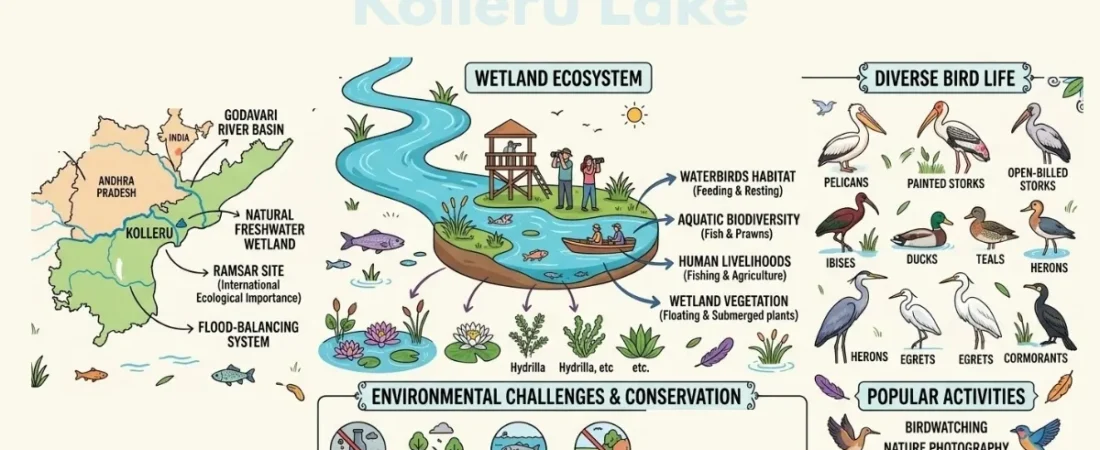
Kolleru Lake is a remarkable freshwater destination in Andhra Pradesh, known for its scenic landscapes, rich biodiversity, and diverse birdlife. Situated between the Krishna and Godavari river basins, this important wetland attracts numerous resident and migratory birds during the cooler months. Its recognition as a Ramsar site highlights its international ecological importance and role in supporting a thriving wetland ecosystem. Visitors can enjoy birdwatching, nature photography, and peaceful views while learning about the lake’s unique environment. The surrounding wildlife sanctuary also protects valuable habitats for birds and aquatic species. For travelers interested in nature, conservation, and wildlife, Kolleru Lake offers an engaging experience year-round, especially during the migratory bird season.
Kolleru Lake at a Glance
Understanding the basic facts first makes it easier to appreciate this destination’s ecological and tourism significance. The lake is a natural freshwater wetland situated between two major river basins and has long been recognized for its importance to waterbirds and aquatic biodiversity.
| Feature | Details |
| Location | Andhra Pradesh, India |
| Type | Natural freshwater wetland |
| Geographic setting | Between the Krishna and Godavari river basins |
| Major attraction | Migratory and resident birds |
| Protected area | Kolleru Lake Wildlife Sanctuary |
| International recognition | Ramsar Wetland of International Importance |
| Birdwatching season | Mainly October to March |
| Popular activities | Birdwatching, nature observation and photography |
The Ramsar information identifies the wetland as a natural flood-balancing system between the Krishna and Godavari deltas. It also records important populations of resident and migratory waterbirds, as well as a diverse fish and aquatic ecosystem.
Where Is Kolleru Lake Located?
Kolleru Lake is located in the coastal region of Andhra Pradesh, between the Krishna and Godavari river basins. The wetland is associated with the wider Eluru area, while Kaikaluru is another useful access point for travelers exploring the surrounding landscape.
Its geographical position is one of its defining characteristics. Water entering and leaving the wetland is influenced by surrounding rivers, streams, channels, rainfall, and seasonal conditions, creating a dynamic freshwater environment.
For travelers, this also means that Kolleru is not simply one small sightseeing point. The wetland covers a broad landscape, and the most suitable viewing or access area can depend on the season, water levels, and local conditions.
Why Is Kolleru Lake Famous?
Kolleru Lake is best known for its rich wetland ecosystem and remarkable birdlife. It provides feeding, resting, and habitat areas for numerous resident birds as well as migratory species that arrive during the cooler months.
The wetland is also famous for its ecological role between the Krishna and Godavari river systems. Its natural setting helps demonstrate why wetlands are important for biodiversity, fisheries, water management, and surrounding communities.
Another major reason for its recognition is its international conservation status. Kolleru is listed as a Ramsar wetland of international importance, reinforcing its significance as a protected and ecologically valuable landscape. Visitors can also explore the area on a budget, making it a practical destination for travelers interested in nature and wetland experiences.
Must Read: Munneru River
Ramsar Status and Wildlife Sanctuary
The Kolleru Lake Wildlife Sanctuary protects an important part of this wetland environment. The Ramsar designation recognizes the broader ecological value of Kolleru and its importance for waterbirds and aquatic species.
The wetland meets several internationally recognized conservation criteria, including its role as habitat for vulnerable species, its support for large numbers of waterfowl, and its importance for fish and other aquatic organisms. Historical Ramsar documentation also identifies the lake as a natural flood-balancing reservoir between the Krishna and Godavari deltas.
This protected status makes responsible tourism especially important. Visitors should avoid disturbing birds, entering restricted areas, littering, or getting unnecessarily close to wildlife for photographs.
Must Read: NTR Gardens
Birds and Wildlife at Kolleru Lake
Birdwatching is one of the biggest attractions of the wetland. During the migratory season, the area can become particularly active as birds arrive from different regions and use the lake as a feeding and resting habitat.
Species associated with the wetland include pelicans, painted storks, open-billed storks, ibises, ducks, teals, herons, egrets, stilts, avocets, cormorants, and other waterbirds. The precise species visible during a visit can change with season, water conditions, and location.
The lake is also important for aquatic biodiversity. Ramsar documentation records a variety of fish and prawn species, demonstrating that the ecological value of the wetland extends beyond its bird population.
Must Read: Karimnagar Deer Park
Best Time to Visit Kolleru Lake
The best time to visit Kolleru Lake for birdwatching is generally from October to March, when migratory birds arrive, and outdoor conditions are more comfortable. November to March can be particularly suitable for travelers whose main goal is observing wintering waterbirds.
Bird activity and water conditions can still vary from one year to another. Rainfall, water levels, food availability, and seasonal movement all influence wildlife sightings, so visitors should avoid expecting exactly the same experience on every trip.
Early morning is a useful time for nature observation because birds can be active around feeding areas. A quiet approach, binoculars, and a camera with a zoom lens can make birdwatching more rewarding without disturbing wildlife.
Things to Do at Kolleru Lake
Birdwatching is the primary activity for many visitors, especially during the migratory season. Travelers can spend time observing waterbirds, studying wetland vegetation, photographing landscapes, and enjoying the peaceful atmosphere around the lake.
Nature photography is another popular experience. Instead of approaching birds closely, use binoculars or a long camera lens to observe them from a safe distance and capture natural behavior.
Depending on the location and current local arrangements, visitor activities such as boating may be available in some areas. Travelers should confirm current availability, operating conditions, safety rules, and local access before planning an activity.
How to Reach Kolleru Lake
Kolleru Lake can be approached from several locations in Andhra Pradesh, with Eluru and Kaikaluru serving as useful reference points for travelers. The most convenient route depends on which part of the wetland you plan to visit.
Road travel offers flexibility because the wetland extends across a wide landscape. Travelers arriving from larger cities can combine rail or air travel with road transportation to reach the preferred access area.
For example, Andhra Pradesh tourism information lists Eluru Railway Station as an access point for the Kolleru region and identifies Vijayawada Airport as a nearby air connection.
Because local access can vary, it is sensible to check current road conditions, viewing locations, local transport, and any visitor restrictions before starting the journey.
Ecological Importance of Kolleru Lake
The ecological importance of Kolleru Lake extends far beyond birdwatching. Freshwater wetlands provide habitats for aquatic plants, fish, birds, and other organisms while supporting natural processes that benefit the surrounding landscape.
Its position between the Krishna and Godavari systems also gives it an important hydrological role. Ramsar documentation describes the wetland as functioning as a natural flood-balancing reservoir between the two major delta regions.
The wetland also supports human livelihoods. Fishing, agriculture, aquaculture, and other activities around the lake demonstrate the close relationship between the ecosystem and surrounding communities.
Must Read: Taj Mahal
Aquatic Life and Wetland Vegetation
Kolleru contains a variety of aquatic plants and wetland vegetation that provide food, shelter, and breeding habitat for different organisms. Floating and submerged vegetation can vary considerably across different parts of the lake.
The Ramsar information records species such as water lilies, Hydrilla, Vallisneria, Ceratophyllum, Salvinia, Pistia, and other aquatic plants within different parts of the wetland.
This plant life is an important part of the larger food web. Healthy aquatic vegetation can provide habitat for fish and invertebrates while also creating feeding opportunities for waterbirds.
Environmental Challenges and Conservation
Like many large wetlands, Kolleru faces pressure from human activity and changes in the surrounding environment. Issues connected with pollution, habitat alteration, aquaculture, encroachment, and changes in water flow can affect the health of a wetland ecosystem.
Conservation therefore involves more than protecting birds. Maintaining water quality, preserving natural habitats, managing human activities, and supporting sustainable livelihoods are all important for the long-term health of the region.
For visitors, responsible tourism is one practical way to support conservation. Avoid littering, do not feed wild birds, keep noise low, follow sanctuary rules, and never enter sensitive areas simply to obtain a better photograph.
Must Read: Glass Bridge Rajgir
Kolleru Lake and Local Livelihoods
The wetland has a close relationship with people living around it. Fishing and agriculture have historically been important activities, while aquaculture has also become part of the economic landscape surrounding the lake.
This relationship creates a conservation challenge because the wetland has both ecological and economic value. Protecting biodiversity while considering the needs of local communities requires careful management rather than treating the lake as an isolated wilderness area.
Understanding this connection can make a visit more meaningful. Travelers are not simply visiting a scenic lake; they are entering a living landscape where wildlife, water, agriculture, fisheries, and communities interact.
Kolleru Lake Travel Tips
A successful visit depends heavily on timing and preparation. Travelers interested in birds should allow enough time for observation because wildlife sightings are naturally unpredictable.
Carry drinking water, sun protection, comfortable footwear, suitable clothing, binoculars, and a camera if needed. A lightweight day bag can also be useful for spending several hours around the wetland.
Avoid loud music, littering, feeding birds, or attempting to approach wildlife. Respecting local instructions and protected areas helps preserve the experience for both wildlife and future visitors.
Why Visit Kolleru Lake?
Kolleru Lake offers something different from conventional sightseeing destinations. Its appeal comes from the combination of freshwater wetlands, migratory birds, aquatic biodiversity, scenic landscapes, and the opportunity to observe nature in a relatively open environment.
It is particularly suitable for travelers interested in birdwatching and wildlife photography. The winter migratory season can provide an especially memorable experience, while the broader wetland ecosystem offers valuable insight into freshwater conservation.
A visit is most rewarding when approached patiently. Rather than rushing through the area, spend time observing the landscape, listening to the surroundings, and watching birds from a respectful distance.
Must Read: Tenneti Park Beach
Conclusion
Kolleru Lake brings together migratory birds, freshwater biodiversity, wetland ecology, scenic landscapes, and conservation importance in one remarkable destination. Its Ramsar status, wildlife sanctuary, aquatic ecosystem, and connection with local communities make it much more than a sightseeing spot. Visiting during the migratory season, planning access carefully, and practicing responsible tourism can help travelers enjoy the wetland while respecting the natural environment that makes it special.
FAQ’s
Where is Kolleru Lake located?
Kolleru Lake is located in Andhra Pradesh between the Krishna and Godavari river basins. Eluru and Kaikaluru are useful reference points for travelers planning to explore the wetland.
Why is Kolleru Lake famous?
Kolleru Lake is famous for its freshwater wetland ecosystem, migratory and resident birds, aquatic biodiversity, and international conservation importance. Its position between the Krishna and Godavari basins also contributes to its ecological significance.
How can I reach Kolleru Lake?
The wetland can be approached from several locations in Andhra Pradesh. Eluru and Kaikaluru are useful access points, while road transport provides flexibility for exploring different parts of the surrounding region.
What should I carry when visiting Kolleru Lake?
Drinking water, sun protection, comfortable footwear, suitable clothing, binoculars, and a camera are useful. Travelers should also follow local instructions and carry only what they need to avoid unnecessary waste.