
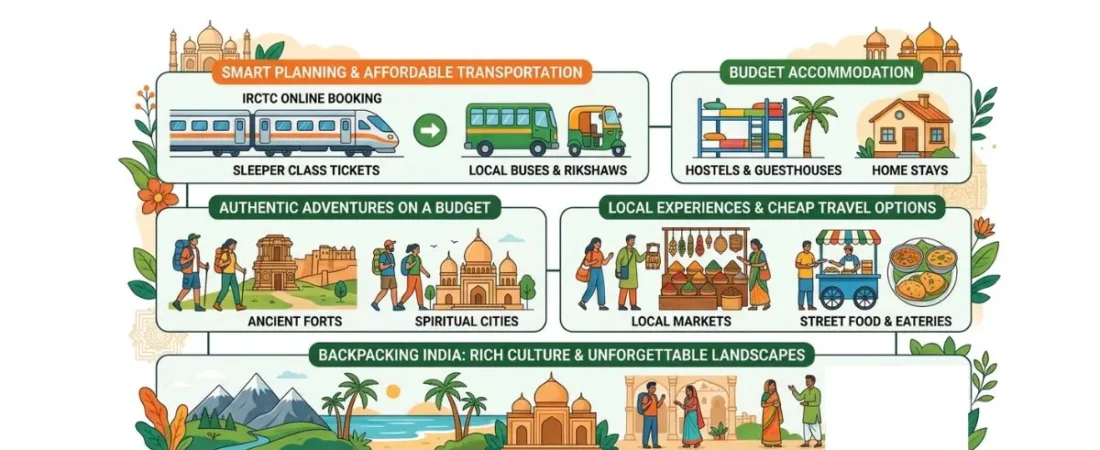
Budget Travel in India offers an incredible opportunity to explore one of the world’s most diverse destinations without spending a fortune. From ancient forts and spiritual cities to beautiful beaches and local markets, India provides countless experiences for travelers with limited budgets. With smart planning, affordable transportation, and budget accommodation, visitors can enjoy authentic adventures while keeping expenses low. Whether you are a first-time backpacker or an experienced traveler, backpacking India allows you to discover rich culture, delicious food, and unforgettable landscapes. By choosing local experiences and cheap travel options, you can explore India comfortably while creating memories that last a lifetime.
How to Travel India on $20/Day (₹ Equivalent)
One of the biggest advantages of traveling in India is the flexibility of costs. You can choose luxury hotels and premium experiences, but you can also explore the country comfortably on a backpacker budget.
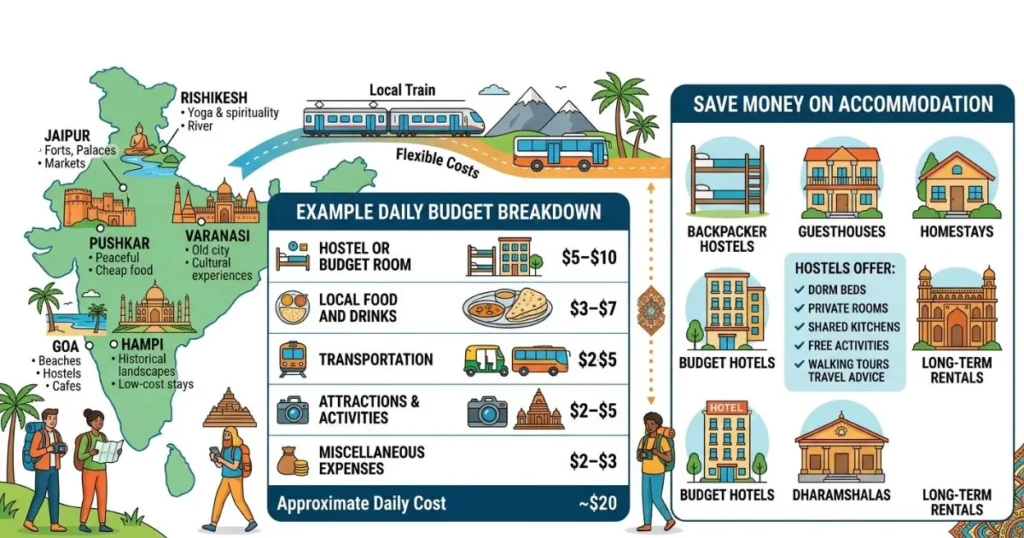
A budget of around $20 per day can be enough for many travelers who choose affordable accommodation, local transportation, and inexpensive meals.
However, your exact spending depends on your travel style, location, season, and activities.
Example Daily Budget for Budget Travel in India
| Expense | Approximate Daily Cost |
| Hostel or budget room | $5–$10 |
| Local food and drinks | $3–$7 |
| Transportation | $2–$5 |
| Attractions and activities | $2–$5 |
| Miscellaneous expenses | $2–$3 |
A traveler staying in hostels, eating local food, and using public transport can often stay within this range.
Choose Affordable Destinations
Some Indian destinations are naturally more budget-friendly than others.
Affordable Places to Visit in India:
- Rishikesh: Known for yoga, spirituality, river views, and affordable guesthouses.
- Jaipur: Famous for forts, palaces, markets, and inexpensive local experiences.
- Goa: Offers beaches, budget hostels, and affordable cafes, especially outside peak season.
- Varanasi: One of India’s oldest cities with affordable accommodation and cultural experiences.
- Hampi: A backpacker favorite with low-cost stays and historical landscapes.
- Pushkar: A peaceful destination with cheap food and accommodation.
Large metropolitan cities such as Mumbai and Delhi can be more expensive, but travelers can still reduce costs by using public transportation and staying in budget areas.
Save Money on Accommodation in India
Accommodation is one of the easiest areas where travelers can reduce expenses.
India offers many options, including:
- Backpacker hostels
- Guesthouses
- Homestays
- Budget hotels
- Dharamshalas
- Long-term rental rooms
Hostels are especially popular among international backpackers because they provide affordable beds and opportunities to meet other travelers.
Many hostels in India offer:
- Dorm beds
- Private rooms
- Shared kitchens
- Free activities
- Walking tours
- Travel advice from local staff
Tips for Finding Cheap Accommodation
1. Book Early During Peak Seasons
Popular destinations become expensive during holidays, festivals, and winter travel seasons. Booking early helps you secure better prices.
For example:
- Goa becomes expensive around Christmas and New Year.
- Rajasthan attracts more visitors during winter months.
- Himalayan destinations are popular during summer.
2. Compare Different Platforms
Before booking accommodation, compare prices across different platforms. Sometimes direct booking with a hostel or guesthouse can provide better rates.
3. Stay Outside Tourist Centers
Hotels located directly near major attractions often charge higher prices.
For example, staying slightly away from central areas in Jaipur or Goa can significantly reduce your daily expenses while still keeping attractions accessible.
Backpacking India: Complete First-Timer Guide
Backpacking India is an exciting experience, but first-time visitors need preparation because India is a large and culturally diverse country.
The country has more than 1.4 billion people, thousands of languages, different climates, and countless regional traditions. Planning your route before arrival can make your journey easier and more enjoyable.
Choose Your Travel Route Wisely
India is too large to explore completely during a short trip. Instead of trying to visit every place, focus on specific regions.
Popular Backpacking Routes in India
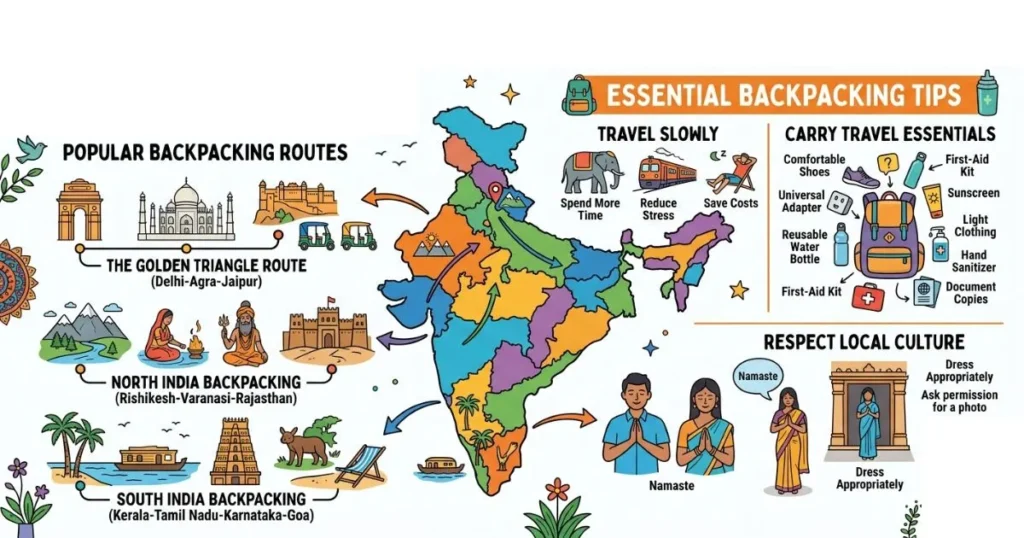
The Golden Triangle Route
Perfect for first-time visitors:
Delhi → Agra → Jaipur
Highlights:
- Historical monuments
- Mughal architecture
- Local markets
- Traditional food
- Cultural experiences
Major attractions include:
- Taj Mahal in Agra
- Amber Fort in Jaipur
- India Gate in Delhi
The North India Backpacking Route
A longer route could include:
Delhi → Rishikesh → Varanasi → Rajasthan
This route offers:
- Spiritual experiences
- Ancient cities
- River landscapes
- Forts and palaces
- Traditional villages
South India Backpacking Route
Popular among travelers who prefer beaches and nature:
Kerala → Tamil Nadu → Karnataka → Goa
Highlights:
- Tropical beaches
- Tea plantations
- Temples
- Wildlife
- Local cuisine
Essential Backpacking Tips for India
Travel Slowly
One common mistake among first-time travelers is trying to cover too many destinations.
India’s transportation system can take time, especially when traveling long distances.
Instead of changing cities every two days, spend more time exploring fewer locations.
Slow travel helps you:
- Save transportation costs
- Experience local culture
- Reduce travel stress
- Discover hidden places
Carry Basic Travel Essentials
A backpacker in India should consider carrying:
- Comfortable walking shoes
- Universal power adapter
- Reusable water bottle
- Small first-aid kit
- Sunscreen
- Light clothing
- Hand sanitizer
- Copies of important documents
Respect Local Culture
India has many cultural traditions, and respecting local customs improves your travel experience.
Simple actions such as dressing appropriately at religious sites, asking permission before taking photos, and learning basic local phrases can create positive interactions.
Cheapest Way to Travel Between Indian Cities: Trains vs Buses vs Flights
Transportation is one of the most important parts of planning budget travel in India. Since India is a huge country, moving between cities can take several hours or even an entire day. Choosing the right transportation option can save a significant amount of money.
India offers multiple travel options, including trains, buses, domestic flights, shared taxis, and local transport. For most backpackers, trains and buses are the most affordable choices.
Traveling by Train in India
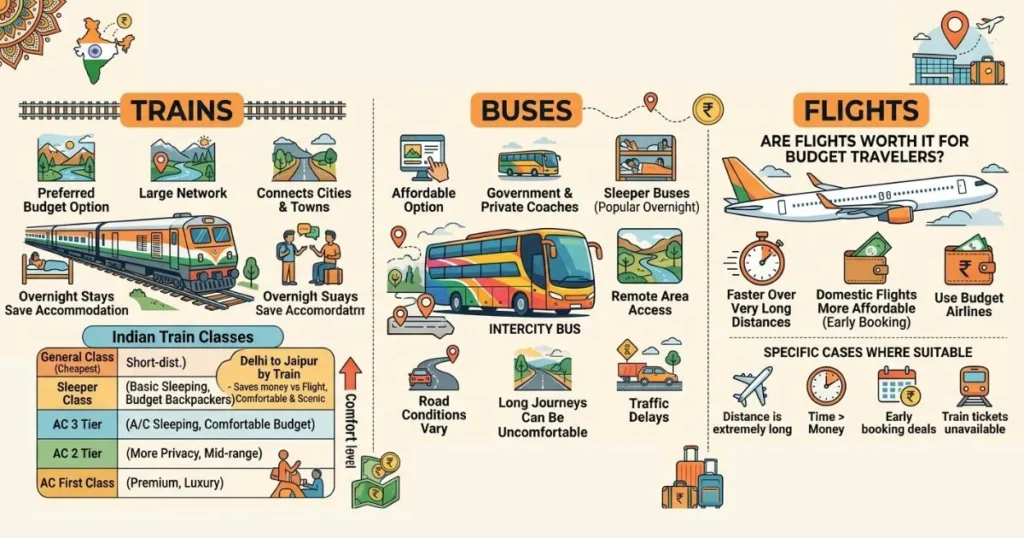
The Indian railway network is one of the largest in the world and is the preferred transportation option for many budget travelers.
For long-distance journeys, trains usually provide the best combination of affordability, comfort, and convenience.
Why Choose Trains for Budget Travel in India?
- Affordable ticket prices
- Wide network connecting major cities and small towns
- Multiple travel classes available
- Overnight journeys help save accommodation costs
- Opportunity to experience local culture
For example, a train journey from Delhi to Jaipur can cost much less than a flight, while allowing travelers to enjoy comfortable seating and scenic views.
Indian Train Classes Explained
Understanding train classes helps travelers choose the right option according to their budget.
| Class | Description | Best For |
| General Class | Cheapest option, usually crowded | Short-distance travelers |
| Sleeper Class | Basic sleeping compartments | Budget backpackers |
| AC 3 Tier | Air-conditioned sleeping coach | Comfortable budget travel |
| AC 2 Tier | More privacy and comfort | Mid-range travelers |
| AC First Class | Premium train experience | Luxury travelers |
For most backpackers, Sleeper Class and AC 3 Tier provide the best balance between cost and comfort.
Traveling by Bus in India
Buses are another affordable way to travel between cities, especially when trains are unavailable.
India has both government and private bus services.
Types of Buses Available:
- Government buses
- Private coaches
- Sleeper buses
- Volvo luxury buses
- Local city buses
Sleeper buses are popular for overnight travel because they combine transportation and sleeping arrangements.
For example:
A traveler moving from Jaipur to Udaipur may find a night bus convenient because it saves the cost of one hotel night.
Advantages of Bus Travel
- More routes than trains in some regions
- Easy booking through online platforms
- Good option for short and medium distances
- Available in remote areas
Disadvantages of Bus Travel
- Road conditions can vary
- Long journeys may feel uncomfortable
- Delays are common during traffic or weather problems
Are Flights Worth It for Budget Travelers?
Domestic flights in India are becoming more affordable, especially when booked early.
While flights are usually more expensive than trains, they can sometimes be useful when traveling very long distances.
For example:
Traveling from Delhi to Goa by train may take more than 24 hours, while a flight can take around two to three hours.
Budget airlines often offer discounted fares, especially during sales.
When Should Budget Travelers Choose Flights?
Flights may be worth considering when:
- The distance is extremely long
- Time is more valuable than money
- Early booking offers cheap fares
- Train tickets are unavailable
However, for a true backpacking experience, trains remain one of the best ways to explore India.
How to Use IRCTC to Book Train Tickets: Foreigners’ Guide
The Indian Railway Catering and Tourism Corporation (IRCTC) is the official online platform for booking train tickets in India.
Many international travelers find the booking process confusing at first, but with the right steps, it becomes easier.
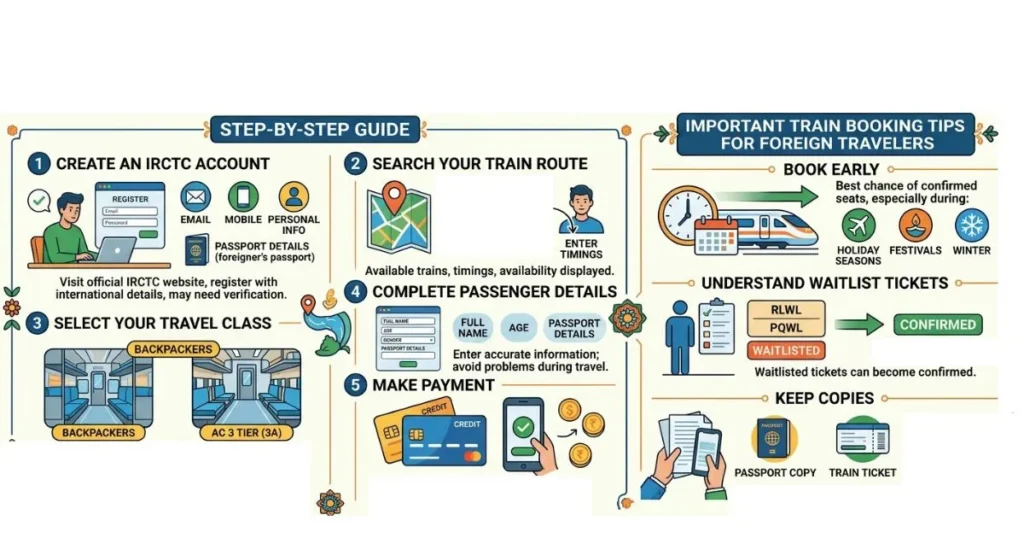
Step-by-Step Guide to Booking Indian Train Tickets
Step 1: Create an IRCTC Account
Visit the official IRCTC website and register using your:
- Email address
- Mobile number
- Personal information
- Passport details (for foreign travelers)
Foreign travelers may need additional verification steps.
Step 2: Search Your Train Route
Enter:
- Departure city
- Destination city
- Travel date
- Class preference
The system will show available trains, timings, and ticket availability.
Step 3: Select Your Travel Class
Choose according to your budget and comfort requirements.
For backpackers:
- Sleeper Class is the cheapest option.
- AC 3 Tier is comfortable for longer journeys.
Step 4: Complete Passenger Details
Enter accurate information, including:
- Full name
- Age
- Gender
- Passport details if required
Incorrect information may create problems during travel.
Step 5: Make Payment
International travelers can use the payment options available through IRCTC.
If direct booking feels complicated, some travelers use authorized travel platforms that assist foreigners with train reservations.
Important Train Booking Tips for Foreign Travelers
Book Early
Popular routes sell out quickly, especially during:
- Holiday seasons
- Festivals
- Winter travel months
Booking early gives you better chances of getting confirmed seats.
Understand Waitlist Tickets
Indian trains use a waiting list system when seats are unavailable.
A waitlisted ticket may become confirmed if other passengers cancel.
Keep Digital and Physical Copies
Carry:
- Passport copy
- Train ticket
- Identification documents
Travel authorities may request verification during your journey.
Best Budget Hostels in Goa, Rishikesh, and Jaipur
Hostels are among the best accommodation options for backpackers because they provide affordable stays and a social environment.
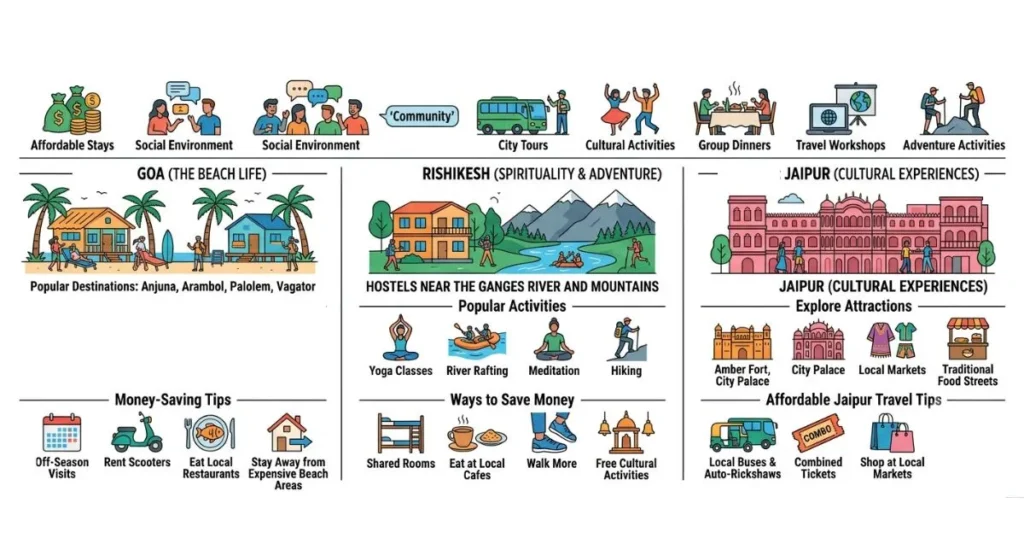
Many hostels in India organize:
- City tours
- Cultural activities
- Group dinners
- Travel workshops
- Adventure activities
Below are some popular budget-friendly destinations where travelers can find excellent hostel options.
Budget Hostels in Goa
Goa is one of India’s most popular backpacking destinations because of its beaches, nightlife, and relaxed atmosphere.
Budget travelers can find affordable hostels near:
- Anjuna
- Arambol
- Palolem
- Vagator
Why Backpackers Love Goa
- Affordable beach experiences
- International traveler community
- Water activities
- Local markets
- Beach cafes
Money-Saving Tips in Goa:
- Visit during the off-season
- Rent scooters instead of taxis
- Eat at local restaurants
- Stay slightly away from expensive beach areas
Budget Hostels in Rishikesh
Rishikesh is known as the yoga capital of the world and attracts travelers interested in spirituality, adventure, and nature.
Popular activities include:
- Yoga classes
- River rafting
- Meditation
- Hiking
- Visiting temples
Budget accommodation is widely available.
Many travelers choose Rishikesh because they can stay longer without spending much money.
Ways to Save Money in Rishikesh:
- Choose shared rooms
- Eat at local cafes
- Walk instead of using taxis
- Join free cultural activities
Budget Hostels in Jaipur
Jaipur, also known as the Pink City, is one of the best destinations for affordable cultural experiences.
Travelers can explore:
- Amber Fort
- City Palace
- Local markets
- Traditional food streets
Jaipur offers many budget hostels near tourist areas.
Affordable Jaipur Travel Tips:
- Use local buses or auto-rickshaws
- Visit attractions with combined tickets
- Shop at local markets
- Try traditional street food
Street Food Safety Guide for Travelers in India
Indian street food is one of the biggest highlights of traveling through the country. From spicy chaats in Delhi to dosas in South India and fresh seafood in Goa, local food offers an authentic way to experience Indian culture.
For budget travelers, street food is also one of the easiest ways to save money. A delicious local meal can often cost only a few dollars, making it possible to explore different cuisines without spending much.
However, first-time visitors should take some precautions because food hygiene standards can vary between locations.
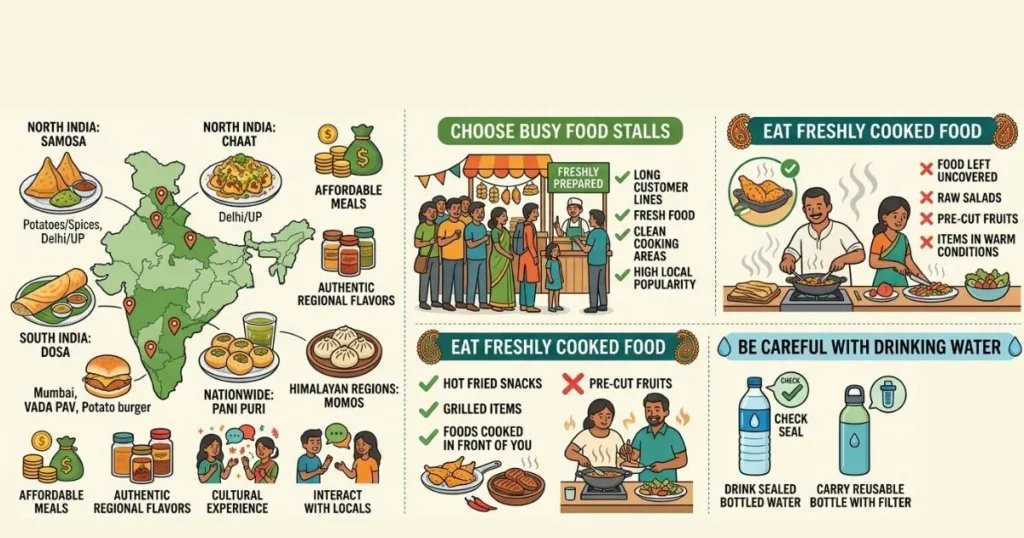
Why Try Street Food in India?
Street food provides:
- Affordable meals
- Authentic regional flavors
- Cultural experiences
- Opportunities to interact with locals
- A chance to discover traditional recipes
Some popular Indian street foods include:
| Food | Popular Locations | Description |
| Samosa | North India | Fried pastry filled with potatoes and spices |
| Chaat | Delhi, Uttar Pradesh | Spicy snack with chutneys and toppings |
| Dosa | South India | Crispy rice and lentil pancake |
| Vada Pav | Mumbai | Indian-style potato burger |
| Pani Puri | Many regions | Small crispy shells filled with flavored water |
| Momos | Himalayan regions | Steamed or fried dumplings |
How to Eat Street Food Safely in India
Choose Busy Food Stalls
A busy food stall is usually a good sign because high customer demand means ingredients are likely being replaced frequently.
Look for:
- Long customer lines
- Freshly prepared food
- Clean cooking areas
- High local popularity
A quiet stall with food sitting for a long time may carry a higher risk.
Eat Freshly Cooked Food
Freshly prepared food that is cooked at high temperatures is generally a safer option.
Good choices include:
- Hot fried snacks
- Freshly cooked meals
- Grilled items
- Foods prepared in front of you
Be careful with:
- Food left uncovered
- Raw salads
- Pre-cut fruits
- Items stored in warm conditions
Be Careful With Drinking Water
Water safety is one of the most important concerns for international travelers.
Follow these tips:
- Drink sealed bottled water
- Check that bottle seals are not broken
- Carry a reusable bottle with a filter if possible
- Avoid unknown water sources
Many experienced backpackers carry purification tablets or portable filters for additional safety.
Budget Travel Tips to Save Money in India
Traveling on a budget does not mean avoiding experiences. It means making smarter choices.
Here are practical ways to reduce expenses while still enjoying your trip.
1. Use Public Transportation
Public transport is one of the biggest money-saving opportunities in India.
Instead of expensive taxis, consider:
- Local buses
- Metro systems
- Auto-rickshaws
- Shared transport
Cities such as Delhi, Mumbai, Bengaluru, and Hyderabad have affordable metro networks that make city travel easier.
For short distances, walking can also be a great way to discover local neighborhoods.
2. Travel During the Off-Season
Travel prices usually increase during peak seasons.
Budget travelers can save money by visiting destinations during less crowded periods.
Examples:
Goa
Peak season:
- December to January
Budget-friendly period:
- Monsoon months and shoulder seasons
Rajasthan
Peak season:
- November to February
Budget-friendly period:
- Summer months, although temperatures are higher
Himalayan Destinations
Peak season:
- Summer months
Budget-friendly period:
- Early spring or autumn
Traveling outside peak periods often means:
- Cheaper accommodation
- Lower transportation costs
- Fewer crowds
3. Eat Like a Local
Restaurants in tourist areas often charge higher prices.
Eating where locals eat can significantly reduce your food expenses.
Budget-friendly options include:
- Local restaurants
- Family-owned cafes
- Food markets
- University-area restaurants
- Traditional eateries
A local meal can often provide better value than an expensive tourist restaurant.
4. Avoid Unnecessary Tourist Expenses
Many travelers spend extra money because they do not research local prices.
Common unnecessary expenses include:
- Overpriced taxis
- Tourist shopping areas
- Expensive guided tours
- Luxury restaurants
- Last-minute bookings
Before paying, compare prices and check local alternatives.
5. Negotiate Respectfully
In many Indian markets, bargaining is common.
You may negotiate prices for:
- Clothing
- Handicrafts
- Souvenirs
- Local products
However, always negotiate respectfully and understand that small price differences can significantly impact local sellers.
Best Travel Apps for Budget Travelers in India
Using the right apps can make your journey easier and help you save money.
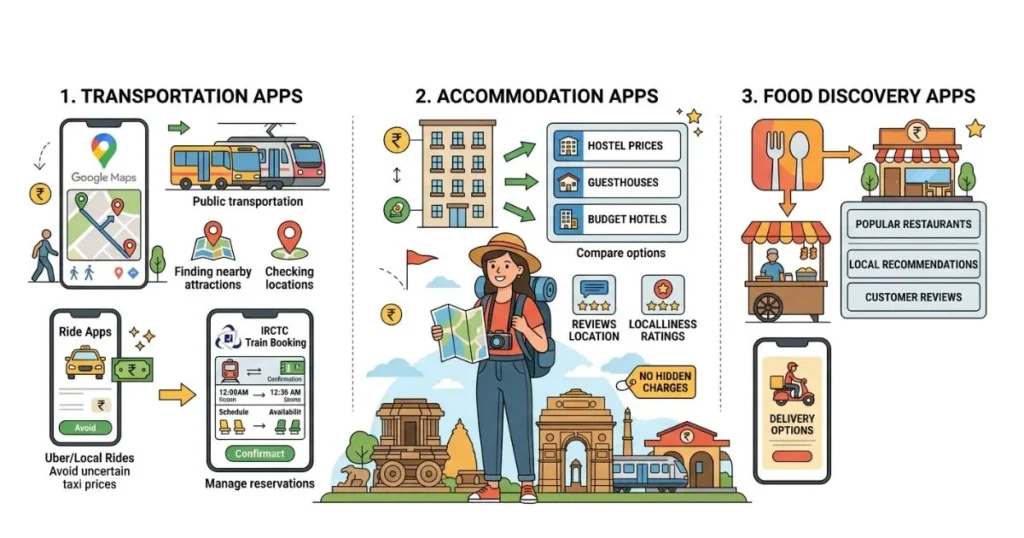
Transportation Apps
Google Maps
Useful for:
- Walking routes
- Public transportation
- Finding nearby attractions
- Checking locations
Ride Apps
Apps like Uber and other local ride services help travelers avoid uncertain taxi prices.
Train Booking Apps
Railway booking apps help travelers:
- Check train schedules
- Track availability
- Manage reservations
Accommodation Apps
Accommodation platforms allow travelers to compare:
- Hostel prices
- Guesthouses
- Budget hotels
- Reviews
Always check:
- Recent reviews
- Location
- Cleanliness ratings
- Additional charges
Food Discovery Apps
Food apps help travelers find:
- Popular restaurants
- Local recommendations
- Customer reviews
- Delivery options
However, exploring local streets and asking residents for recommendations can often lead to the best food experiences.
Common Mistakes First-Time Budget Travelers Make in India
India is an incredible destination, but avoiding common mistakes can make your trip smoother.
Trying to Visit Too Many Places
India is massive, and transportation between cities takes time.
A better approach is:
- Choose fewer destinations
- Spend more days in each location
- Experience local culture
Quality travel is usually better than rushing through many places.
Ignoring Travel Seasons
Weather conditions vary significantly across India.
For example:
- Rajasthan can become extremely hot in summer.
- Himalayan regions can become difficult during heavy snowfall.
- Coastal areas experience strong monsoon seasons.
Researching weather before traveling helps avoid uncomfortable situations.
Carrying Too Much Luggage
Backpacking becomes easier with lightweight luggage.
A smaller backpack allows you to:
- Use public transport easily
- Walk through busy areas
- Avoid extra baggage costs
- Move between accommodations quickly
Not Keeping Emergency Money
Even budget travelers should keep backup funds.
Unexpected expenses may include:
- Medical needs
- Transportation changes
- Lost items
- Emergency accommodation
Having extra money provides peace of mind.
How Much Money Do You Need for Backpacking India?
The total cost depends on your travel style and duration.
Example Monthly Budget for Budget Travelers
| Category | Approximate Monthly Cost |
| Accommodation | $150–$300 |
| Food | $100–$200 |
| Transportation | $50–$150 |
| Activities | $50–$150 |
| Miscellaneous | $50–$100 |
A backpacker traveling carefully can explore India at a relatively low cost, while travelers who prefer more comfort can increase their budget.
Why India Is Perfect for Budget Travelers
India offers something rare: affordable travel combined with incredible diversity.
A single country allows travelers to experience:
- Ancient history
- Spiritual traditions
- Mountain landscapes
- Tropical beaches
- Wildlife
- Regional cuisines
- Local festivals
Unlike many destinations where budget travel means limiting experiences, India allows affordable travelers to participate in authentic cultural experiences.
From sharing a train journey with local families to eating traditional meals at small restaurants, some of the most memorable moments in India are often inexpensive or completely free.
Conclusion
Budget Travel in India proves that exploring a diverse country does not require a huge budget. With smart planning, affordable choices, and local experiences, travelers can enjoy unforgettable journeys across India. From exploring historic landmarks to discovering hidden destinations, backpacking trips offer meaningful experiences at lower costs. By using local transportation, staying in budget-friendly hotels, and enjoying authentic cuisine, visitors can travel comfortably while saving money. Whether you are a solo explorer or a first-time traveler, India provides endless opportunities for affordable adventures. Plan wisely, travel responsibly, and create lasting memories while experiencing the beauty and culture of India.
FAQ’s
Which is the cheapest trip in India?
Budget trips to places like Rishikesh, Jaipur, Hampi, Pushkar, and Varanasi are among the cheapest, offering affordable stays, food, and local transport.
What is the budget for a trip to India?
A budget traveler can comfortably explore India with around $20–$30 per day, depending on the destination, accommodation, and travel style.
How much does a trip cost in India?
The total cost depends on trip duration and preferences, but a two-week budget trip can often be planned within a few hundred dollars.
How to travel on a low budget in India?
Use local transport, stay in hostels, eat local food, travel during the off-season, and plan your bookings to save money.
Is India cheap as a tourist?
Yes, India is one of the most affordable travel destinations, offering low-cost accommodation, transportation, and food while providing rich cultural experiences.