
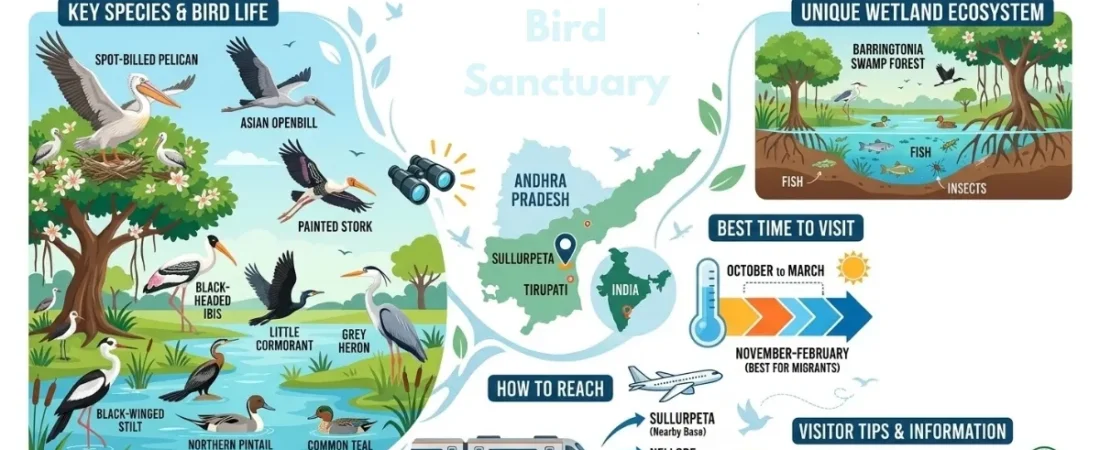
Nelapattu Bird Sanctuary is a fascinating wetland destination in Andhra Pradesh, celebrated for its rich birdlife and remarkable spot-billed pelican population. Surrounded by natural vegetation and water-rich habitats, the sanctuary attracts numerous migratory birds during the cooler months, making it a rewarding destination for birdwatchers and nature lovers. Its peaceful environment also provides excellent opportunities for wildlife observation and photography. Beyond its scenic appeal, Nelapattu plays an important role in bird conservation and protects valuable wetland ecosystems. From discovering its diverse bird species to learning about its habitat, the sanctuary offers a memorable experience for visitors seeking nature, wildlife, and responsible travel. Knowing the best season, access, and visitor information can make your trip more enjoyable.
What Makes Nelapattu Bird Sanctuary Special?
The Nelapattu Bird Sanctuary stands out because of its importance as a breeding and nesting habitat for spot-billed pelicans and other waterbirds. Unlike a conventional tourist attraction, its main appeal comes from observing wildlife within a protected wetland ecosystem.
The sanctuary also represents an interesting connection between nature and nearby communities. Birds, wetlands, vegetation, and agriculture are interconnected here, making the destination valuable not only for tourism but also for environmental education and biodiversity conservation.
Where Is Nelapattu Bird Sanctuary Located?
Nelapattu is located in the Tirupati region of Andhra Pradesh, near Sullurpeta, India. Its position makes it accessible for travelers exploring the southern part of the state as well as visitors traveling between the Chennai region and destinations around Tirupati and Nellore.
The sanctuary forms part of a wetland landscape that supports aquatic birds and other wildlife. Its surroundings include water bodies, nesting vegetation, and dry evergreen vegetation, creating different habitats within and around the protected area.
Why Is Nelapattu Famous for Spot-Billed Pelicans?
Spot-billed pelicans are the signature attraction of Nelapattu. These large waterbirds depend on suitable wetlands, food sources, and secure trees for nesting and breeding.
The presence of breeding colonies demonstrates the ecological importance of the area. Protecting nesting trees and maintaining healthy wetland conditions is essential because disturbance or habitat degradation can affect bird populations.
For visitors, seeing pelicans gathered around their nesting and feeding areas can be one of the most memorable experiences of a trip.
Birds Found at Nelapattu Bird Sanctuary
The sanctuary supports a diverse collection of resident and migratory birds. Waterbirds are especially prominent because the wetland provides feeding, resting, and breeding opportunities.
Depending on the season and local conditions, visitors may encounter spot-billed pelicans, Asian openbills, painted storks, black-headed ibises, little cormorants, grey herons, Oriental darters, black-winged stilts, Indian spot-billed ducks, northern pintails, common teals, northern shovelers, and other seasonal visitors.
| Bird or Wildlife Feature | What Makes It Interesting |
| Spot-billed Pelican | Major breeding and nesting attraction |
| Asian Openbill | Important wetland bird |
| Painted Stork | Large waterbird associated with wetlands |
| Black-headed Ibis | Important resident and breeding species |
| Little Cormorant | Aquatic bird commonly associated with water bodies |
| Grey Heron | Large wetland bird and patient hunter |
| Oriental Darter | Fish-eating waterbird |
| Black-winged Stilt | Distinctive long-legged wetland bird |
| Northern Pintail | Seasonal migratory visitor |
| Common Teal | Winter waterbird |
| Northern Shoveler | Migratory duck species |
Bird sightings are never guaranteed because wildlife activity changes with weather, water levels, season, and breeding conditions. Binoculars can significantly improve the experience by allowing you to observe birds from a respectful distance.
Nelapattu Wetland Ecosystem
The sanctuary’s importance comes largely from its wetland ecosystem. Water bodies provide feeding and resting areas, while vegetation offers nesting locations and shelter for birds.
One of the notable habitat features is the Barringtonia swamp forest. These trees can tolerate wet conditions and provide suitable nesting environments for colonial waterbirds. The surrounding vegetation further increases habitat diversity.
This ecosystem supports a natural chain involving water, fish, insects, aquatic organisms, vegetation, and birds. Maintaining this balance is essential for both resident wildlife and migratory visitors.
Best Time to Visit Nelapattu Bird Sanctuary
The best period for birdwatching is generally from October to March, when migratory birds are more likely to be present. The cooler weather also makes outdoor exploration more comfortable than the hotter months.
November to February can be particularly rewarding for visitors interested in winter migrants. Early morning is another good time for wildlife observation because birds are often more active and the softer natural light can be excellent for photography.
If your main purpose is birdwatching, plan your visit around the migratory season rather than treating the sanctuary as a year-round sightseeing stop.
Nelapattu Bird Sanctuary Timings and Entry Fee
Visitor timings and entry charges can change according to local management arrangements, seasons, or other operational factors. Online information can therefore become outdated, so it is sensible to confirm the latest details before traveling.
Rather than planning a rushed visit, allow sufficient time for walking, bird observation, photography, and exploring permitted visitor areas. Arriving early can be particularly useful for serious birdwatchers.
How to Reach Nelapattu Bird Sanctuary
Road travel is one of the most convenient ways to access the sanctuary. Sullurpeta is an important nearby town and can be used as a practical base for arranging onward transportation.
Travelers coming from Nellore, Tirupati, Chennai, or surrounding areas can plan a road journey toward Nelapattu. Depending on your starting point, a private vehicle or hired taxi can provide greater flexibility than relying on limited local transport.
For train travelers, nearby railway stations such as Sullurpeta and Naidupeta can be considered before continuing by road. Travelers arriving by air can consider the Tirupati region as an entry point and then continue by road.
Because road conditions and public transport schedules can change, checking the current route before departure is recommended.
Nelapattu Distance From Major Places
The exact travel distance and journey time depend on your starting point and chosen route. Sullurpeta is among the closest useful access points, while Nellore, Tirupati, and Chennai are practical reference cities for planning a larger trip.
| Starting Point | Travel Planning |
| Sullurpeta | Useful nearby base for onward travel |
| Nellore | Suitable for a wider regional itinerary |
| Tirupati | Can be combined with a pilgrimage or sightseeing trip |
| Chennai | Practical for a longer road journey |
| Naidupeta | Useful transport connection for road travel |
Always check the current route and traffic conditions before leaving, particularly if you are planning to arrive early for birdwatching.
Things to Do at Nelapattu
Birdwatching is the primary activity, but the sanctuary also offers opportunities for nature observation, wildlife photography, and learning about wetland conservation.
Take your time rather than rushing from one area to another. Quiet observation can reveal birds feeding, flying, nesting, or interacting around the wetland.
The experience is especially enjoyable for travelers who appreciate nature and photography rather than expecting a conventional amusement-style attraction.
Birdwatching Tips for First-Time Visitors
A successful birdwatching trip depends largely on patience. Bring binoculars if possible and spend several minutes quietly observing one area instead of constantly moving.
Wear comfortable footwear and lightweight clothing suitable for outdoor conditions. Drinking water is useful, especially during warmer periods, while a hat and sun protection can make longer outdoor observation more comfortable.
Avoid loud conversations and sudden movements around birds. Never attempt to approach nesting colonies simply to obtain a closer photograph.
Bird Photography at Nelapattu
The sanctuary can be an excellent destination for wildlife photography, particularly during the migratory and breeding seasons. Early morning light can provide better conditions for photographing pelicans, storks, herons, and other waterbirds.
A telephoto lens is preferable because it allows photographers to maintain a safe distance. Binoculars are also useful for identifying species before attempting photography.
Responsible photography should always come first. Do not chase birds, make noises to attract them, enter restricted areas, or interfere with nesting activity for a photograph.
Facilities at the Sanctuary
Visitor facilities may include areas dedicated to environmental education and interpretation. However, facilities and operating arrangements can change, so visitors should avoid assuming that every service will always be available.
It is better to carry essential items such as drinking water, basic snacks, sun protection, and suitable footwear. Keeping the surroundings clean is especially important in a wetland environment.
Is Nelapattu Suitable for a Family Trip?
The sanctuary can be a rewarding destination for families interested in nature, wildlife, and environmental learning. Children can observe different bird species and learn how wetlands support ecosystems.
Families should prepare for an outdoor experience rather than expecting extensive entertainment facilities. Quiet behavior is particularly important because excessive noise can disturb birds.
Is Nelapattu Good for Birdwatchers?
Yes, particularly during the migratory season. The combination of resident waterbirds, seasonal migrants, nesting colonies, and wetland habitat makes the sanctuary interesting for both beginners and experienced birdwatchers.
Bird activity varies from day to day, so visitors should approach the experience with realistic expectations. The goal should be observing wildlife in its natural setting rather than expecting guaranteed sightings of every species.
Conservation Importance of Nelapattu
Nelapattu is important because wetlands provide essential habitat for birds throughout different stages of their life cycles. Breeding colonies depend on suitable nesting trees, while migratory species require safe feeding and resting grounds during their seasonal journeys.
Protecting the sanctuary therefore means protecting more than individual birds. Maintaining water quality, wetland vegetation, nesting trees, and surrounding habitat helps preserve the wider ecosystem.
Environmental education also plays an important role by helping visitors understand why wetlands deserve protection and how responsible tourism can reduce pressure on wildlife.
The Relationship Between Birds and Local Communities
One of the most interesting aspects of Nelapattu is the connection between birds and people living around the wetland landscape. Bird activity has traditionally been associated with benefits to nearby agricultural areas because bird droppings can contribute nutrients to the soil.
This relationship demonstrates how wildlife conservation and local livelihoods can sometimes support one another. When communities recognize the value of birds, protecting nesting areas becomes a shared environmental responsibility.
Places to Visit Near Nelapattu Bird Sanctuary
Travelers can combine their sanctuary visit with other destinations in the surrounding region. Budget travel makes it easier to explore nearby attractions while keeping transportation and accommodation costs manageable. Pulicat Lake is particularly relevant for people interested in wetlands, coastal landscapes, spiritual or cultural landmarks, and migratory birds.
Depending on your route, you can also consider Sullurpeta, Sriharikota, Srikalahasti, Nellore, or Tirupati. Combining two or more destinations can turn a short wildlife visit into a broader Andhra Pradesh travel itinerary.
Where to Stay Near Nelapattu
Accommodation options are easier to find in nearby towns and larger destinations than in the immediate sanctuary surroundings. Sullurpeta can be considered when you want to stay relatively close to the sanctuary.
Travelers planning a wider itinerary can also consider staying in Nellore or Tirupati, depending on their route. Booking ahead is advisable during busy travel periods, especially when combining the sanctuary with popular regional attractions.
Important Things to Know Before Visiting
A wildlife sanctuary is different from a conventional sightseeing attraction, so flexibility is important. Bird numbers and activity can change according to weather, season, water levels, and breeding conditions.
Check current visitor arrangements before leaving, carry essential supplies, follow local instructions, and stay within designated areas. Avoid plastic waste and never feed, chase, or disturb wildlife.
If birdwatching is your primary goal, give yourself enough time and avoid scheduling the sanctuary as a rushed stop between several attractions.
Conclusion
The Nelapattu Bird Sanctuary is a rewarding destination for anyone interested in pelicans, migratory birds, wetlands, birdwatching, and wildlife conservation. Its nesting habitat, diverse birdlife, Barringtonia vegetation, and connection with local communities make it more than a simple sightseeing stop. Plan your visit during the stronger birdwatching season, arrive early, carry binoculars, respect wildlife, and verify current visitor information before traveling for the best experience.
FAQ’s
What is Nelapattu Bird Sanctuary famous for?
It is especially famous for its spot-billed pelicans and its importance as a breeding and wetland habitat for numerous resident and migratory birds.
Which birds are found at Nelapattu Bird Sanctuary?
Birds that may be observed include spot-billed pelicans, Asian openbills, painted storks, black-headed ibises, little cormorants, grey herons, Oriental darters, black-winged stilts, northern pintails, common teals, and northern shovelers.
What are the timings of Nelapattu Bird Sanctuary?
Visitor timings can change, and different published sources may provide different schedules. Confirm the current opening hours locally before planning your visit.
What is the entry fee for Nelapattu Bird Sanctuary?
Entry charges can change over time. Visitors should verify the latest applicable fee before traveling rather than relying on older online information.
Can I take photographs at Nelapattu?
Bird photography can be enjoyed at the sanctuary, provided visitors follow local rules and maintain a safe distance from wildlife. A telephoto lens and binoculars are useful for observing birds without disturbing them.