
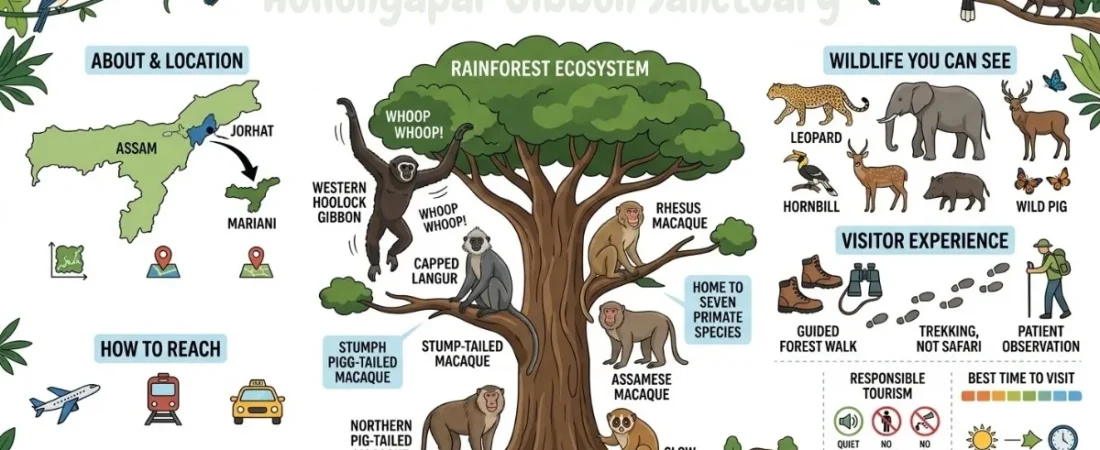
Hollongapar Gibbon Sanctuary is a remarkable wildlife destination near Jorhat in Assam, known for its rich forest ecosystem and rare primate species. Surrounded by evergreen forests, tea gardens, and quiet woodland trails, the sanctuary offers visitors a memorable opportunity to experience Assam’s natural beauty. It is especially famous for the western hoolock gibbon, India’s only ape, along with capped langurs, macaques, and the Bengal slow loris. A visit here is more about patient forest walks and listening for wildlife calls than a traditional safari. With its unique wildlife sanctuary, diverse biodiversity, and important conservation role, Hollongapar provides an enriching experience for nature lovers, photographers, birdwatchers, and travelers seeking a peaceful escape into Assam’s wilderness.
About Hollongapar Gibbon Sanctuary
The protected forest was historically known as Hoollongapar Forest during the British period, with records dating back to 1881. Today, the sanctuary covers about 20.98 square kilometers in Jorhat district and lies approximately 19 km from central Jorhat and 5 km from Mariani.
Its relatively small size should not be mistaken for limited ecological value. The forest supports an impressive concentration of primates and other wildlife, while its mature trees form the canopy that arboreal species depend on for movement, feeding, and shelter.
Must Read: Kedarnath Wildlife Sanctuary
Why Is Hollongapar Gibbon Sanctuary Famous?
The sanctuary is famous for its western hoolock gibbon, a tailless ape that spends most of its life high above the forest floor. These agile animals use their long arms to move between branches and can often be detected by their distinctive calls before they are actually seen.
The sanctuary is particularly significant because it supports seven primate species, including the hoolock gibbon, stump-tailed macaque, rhesus macaque, northern pig-tailed macaque, Assamese macaque, slow loris, and capped langur. It also supports numerous birds and reptiles.
Must Read: Dehradun Zoo Timing
Wildlife You Can See in Hollongapar Gibbon Sanctuary
The western hoolock gibbon is naturally the main attraction, but the forest experience extends well beyond one species. Depending on conditions, visitors may encounter elephants, leopards, pangolins, jungle cats, Indian civets, giant squirrels, barking deer in parks, sambar, wild pigs, and several species of macaques and langurs.
Birdwatchers can also find the sanctuary rewarding. Hornbills, hill mynas, ospreys, pheasants, and other forest birds add another dimension to the visit, while reptiles, butterflies, and smaller forest creatures make patient observation worthwhile.
Must Read: Kambalakonda Wildlife Sanctuary
Best Time to Visit Hollongapar Gibbon Sanctuary
The sanctuary remains open year-round, but October to April is generally considered the best period for wildlife viewing. The cooler and comparatively drier months are also more comfortable for walking through forest trails.
For the best wildlife experience, plan to arrive in the morning. Recent visitor experiences commonly favor the early hours because gibbons and other forest animals can be more active then. During the monsoon, heavy rain can make paths muddy and slippery, while the forest becomes exceptionally green and humid.
Best Time of Day for Wildlife Watching
Morning is more important than simply choosing the right season. A quiet start gives visitors a better opportunity to hear gibbon calls and watch primates moving through the canopy before the forest becomes busier.
Wildlife sightings are never guaranteed, however. Gibbons live high in the trees and can move away quickly when disturbed. A patient visitor who spends time listening and scanning the canopy may have a more rewarding experience than someone who rushes through the trail looking only for photographs.
Hollongapar Gibbon Sanctuary Timings and Entry Information
Current visitor information about exact opening hours and charges is not completely consistent across online sources. Because forest access, local arrangements, and visitor regulations can change, travelers should confirm the latest timings and entry requirements before starting the journey.
The same approach applies to entry fees, guide charges, and any additional security or photography arrangements. Avoid relying on old figures from travel posts when planning a current trip; carrying some cash and checking the latest local instructions is a sensible precaution.
How to Reach Hollongapar Gibbon Sanctuary
Jorhat is the principal gateway for visiting the sanctuary. Assam’s tourism information identifies Jorhat as the nearest airport and Mariani as the nearest railway station, with taxis available from both locations.
The sanctuary is about 5 km from Mariani and roughly 19–20 km from Jorhat according to current government information, although road distance can vary depending on the exact starting point and route. Travelers arriving by air can therefore stay in Jorhat and arrange a road transfer, while rail passengers can consider Mariani for the final stretch.
Is It a Safari or a Forest Walk?
One of the biggest differences between this sanctuary and Assam’s larger wildlife destinations is the way visitors explore it. The jungle is primarily experienced through trekking and walking rather than a standard jeep safari.
This makes the experience more intimate. Instead of covering long distances by vehicle, visitors can slow down, listen for calls, examine the canopy, observe insects and birds, and learn about the forest from a local guide. Comfortable shoes are therefore more useful than typical safari clothing alone.
Must Read: Nelapattu Bird Sanctuary
What to Expect During the Forest Walk
The forest walk requires patience. Hoolock gibbons may remain above the canopy, while macaques and langurs can move quickly between trees. A knowledgeable guide can help visitors locate animals by recognizing calls, movement, feeding behavior, and preferred parts of the forest.
Recent visitor experiences also indicate that trails can become muddy during wet weather and that insects or leeches may be encountered during the monsoon. Planning for changing ground conditions and carrying suitable footwear can make the walk considerably more comfortable.
Flora and Forest Landscape
The forest is valuable not only because of its animals but also because of its vegetation. Hollong and Nahar are important trees within the forest structure, while evergreen shrubs, herbs, vines, and other native plants occupy the lower layers.
This layered vegetation creates a functioning ecosystem rather than simply a scenic backdrop. The upper canopy provides routes for gibbons and other arboreal mammals, while the middle and lower levels support birds, insects, reptiles, and smaller mammals.
Must Read: Rock Garden Timings
Conservation Importance
The sanctuary has exceptional conservation value because it protects an important habitat for India’s hoolock gibbons and several other primates. Its location amid tea gardens, settlements, roads, and other human-modified landscapes also makes the protection of remaining forest especially important.
Habitat fragmentation is one of the major concerns for wildlife that depends on continuous forest. Railway infrastructure and surrounding land use can interrupt natural movement, making forest connectivity and safe canopy routes particularly important for gibbons and other tree-dwelling species.
Must Read: Nehru Rose Garden
Responsible Wildlife Tourism
Visitors should treat the sanctuary as a living ecosystem rather than an outdoor photography set. Keeping conversations quiet, avoiding sudden movements, following permitted trails, and maintaining a safe distance from animals can reduce disturbance and improve the chance of natural sightings.
Feeding wildlife, attempting to attract animals, leaving plastic behind, or making excessive noise can damage the experience for both animals and other visitors. Responsible wildlife tourism is especially important in a habitat supporting sensitive primate species.
Where to Stay Near the Sanctuary
Jorhat is a practical base because it offers a wider selection of hotels and makes it easier to combine the sanctuary with other attractions. Mariani is another option for travelers who prefer to stay closer to the forest.
Nearby accommodation can include homestays and eco-oriented stays, while Assam tourism information also identifies Gibbon Eco-camp, Gibbon homestay, accommodation in Jorhat and Mariani, and traditional tea-bungalow experiences as possible choices. Availability should be checked before travel, particularly during the busier winter season.
Places to Visit Near Hollongapar Gibbon Sanctuary
The sanctuary fits naturally into a wider Upper Assam itinerary. Jorhat is closely associated with the region’s tea culture, while historic and cultural attractions provide a useful contrast to the forest experience.
Travelers with additional time can explore Tocklai Tea Research Institute, Sukapha Samanway Kshetra, nearby tea estates, and Majuli. Assam tourism specifically recommends these tourist attractions as complementary experiences around a Jorhat visit.
Must Read: Tourist places in Kollam
Hollongapar Gibbon Sanctuary Travel Tips
A morning visit is a sensible choice for wildlife observation, especially if gibbons are the main reason for your trip. Allow enough time to walk slowly rather than treating the sanctuary as a quick photo stop, and consider carrying binoculars for canopy viewing.
Wear comfortable walking shoes and carry water, insect protection, weather-appropriate clothing, and a camera if needed. Keeping a budget for essentials such as local transport, entry charges, and refreshments can also make the visit more convenient. During rainy periods, expect slippery ground and wet vegetation. Most importantly, check current visitor rules, timings, charges, and access arrangements before traveling because these details can change.
Must Read: Fountain Chowk
A Simple Day Plan
A practical itinerary can begin with an early departure from Jorhat or Mariani, followed by a guided forest walk during the morning. After spending sufficient time observing primates and other wildlife, travelers can return toward Jorhat for lunch and continue with a tea estate or cultural attraction.
Visitors with more time can extend the trip toward Majuli or combine the sanctuary with a broader Assam wildlife itinerary. Its location makes it particularly suitable for travelers who want to experience a specialized primate habitat without dedicating several days to a single destination.
Quick Travel Information
| Travel Detail | Information |
| Location | Jorhat district, Assam |
| Nearby town | Jorhat |
| Nearest railway access | Mariani |
| Main wildlife attraction | Western hoolock gibbon |
| Primate diversity | Seven primate species |
| Best visiting season | October to April |
| Best time of day | Early morning |
| Main activity | Guided forest walk and wildlife observation |
| Forest type | Evergreen and semi-evergreen habitat |
| Recommended essentials | Walking shoes, water, binoculars, and insect protection |
| Nearby experiences | Tea estates, Jorhat attractions, and Majuli |
Conclusion
Hollongapar Gibbon Sanctuary offers a rare opportunity to experience Assam’s forest ecosystem through its western hoolock gibbons, diverse primates, birds, and rich vegetation. With an early start, comfortable walking gear, responsible wildlife practices, and enough time for patient observation, this remarkable forest near Jorhat can become a memorable part of an Assam wildlife and cultural journey.
FAQ’s
Why is Hollongapar Gibbon Sanctuary famous?
It is famous for the western hoolock gibbon and its exceptional primate diversity. The forest supports seven primate species along with birds, reptiles, mammals, and diverse vegetation.
What is the best month to visit Hollongapar Gibbon Sanctuary?
The broader favorable period is October to April. For comfortable wildlife observation, the cooler months are particularly attractive, while early mornings are generally preferable regardless of the season.
Is Hollongapar a jeep safari destination?
No. The sanctuary is primarily explored through trekking and walking. This makes it especially appealing to visitors who want a closer and quieter forest experience rather than a conventional vehicle-based safari.
How much time is needed to explore the sanctuary?
A morning can provide a meaningful introduction, but wildlife enthusiasts should allow additional time for patient observation. Assam tourism notes that a day can be useful for experiencing the area’s flora and fauna, particularly its primates.
Is the sanctuary suitable for wildlife photographers?
Yes. Gibbons, macaques, langurs, birds, butterflies, and forest vegetation provide varied photography opportunities. A telephoto lens and binoculars are particularly useful because many animals remain high in the canopy.