
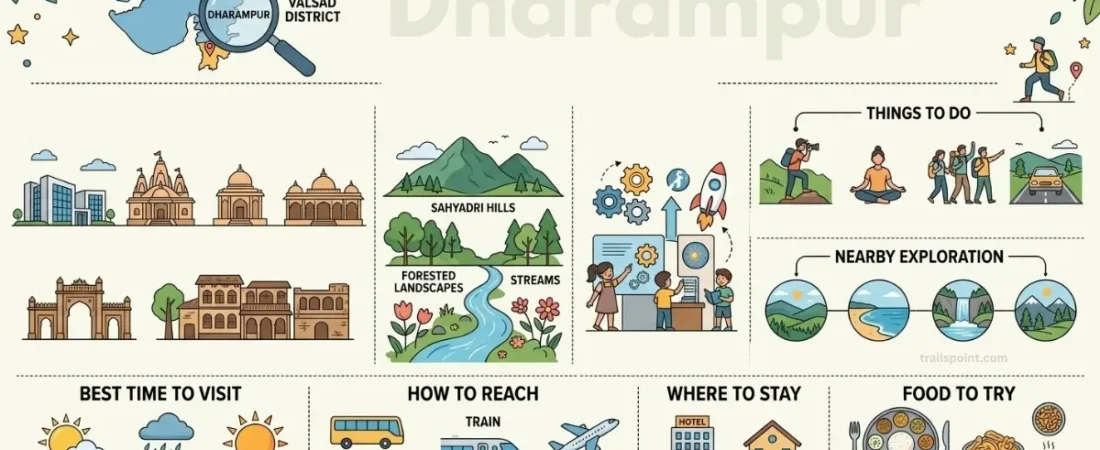
Dharampur is a peaceful destination in Gujarat’s Valsad district, offering a refreshing blend of natural beauty, heritage, spirituality, and local culture. Surrounded by the scenic Sahyadri landscape, the town provides an appealing escape for travelers seeking quiet surroundings away from busy city life. Visitors can explore historic landmarks, Jain temples, spiritual attractions, museums, and nearby hill destinations while enjoying the region’s greenery. The renowned Shrimad Rajchandra Mission adds a distinctive spiritual dimension to the journey, while attractions around Valsad make it easy to plan a broader South Gujarat itinerary. Whether you enjoy heritage tourism, hill landscapes, photography, or peaceful retreats, Dharampur offers diverse experiences for a memorable trip.
Where Is Dharampur Located?
Dharampur is located in Valsad district in southern Gujarat. It lies in a greener part of the state, where the landscape changes from the relatively dry surroundings found in many parts of Gujarat to forested hills, streams, rivers, and lush countryside.
Its location makes it a useful starting point for exploring several attractions across South Gujarat. Travelers can combine a visit to Dharampur with Valsad, Wilson Hills, Waghai, Saputara, and other nearby destinations depending on the length of their itinerary.
Why Is Dharampur Worth Visiting?
The biggest attraction of Dharampur is its variety. Instead of offering only one type of sightseeing, the area brings together natural scenery, history, architecture, spirituality, and educational attractions.
The surrounding hills create a peaceful setting for photography and short nature experiences, while historical landmarks and religious sites provide cultural depth. This makes the destination suitable for couples, families, spiritual travelers, history enthusiasts, and visitors planning a relaxed weekend getaway.
Best Places to Visit in Dharampur
The attractions around Dharampur range from spiritual landmarks and historic sites to educational centres and scenic landscapes. Planning your sightseeing by category can make it easier to experience the area’s different sides without rushing.
Shrimad Rajchandra Mission Dharampur
Shrimad Rajchandra Mission is one of the most prominent attractions in the area. The large spiritual complex combines distinctive architecture, temples, gardens, meditation spaces, and peaceful surroundings.
The campus includes Shri Mahavir Prasad, Shri Chandraprabhu Prasad, Gurumandir, Raj Sabhagruh, and Raj Darbar. Visitors interested in spirituality, Jain heritage, architecture, and meditation can spend several hours exploring the complex and its surroundings.
Shri Mahavir Prasad
Shri Mahavir Prasad is a prominent Jain temple within the spiritual complex. Its architecture and serene atmosphere make it an important stop for visitors interested in Jain culture and religious heritage.
Visitors should allow sufficient time for the temple experience rather than treating it as a quick sightseeing stop. Religious etiquette and current visitor rules should also be followed.
Shri Chandraprabhu Prasad
Another important religious attraction is Shri Chandraprabhu Prasad, associated with the Digambar Jain tradition. Together with the other spiritual landmarks, it gives visitors a broader understanding of the religious significance of the area.
The peaceful surroundings also make this part of the visit suitable for travelers looking for a quiet break from crowded tourist attractions.
Gurumandir
Gurumandir is another significant part of the spiritual complex. Its tranquil setting provides an opportunity for contemplation and a slower travel experience.
For visitors interested in spiritual tourism, including Gurumandir in the itinerary can make the trip more meaningful rather than focusing only on conventional sightseeing.
Raj Sabhagruh and Raj Darbar
Raj Sabhagruh and Raj Darbar add architectural and cultural interest to the destination. Their design reflects the area’s connection with the traditions and heritage associated with the spiritual campus.
Photography enthusiasts and travelers interested in architecture can pay particular attention to the details, symmetry, surrounding gardens, and overall setting.
District Science Centre
The District Science Centre provides a different kind of experience and is particularly suitable for families and visitors traveling with children. It adds an educational element to a trip otherwise dominated by nature, heritage, and spiritual attractions.
Including the science centre can help create a balanced itinerary, especially when traveling with family members who prefer interactive and educational experiences.
Rajya Rohan Gate and Local Heritage
The historical character of the town can also be explored through its heritage structures and landmarks associated with the former Dharampur State. Rajya Rohan Gate is one of the features that reflects this royal connection.
Rather than seeing these structures only as photo opportunities, visitors can use them to understand the historical development of the town and its importance in the region.
History of Dharampur
The history of Dharampur is closely connected with the former Dharampur princely state. The area’s royal past influenced its architecture, administration, cultural traditions, and historic landmarks.
The heritage becomes more interesting when viewed alongside the town’s present-day identity. Old structures, museums, religious traditions, and modern attractions together show how the destination has evolved from a princely-state centre into a tourism destination in South Gujarat.
Things to Do in Dharampur
A visit does not have to be limited to checking attractions off a list. Travelers can explore heritage landmarks, spend time at spiritual sites, photograph the surrounding hills, discover local culture, and enjoy the quieter atmosphere of the region.
Nature lovers can also explore the wider landscape around Valsad district. The combination of forests, hills, rivers, and seasonal greenery creates excellent opportunities for scenic drives and photography, particularly when the weather is pleasant.
For a more immersive experience, travelers interested in meditation and spirituality can dedicate additional time to the spiritual attractions. This slower approach can be especially rewarding for visitors who prefer peaceful travel rather than a tightly packed itinerary.
Nature and Scenic Beauty Around Dharampur
The natural landscape is one of the reasons the area feels different from many other parts of Gujarat. The Sahyadri hills, forested surroundings, streams, and seasonal greenery create a refreshing environment for travelers.
The monsoon can transform the countryside with greener vegetation and flowing water, while the cooler months generally offer more comfortable conditions for sightseeing. Travelers should choose the season according to whether they prefer lush scenery or easier outdoor travel.
Best Time to Visit Dharampur
October to March is generally a comfortable period for sightseeing because temperatures are more suitable for outdoor activities and exploring attractions. This period is useful for travelers planning a broader South Gujarat itinerary.
The monsoon months can be appealing for visitors who enjoy green landscapes, misty hills, and seasonal waterfalls. However, heavy rainfall can affect road travel and outdoor plans, so weather conditions should be checked before departure.
Summer can be warmer, especially during the middle of the day. If visiting during this period, plan outdoor sightseeing during the morning or later afternoon and carry adequate water and sun protection.
How to Reach Dharampur
Dharampur can be reached by road from different parts of Gujarat, making private vehicles, taxis, and buses practical choices for many travelers. Road travel is particularly convenient if you want to explore nearby attractions during the same trip.
For rail travelers, Valsad is an important railway connection for reaching the area. From the station, visitors can continue by taxi, bus, or other local transportation toward Dharampur.
Air travelers can consider Surat as a major nearby airport option, while Mumbai can also serve as a useful gateway depending on the starting point and available connections.
| Travel Mode | Planning Information |
| Road | Buses, taxis, and private vehicles connect the area with nearby towns |
| Train | Valsad is an important railway gateway for the region |
| Air | Surat is a practical airport option for many travelers |
| Local Transport | Taxis and private vehicles are useful for sightseeing |
| Nearby Exploration | A private vehicle can make visits to surrounding attractions easier |
Travel times vary according to the starting point, traffic, weather, and route. Checking current transportation schedules before leaving is recommended.
Dharampur Travel Budget
A trip can be planned at different spending levels depending on transportation, accommodation, food, and the number of nearby attractions included in the itinerary.
Budget travelers can reduce costs by using public transportation, choosing simple accommodation, and concentrating on attractions within the town. Travelers with more flexibility can use private taxis or vehicles to explore the surrounding hills and destinations.
Planning transportation is particularly useful because visiting several attractions outside the main town can increase both travel time and overall expenses.
Where to Stay in Dharampur
Accommodation should be selected according to the purpose of the trip. Visitors mainly interested in sightseeing can look for hotels and guesthouses in Dharampur or nearby Valsad.
Travelers visiting for spiritual programmes may also consider accommodation associated with the spiritual campus when available. Planning is advisable during weekends, holidays, festivals, or special programmes when demand can increase.
For a wider selection of hotels, staying around Valsad can also be practical, particularly for travelers combining Dharampur with coastal attractions and other South Gujarat destinations.
Food to Try During Your Trip
Food is another way to experience the character of Gujarat. Travelers can look for traditional Gujarati meals, vegetarian dishes, snacks, farsan, and Gujarati thali during their trip.
Those spending more time in the wider Valsad region can explore additional restaurants and local food options. Carrying water and keeping some flexibility around meal timings can be useful when visiting attractions outside the main town.
Places to Visit Near Dharampur
One of the advantages of choosing Dharampur for a trip is its access to several attractions in South Gujarat. Nearby destinations can be added according to the available time and preferred travel style.
Wilson Hills
Wilson Hills is an important hill destination in the wider Dharampur region and is known for its elevated landscapes, pleasant surroundings, and panoramic views. It is a natural choice for travelers interested in hills, photography, and scenic drives.
A visit to Wilson Hills can add a stronger nature and mountain element to a Dharampur itinerary.
Valsad
Valsad provides a useful combination of town facilities, historical interest, and coastal attractions. Travelers can use Valsad as a transport base or include it as part of a broader South Gujarat trip.
Tithal Beach is one of the better-known attractions around Valsad and offers a contrasting coastal experience after exploring the inland hills around Dharampur.
Waghai and Gira Falls Region
The Waghai area is associated with forests, waterfalls, and scenic landscapes. Gira Falls becomes particularly attractive during and after the monsoon when seasonal water flow increases.
Because rainfall affects road conditions and waterfall activity, travelers should check local conditions before making a dedicated trip.
Saputara
Saputara is a well-known hill destination in Gujarat and can be considered for a longer South Gujarat itinerary. Its cooler hill environment, viewpoints, gardens, and recreational attractions provide a different experience from the heritage and spiritual sites around Dharampur.
Must Read: Ujjain Places to Visit
How Many Days Are Enough for Dharampur?
One full day can cover several major attractions if the itinerary is focused and transportation is arranged in advance. However, travelers who want to explore spiritual sites at a relaxed pace and add nearby destinations should consider a two- or three-day plan.
A longer itinerary is particularly useful if Wilson Hills, Valsad, Tithal Beach, Waghai, or other surrounding attractions are included. This avoids spending most of the trip traveling between destinations.
Dharampur Travel Tips
Wear comfortable footwear if your itinerary includes walking between attractions, temples, gardens, or outdoor areas. Carry water, especially during warmer weather, and keep rain protection during the monsoon.
Visitors to religious and spiritual attractions should dress respectfully and follow site-specific rules. Photography and phone-use policies can differ between individual areas, so checking the current guidelines before visiting is worthwhile.
Start sightseeing early when possible, particularly during warmer months. For a smoother trip, keep some flexibility in your schedule because weather, traffic, local transport, and attraction timings can change.
Must Read: Tenneti Park Beach
Suggested Dharampur Itinerary
For a one-day visit, begin with the main spiritual and heritage attractions before exploring the District Science Centre or other local sights. Keep the afternoon flexible for additional sightseeing and photography.
For a two-day trip, dedicate the first day to the town’s heritage and spiritual attractions and use the second day for Wilson Hills or another nearby destination. This approach provides a better balance between sightseeing and travel time.
A three-day itinerary can include Dharampur, Wilson Hills, and selected attractions around Valsad or Waghai. This is more suitable for travelers who want a relaxed South Gujarat getaway instead of a rushed sightseeing schedule.
Must Read: Dehradun Zoo Timings
Conclusion
Dharampur combines South Gujarat’s natural beauty with history, spirituality, heritage, and scenic attractions. From exploring its temples and cultural landmarks to visiting Wilson Hills and nearby destinations, it offers enough variety for a relaxed weekend or a longer regional itinerary.
FAQ’s
What is Dharampur famous for?
Dharampur is known for its scenic surroundings, heritage, spiritual attractions, Jain temples, and connection with the former Dharampur State. Shrimad Rajchandra Mission is one of its most prominent attractions.
Where is Dharampur located?
Dharampur is located in Valsad district of southern Gujarat. It lies in a greener part of the state, surrounded by hills, forests, rivers, and rural landscapes.
What are the best places to visit in Dharampur?
Important attractions include Shrimad Rajchandra Mission, Shri Mahavir Prasad, Shri Chandraprabhu Prasad, Gurumandir, Raj Sabhagruh, Raj Darbar, the District Science Centre, and local heritage landmarks.
What is the best time to visit Dharampur?
October to March is generally comfortable for sightseeing and outdoor exploration. The monsoon is attractive for travelers who prefer lush greenery and seasonal waterfalls but requires more attention to rainfall and road conditions.
What places can I visit near Dharampur?
Wilson Hills, Valsad, Tithal Beach, Waghai, Gira Falls, and Saputara can be considered when planning a wider South Gujarat trip. The best combination depends on your available time and transportation.