
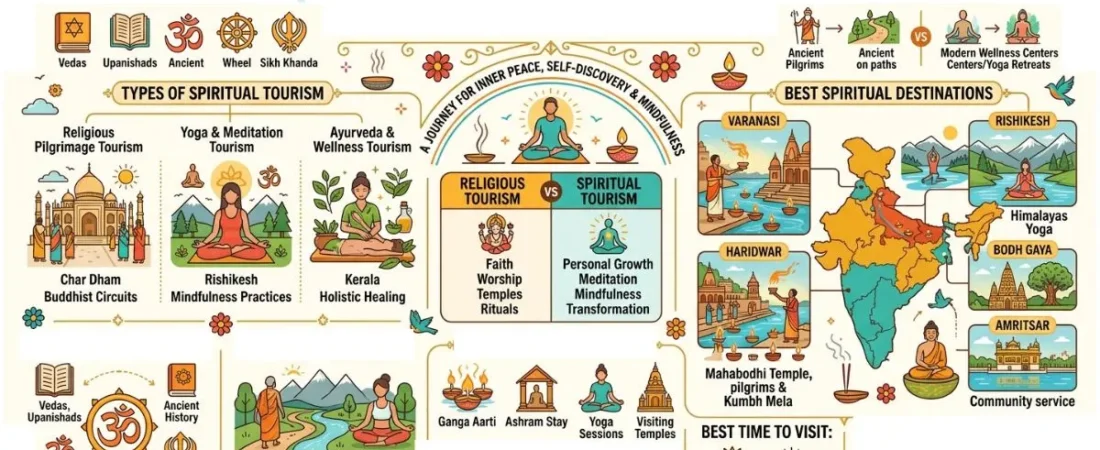
Spiritual Tourism in India represents a journey beyond traditional sightseeing, allowing travelers to explore the country’s ancient traditions, sacred locations, and meaningful cultural experiences. Unlike regular vacations, spiritual travel focuses on inner peace, self-discovery, mindfulness, and personal transformation through practices like yoga, meditation, and wellness retreats. India has been a global center of spirituality for thousands of years, attracting visitors to places such as Varanasi, Rishikesh, and Bodh Gaya. From peaceful ashrams and sacred temples to pilgrimage journeys and holistic healing practices, India offers unique opportunities for travelers seeking balance, spiritual growth, and a deeper connection with its rich cultural heritage and ancient wisdom.
What Is Spiritual Tourism in India?
Spiritual tourism refers to travel activities focused on spiritual development, religious experiences, meditation, wellness, and the discovery of sacred cultural traditions. It combines travel with personal growth, emotional balance, and connection with ancient practices.
In India, spiritual tourism includes temple visits, pilgrimage journeys, yoga retreats, meditation programs, Ayurveda therapies, and stays at traditional ashrams. These experiences attract both domestic and international travelers searching for peace and self-awareness.
The difference between religious tourism and spiritual tourism is that religious tourism is often centered around faith-based visits to sacred sites, while spiritual tourism includes broader experiences related to mindfulness, wellness, philosophy, and personal transformation.
Why India Is Famous for Spiritual Tourism
India is considered one of the world’s most important spiritual destinations because of its ancient history, diverse religions, and philosophical traditions. The country has contributed globally recognized practices such as yoga, meditation, and Ayurveda.
For centuries, seekers, monks, and travelers have visited India to learn about enlightenment, consciousness, and spiritual practices. Ancient texts such as the Vedas and Upanishads reflect India’s long relationship with spirituality and self-discovery.
The country’s spiritual landscape includes Hindu temples, Buddhist monasteries, Sikh shrines, Jain pilgrimage sites, and peaceful wellness centers, creating a unique environment for meaningful travel.
The popularity of Spiritual Tourism in India continues to increase as modern travelers look for experiences that support mental wellness, mindfulness, and a balanced lifestyle.
History and Evolution of Spiritual Tourism in India
Spiritual travel in India has existed for thousands of years through pilgrimage traditions. Ancient pilgrims traveled long distances to visit temples, rivers, mountains, and sacred locations connected with spiritual beliefs.
Places such as Varanasi, Haridwar, and the Himalayan regions have remained important spiritual centers because of their historical and cultural significance.
In the modern era, spiritual tourism has evolved beyond traditional pilgrimages. Travelers now combine spirituality with yoga retreats, meditation programs, wellness treatments, cultural exploration, and sustainable travel experiences.
Today, India is transforming from a pilgrimage destination into a global hub for holistic and experiential tourism.
Types of Spiritual Tourism in India
Religious Pilgrimage Tourism
Religious pilgrimage is one of the oldest forms of spiritual travel in India. Millions of visitors travel every year to sacred destinations to participate in rituals, prayers, festivals, and religious ceremonies.
Popular pilgrimage routes include Char Dham Yatra, Jyotirlinga temples, Buddhist pilgrimage circuits, Sikh spiritual destinations, and ancient temple towns.
These journeys provide travelers with opportunities to experience India’s traditions, architecture, festivals, and spiritual customs.
Yoga and Meditation Tourism
India is widely recognized as the birthplace of yoga, making it a leading destination for yoga tourism. Travelers from around the world visit India to learn traditional yoga techniques, meditation methods, and mindfulness practices.
Rishikesh, often known as the “Yoga Capital of the World,” attracts thousands of visitors through yoga teacher training programs, meditation retreats, and spiritual workshops.
Meditation retreats across India provide peaceful environments where visitors can disconnect from daily stress and focus on mental clarity.
Ayurveda and Wellness Tourism
Ayurveda tourism is another important part of India’s spiritual and wellness travel sector. Ayurveda focuses on natural healing methods, lifestyle balance, nutrition, and holistic health.
Kerala is especially famous for Ayurveda resorts and wellness centers offering traditional therapies, rejuvenation programs, and personalized treatments.
Many international travelers combine Ayurveda experiences with meditation and yoga to achieve complete physical and mental wellness.
Religious Tourism vs Spiritual Tourism
| Religious Tourism | Spiritual Tourism |
| Focuses on faith and worship | Focuses on personal growth |
| Temple visits and pilgrimages | Meditation, yoga, wellness |
| Community traditions | Individual transformation |
| Religious rituals | Mindfulness practices |
Best Spiritual Destinations in India
Varanasi: The Spiritual Capital of India
Varanasi is one of the oldest continuously inhabited cities in the world and holds immense spiritual importance. Located on the banks of the River Ganges, the city attracts visitors seeking cultural experiences, religious ceremonies, and spiritual knowledge.
The famous Ganga Aarti ceremony creates a powerful spiritual atmosphere where visitors witness traditional rituals performed along the river.
The Kashi Vishwanath Temple, ancient ghats, and spiritual traditions make Varanasi one of the most significant travel destinations in India.
Rishikesh: The Global Yoga Destination
Rishikesh is among the most popular spiritual destinations in India because of its connection with yoga, meditation, and Himalayan spirituality.
Located near the foothills of the Himalayas and the River Ganges, the city offers numerous ashrams, meditation centers, and wellness retreats.
Travelers visit Rishikesh to practice yoga, attend spiritual programs, experience river ceremonies, and explore peaceful natural surroundings.
Haridwar: Gateway to Sacred Traditions
Haridwar is another important spiritual destination located along the holy River Ganges. It is famous for religious festivals, pilgrimage traditions, and the evening Ganga Aarti.
The city becomes especially significant during Kumbh Mela, one of the largest spiritual gatherings in the world.
Haridwar allows visitors to experience traditional Indian rituals and understand the cultural importance of sacred rivers.
Bodh Gaya: Center of Buddhist Spirituality
Bodh Gaya is one of the most important Buddhist pilgrimage sites because it is associated with Buddha’s enlightenment.
The Mahabodhi Temple attracts Buddhist monks and spiritual seekers from different countries who come for meditation, prayer, and reflection.
The peaceful environment makes Bodh Gaya an important destination for Buddhist tourism in India.
Amritsar: A Sacred Sikh Destination
Amritsar is famous worldwide for the Golden Temple, one of the most respected Sikh spiritual sites.
The temple represents equality, service, and devotion. Visitors experience peaceful surroundings, community service, and Sikh traditions.
Amritsar demonstrates India’s spiritual diversity and cultural harmony.
Growth of Spiritual Tourism in India
Spiritual tourism in India has grown beyond traditional pilgrimages and now includes yoga, meditation, wellness retreats, Ayurveda, and cultural experiences. Modern travelers are increasingly looking for meaningful journeys that provide peace, self-discovery, and connection with ancient traditions.
Destinations like Varanasi, Rishikesh, Ayodhya, Bodh Gaya, and Haridwar are becoming global spiritual hubs due to improved tourism infrastructure and growing interest in wellness travel. India’s combination of spirituality, heritage, and holistic practices continues to attract visitors from around the world.
Spiritual Experiences to Have in India
A spiritual journey in India is not limited to visiting famous places. Many travelers seek immersive experiences that create personal connections.
Participating in a Ganga Aarti ceremony, staying in an ashram, practicing meditation, joining yoga sessions, and exploring ancient temples are some of the most meaningful spiritual experiences.
Many visitors also explore traditional festivals, local customs, and wellness practices to understand India’s spiritual heritage more deeply.
Best Time for Spiritual Tourism in India
The ideal time for spiritual travel in India depends on the destination and type of experience. Generally, October to March is considered suitable because the weather remains comfortable in most regions.
The Himalayan spiritual destinations are best visited during warmer months, while cities like Varanasi and Rishikesh can be explored throughout much of the year.
Travelers planning pilgrimage journeys should also consider festival periods because many spiritual events attract large crowds.
How to Plan a Spiritual Journey in India
Planning a spiritual journey requires understanding personal goals, preferred experiences, budget, and destinations. Some travelers focus on meditation and wellness, while others prefer pilgrimage routes and cultural exploration.
Choosing authentic accommodations such as ashrams, wellness centers, and spiritually significant locations can improve the overall experience.
Respecting local traditions, dressing appropriately at religious sites, and learning about cultural practices helps travelers create meaningful connections during their journey.
Future of Spiritual Tourism in India
The future of Spiritual Tourism in India is closely connected with the global growth of wellness travel and experiential tourism. More travelers are searching for destinations that provide mental peace, cultural learning, and personal transformation.
India’s combination of ancient traditions, diverse spiritual sites, yoga practices, and wellness systems gives it a unique position in the international tourism market.
With improved infrastructure, digital travel services, and sustainable tourism initiatives, spiritual destinations in India are becoming more accessible to global visitors.
Conclusion
Spiritual Tourism in India offers travelers a unique opportunity to explore sacred destinations, ancient traditions, yoga, meditation, and wellness experiences. From Varanasi and Rishikesh to Bodh Gaya and Amritsar, India provides transformative journeys that connect people with spirituality, culture, and inner peace. As global interest in meaningful travel grows, India remains one of the world’s most powerful spiritual tourism destinations.
FAQ’s
What is Spiritual Tourism in India?
Spiritual Tourism in India refers to travel experiences focused on spirituality, meditation, yoga, pilgrimage, wellness, and exploring India’s sacred cultural heritage. It allows travelers to seek inner peace while experiencing ancient traditions.
How much does a spiritual trip to India cost?
The cost of a spiritual trip to India depends on the destination, duration, and type of experience. A budget spiritual journey may cost around $30–$50 per day, while yoga and meditation retreats can range from $200–$800 or more for a week depending on facilities and services.
Can foreigners visit Indian ashrams?
Yes, foreigners can visit Indian ashrams and participate in yoga, meditation, and spiritual programs. Many ashrams in places like Rishikesh, Kerala, and the Himalayas welcome international visitors with structured stays and retreats.
Which is the best spiritual retreat in India?
Rishikesh is considered one of the best destinations for spiritual retreats because of its yoga centers, meditation programs, and Himalayan surroundings. Other popular options include Kerala Ayurveda retreats and Himalayan wellness centers.
How many days are enough for a spiritual journey in India?
A 7–14-day spiritual journey is usually enough to experience yoga, meditation, sacred destinations, and cultural activities. Longer stays of several weeks are ideal for deeper retreats and personal transformation.