
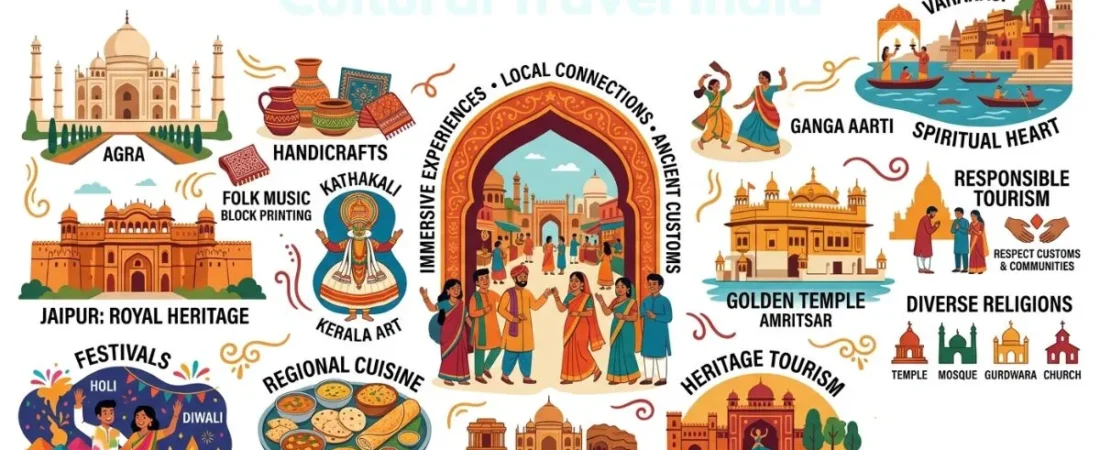
India is a land where history, traditions, and vibrant cultures come together to create unforgettable travel experiences. From magnificent forts and ancient temples to colorful festivals and bustling local markets, every destination reveals a unique chapter of the country’s rich heritage. Cultural Travel India offers more than sightseeing—it allows you to connect with local communities, discover timeless customs, and experience authentic traditions preserved for centuries. Whether you’re exploring UNESCO World Heritage Sites, enjoying heritage tourism, tasting regional cuisine, or witnessing traditional festivals, India promises an immersive journey unlike any other. This guide highlights the best cultural and historical places to visit, helping you plan a meaningful adventure across one of the world’s most diverse destinations.
What Is Cultural Travel India?
Cultural Travel India is about experiencing the country’s living heritage rather than simply visiting tourist attractions. It focuses on understanding local customs, architecture, art, music, food, festivals, and traditions that have evolved over thousands of years.
Unlike conventional holidays, cultural travel encourages meaningful interactions with local people. Staying in heritage hotels, joining guided heritage walks, attending cultural performances, or participating in traditional festivals creates memorable experiences that reveal India’s true character beyond its famous landmarks.
Why India Is One of the World’s Best Cultural Destinations
Few countries offer the cultural diversity found in India. More than twenty officially recognized languages, numerous religions, and centuries of royal dynasties have shaped a nation filled with remarkable traditions and architectural wonders.
From snow-covered Himalayan monasteries to ancient temples in Tamil Nadu, every state has developed its own customs, cuisine, clothing, and artistic traditions. This extraordinary diversity allows travelers to experience many cultures within a single country.
Delhi: Where Ancient History Meets Modern India
Delhi perfectly introduces travelers to India’s rich cultural heritage. The city blends Mughal architecture, colonial landmarks, bustling bazaars, and modern neighborhoods into one fascinating destination.
Historic sites such as the Red Fort, Humayun’s Tomb, and Qutub Minar showcase centuries of architectural brilliance. Exploring Chandni Chowk, tasting authentic street food, and visiting traditional markets provide an authentic glimpse into everyday life.
Jaipur: Experience Rajasthan’s Royal Heritage
Known as the Pink City, Jaipur showcases the grandeur of Rajasthan’s royal history. Majestic palaces, colorful streets, and centuries-old traditions make it one of India’s finest cultural destinations.
Amber Fort, City Palace, and Hawa Mahal reveal the artistic excellence of Rajput architecture. Visitors can also experience block printing, gemstone craftsmanship, folk music, and traditional Rajasthani cuisine while exploring the city’s vibrant culture.
Agra: Beyond the Taj Mahal
Although the Taj Mahal attracts millions every year, Agra offers much more than its famous monument. The city’s Mughal heritage includes magnificent forts, gardens, and historical sites that reflect one of India’s greatest empires.
Walking through Agra Fort and visiting local marble workshops helps travelers understand the incredible craftsmanship that continues to preserve Mughal artistic traditions.
Varanasi: India’s Spiritual Heart
Varanasi is among the oldest continuously inhabited cities in the world and remains one of India’s most sacred destinations. Life along the River Ganges revolves around centuries-old religious rituals that continue unchanged today.
Watching the evening Ganga Aarti, exploring narrow temple-lined streets, and taking a sunrise boat ride offer profound cultural experiences that cannot be replicated elsewhere.
Kerala: Culture Surrounded by Natural Beauty
Kerala combines breathtaking landscapes with centuries of cultural traditions. The state’s peaceful backwaters, historic churches, ancient temples, and colonial towns create an enriching travel experience.
Visitors can enjoy Kathakali dance performances, witness traditional martial arts demonstrations, explore spice plantations, and stay in family-run homestays that offer authentic local hospitality.
Khajuraho: A Masterpiece of Ancient Architecture
The UNESCO-listed temples of Khajuraho demonstrate India’s remarkable architectural and artistic achievements. Built between the 10th and 12th centuries, these temples feature intricate carvings that celebrate spirituality, daily life, and human creativity.
Their exceptional craftsmanship continues to attract historians, photographers, and cultural travelers from around the world.
Amritsar: Faith, Hospitality, and History
Amritsar offers a unique cultural experience centered around Sikh traditions and hospitality. The Golden Temple welcomes visitors from every religion while serving thousands of free meals daily through one of the world’s largest community kitchens.
Nearby historical sites such as Jallianwala Bagh provide important insights into India’s struggle for independence and national identity.
Discover India’s UNESCO World Heritage Sites
India is home to dozens of UNESCO World Heritage Sites that preserve its extraordinary cultural and historical legacy. These monuments represent remarkable achievements in architecture, engineering, religion, and art.
From Ajanta and Ellora Caves to Fatehpur Sikri and Hampi, each destination tells a unique chapter of India’s rich past while showcasing exceptional craftsmanship that has survived for centuries.
Experience India’s Festivals
Festivals offer one of the most exciting ways to experience India. Celebrations fill streets with music, colors, traditional clothing, dance, and religious ceremonies throughout the year.
Diwali illuminates entire cities with lamps and fireworks, while Holi transforms neighborhoods into vibrant celebrations of color. Regional festivals such as Onam, Durga Puja, Pushkar Camel Fair, and Pongal introduce travelers to local traditions that vary across different states.
Explore India’s Diverse Food Culture
Indian cuisine reflects the country’s cultural diversity just as much as its architecture. Every region offers distinct flavors, ingredients, and cooking techniques developed over generations.
Northern India is famous for rich curries and breads, while southern states specialize in rice-based dishes, seafood, and coconut flavors. Sampling authentic regional cuisine in local restaurants and family homes becomes an essential part of every cultural journey.
Traditional Arts, Music, and Handicrafts
India’s artistic heritage continues to thrive through skilled artisans who preserve ancient techniques. Handwoven textiles, pottery, wood carving, jewelry making, and hand-painted artworks showcase remarkable craftsmanship.
Classical dance forms such as Bharatanatyam and Kathak, along with traditional music performances, provide deeper insights into India’s cultural identity and artistic expression.
Religious Diversity and Sacred Places
India’s religious diversity is one of its defining characteristics. Hindu temples, Buddhist monasteries, Sikh gurdwaras, Islamic mosques, Christian churches, and Jain temples often exist within the same city.
Respectfully visiting these sacred places allows travelers to understand the spiritual traditions that have shaped Indian society for thousands of years.
Authentic Cultural Experiences Beyond Tourist Attractions
The most rewarding journeys often happen away from crowded landmarks. Visiting rural villages, joining local cooking classes, attending artisan workshops, or participating in traditional farming activities creates meaningful connections with local communities.
These immersive experiences allow travelers to appreciate India’s living traditions while supporting local economies and preserving cultural heritage.
Responsible Cultural Tourism in India
Responsible tourism helps protect India’s remarkable heritage for future generations. Choosing locally owned accommodations, hiring certified local guides, respecting cultural customs, and supporting traditional artisans contribute directly to sustainable tourism.
Travelers should dress appropriately when visiting religious sites, ask permission before photographing people, and avoid disturbing religious ceremonies. These simple practices show respect while creating positive interactions with local communities.
Practical Tips for Cultural Travel India
Planning your Budget helps travelers enjoy a smoother cultural journey. Researching local customs, understanding regional etiquette, and learning a few basic greetings demonstrate respect for local traditions.
The cooler months between October and March are generally considered the most comfortable for exploring many parts of India. Carrying modest clothing, comfortable walking shoes, and staying hydrated will make sightseeing more enjoyable, especially when visiting historical monuments and religious sites.
Suggested Itinerary for Cultural Travelers
A well-planned itinerary allows visitors to experience India’s diverse heritage without feeling rushed. Beginning in Delhi provides historical context before continuing to Agra and Jaipur, collectively known as the Golden Triangle.
Travelers with additional time can continue to Varanasi for spiritual experiences, Kerala for traditional arts and natural beauty, and Hampi or Khajuraho to discover some of India’s most remarkable archaeological treasures.
Internal and External Resources
For a complete overview of planning your journey, explore your India Travel Guide pillar page and related destination guides on your website to help readers continue their travel planning.
For reliable travel information and heritage details, consult high-authority sources such as the UNESCO World Heritage Centre, the Ministry of Tourism, Government of India, and the Archaeological Survey of India, which provide updated information on monuments, conservation efforts, and visitor guidelines.
Conclusion
India offers an extraordinary combination of history, spirituality, architecture, art, festivals, and local traditions that few destinations can match. Whether you explore magnificent forts, ancient temples, vibrant cities, or peaceful villages, every journey reveals another layer of the country’s remarkable heritage. Cultural Travel India is more than visiting famous landmarks—it’s about connecting with authentic experiences, understanding diverse traditions, and creating lasting memories that stay with you long after your trip ends.
FAQ’s
What is Cultural Travel India?
Cultural Travel India focuses on exploring the country’s heritage, traditions, architecture, festivals, cuisine, arts, and local communities through authentic travel experiences.
Which cities are best for cultural travel India?
Delhi, Jaipur, Agra, Varanasi, Amritsar, Kochi, Udaipur, Mysuru, and Khajuraho are among the best destinations for discovering India’s cultural and historical heritage.
When is the best time to visit India for cultural tourism?
October to March offers pleasant weather across most regions, making it the ideal season for sightseeing, festivals, and exploring historical monuments.
Is India suitable for first-time cultural travelers?
Yes. Popular destinations such as the Golden Triangle provide excellent infrastructure, experienced local guides, and numerous cultural attractions that are ideal for first-time visitors.
How can travelers experience authentic Indian culture?
Staying in heritage hotels, visiting local markets, joining cooking classes, attending festivals, participating in heritage walks, and interacting respectfully with local communities provide authentic cultural experiences beyond traditional sightseeing.