
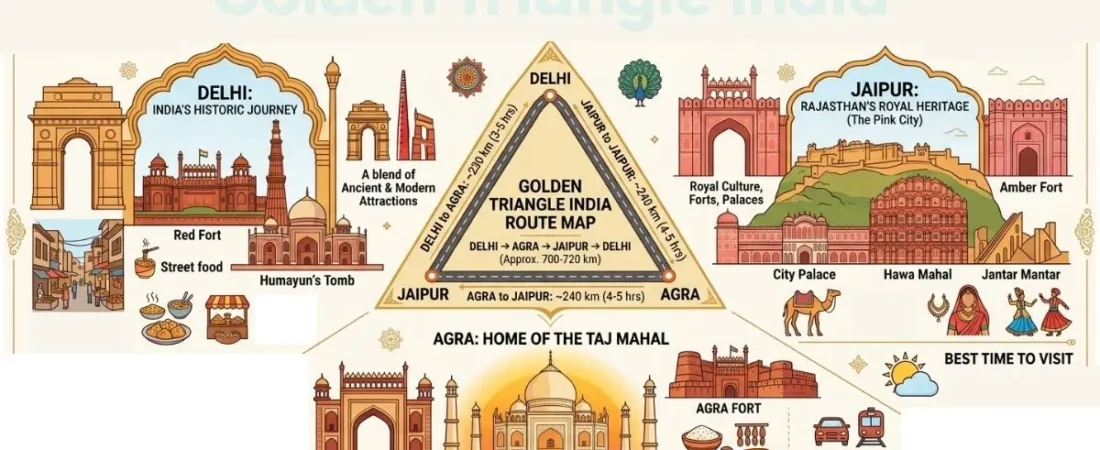
The Golden Triangle India is one of the most iconic travel circuits, connecting the historic cities of Delhi, Agra, and Jaipur. This remarkable journey offers a perfect blend of India’s rich heritage, vibrant culture, and architectural wonders. From exploring ancient Mughal architecture and UNESCO-listed monuments to experiencing traditional markets, local cuisine, and royal Rajasthan heritage, travelers discover the diverse beauty of North India. The route includes world-famous attractions like the Taj Mahal, Red Fort, and Amber Fort, making it an ideal choice for first-time visitors. With its unique combination of history, culture, and unforgettable experiences, the Golden Triangle India provides a complete introduction to India’s timeless charm.
What Is the Golden Triangle India Route?
The Golden Triangle India refers to the famous tourist circuit connecting Delhi, Agra, and Jaipur. These three destinations are located in northern India and represent three different aspects of Indian history and culture.
Delhi represents India’s political and historical heart, combining ancient monuments with modern city life. Agra showcases the glory of the Mughal Empire through iconic landmarks like the Taj Mahal. Jaipur introduces travelers to Rajasthan’s royal heritage through magnificent forts, palaces, and traditional markets.
The usual route begins in Delhi, continues south to Agra, and then moves west toward Jaipur before returning to Delhi. Each section of the journey offers a completely different experience.
This combination of Mughal history, Rajput architecture, and modern Indian culture is what makes the circuit internationally recognized.
Golden Triangle India Route Map: Delhi → Agra → Jaipur → Delhi
The Golden Triangle India route creates a travel circuit connecting three of North India’s most iconic destinations: Delhi, Agra, and Jaipur. Most travelers begin their journey in Delhi, travel south to Agra to experience the Taj Mahal, continue west toward Jaipur for Rajasthan’s royal heritage, and finally return to Delhi.
Travel Route:
Delhi → Agra → Jaipur → Delhi
Approximate Distance & Travel Time:
Delhi to Agra
Distance: Around 230–233 km
Travel Time: Approximately 3–5 hours by road
Agra to Jaipur
Distance: Around 240 km
Travel Time: Approximately 4–5 hours by road
Jaipur to Delhi
Distance: Around 270 km
Travel Time: Approximately 5–6 hours by road
The entire circuit covers around 700–720 km and can usually be completed comfortably in 5–7 days.
Delhi: The Beginning of India’s Historic Journey
Delhi is usually the starting point because it provides a fascinating introduction to India’s history. The city has been shaped by several dynasties, creating a unique combination of ancient and modern attractions.
Visitors can explore the impressive Red Fort, the towering Qutub Minar, Humayun’s Tomb, India Gate, and the historic Jama Masjid.
Old Delhi offers a completely different atmosphere with narrow streets, traditional markets, and famous Indian street food. Walking through Chandni Chowk allows travelers to experience the energy, flavors, and traditions of everyday Indian life.
Beyond historical landmarks, Delhi also offers modern shopping areas, museums, art galleries, and restaurants representing different regions of India.
Agra: Discover the Beauty of the Taj Mahal
Agra is the highlight of many travelers’ journeys because it is home to the Taj Mahal, one of the world’s most recognizable monuments.
Built by Mughal Emperor Shah Jahan in memory of his wife Mumtaz Mahal, the Taj Mahal represents extraordinary craftsmanship, symmetry, and architectural beauty.
Most visitors prefer seeing the monument during sunrise because the changing light creates a memorable experience and allows travelers to avoid some of the larger crowds.
However, Agra offers much more than the Taj Mahal. Agra Fort, another UNESCO World Heritage Site, reveals the power and lifestyle of Mughal rulers. Fatehpur Sikri, located near Agra, provides another glimpse into Mughal history and architecture.
Travelers can also explore local markets selling marble handicrafts, traditional artwork, and regional products.
Jaipur: Experience Rajasthan’s Royal Heritage
Jaipur, known as the Pink City, is where travelers experience the royal culture of Rajasthan. The city is famous for its grand forts, colorful markets, traditional clothing, jewelry, and historic palaces.
Amber Fort is one of Jaipur’s most impressive attractions, featuring detailed artwork, large courtyards, and beautiful views of the surrounding hills.
Other important landmarks include Hawa Mahal, City Palace, Jantar Mantar, and Nahargarh Fort.
Jaipur is also a destination for cultural experiences. Visitors can enjoy authentic Rajasthani cuisine, explore local bazaars, purchase handcrafted products, and experience the hospitality that Rajasthan is known for.
Why Should You Visit the Golden Triangle?
The biggest attraction of this route is the variety of experiences available within a short distance. Travelers do not need several weeks to experience some of India’s most famous destinations.
The journey includes UNESCO World Heritage Sites, royal palaces, ancient forts, religious landmarks, local bazaars, and traditional food experiences.
History lovers can explore centuries-old monuments, photographers can capture incredible architecture, and food lovers can discover regional cuisines from different parts of North India.
Another reason travelers choose this route is convenience. The cities have excellent tourism infrastructure, including hotels, guides, transportation options, and sightseeing services.
Best Golden Triangle India Itinerary
3-Day Itinerary: Quick Highlights
A three-day journey is suitable for travelers with limited time.
The trip usually begins in Delhi with visits to major attractions before traveling to Agra for the Taj Mahal and Agra Fort. The final day focuses on Jaipur’s famous landmarks before returning.
This option covers the major highlights but leaves limited time for deeper cultural experiences.
5-Day Itinerary: The Most Popular Option
A five-day itinerary provides a comfortable balance between sightseeing and relaxation.
Day one focuses on Delhi attractions and local experiences.
Day two includes travel to Agra, visiting the Taj Mahal and Agra Fort.
Day three continues toward Jaipur with stops at historical attractions along the way.
Days four and five allow visitors to explore Jaipur’s forts, palaces, markets, and cultural experiences before departure.
Many organized tours follow a similar structure because it allows travelers to experience the major attractions without rushing.
7-Day Itinerary: The Complete Experience
A seven-day journey is ideal for travelers who want a slower pace.
Extra time allows visitors to explore hidden markets, enjoy traditional meals, visit additional monuments, and experience local culture.
Travelers can also include nearby attractions such as Ranthambore National Park, known for wildlife experiences, or extend their journey toward other Rajasthan destinations.
Best Time to Visit the Golden Triangle
The best time to visit is generally between October and March when temperatures are comfortable for sightseeing.
Winter months are especially popular because travelers can comfortably explore forts, markets, and outdoor monuments.
April to June can be extremely hot, especially in Agra and Jaipur. Visitors traveling during this period should plan sightseeing during early mornings and evenings.
The monsoon season from July to September brings occasional rainfall but can offer fewer crowds and greener landscapes.
How to Travel Between Delhi, Agra, and Jaipur
Travelers can choose different transportation options depending on budget and comfort.
Private cars are one of the most convenient choices because they allow flexibility and direct travel between destinations.
Trains are another popular option, especially between Delhi and Agra. India’s railway network connects major tourist destinations efficiently.
Guided tours are preferred by many international visitors because they include transportation, accommodation assistance, and local expertise.
Golden Triangle India Travel Cost
The total cost depends on travel style, accommodation, transportation, and activities.
Budget travelers can complete the journey using affordable hotels, local restaurants, and public transportation.
Mid-range travelers usually choose comfortable hotels, private transportation, and guided sightseeing.
Luxury travelers can enjoy heritage hotels, private guides, premium dining, and personalized experiences.
Planning your trip on a budget before traveling helps create a smoother experience without unexpected expenses.
Luxury vs Budget Experience
A luxury journey focuses on comfort and exclusive experiences. Travelers can stay in heritage properties, enjoy private tours, and experience traditional hospitality.
Budget travel focuses on affordability while still allowing visitors to experience major attractions.
Both options provide memorable experiences because the real value of this journey comes from the culture, history, and people encountered along the way.
Hidden Experiences Beyond Famous Monuments
Although monuments are the main attraction, some of the best memories come from smaller experiences.
Exploring local markets, trying traditional food, meeting artisans, and discovering neighborhood streets provide a deeper understanding of Indian culture.
In Delhi, visitors can explore traditional food streets. In Agra, they can discover local crafts. In Jaipur, they can experience Rajasthan’s artistic traditions.
These experiences transform a sightseeing trip into a meaningful cultural journey.
Is the Golden Triangle Safe for First-Time Visitors?
The route is one of the most visited tourist circuits in India and has strong tourism infrastructure.
First-time visitors should follow basic travel practices such as keeping valuables secure, using trusted transportation, respecting local customs, and choosing reliable guides, especially when exploring destinations connected to Spiritual Tourism.
Travelers should also stay hydrated, carry necessary documents, and plan sightseeing schedules according to weather conditions.
With proper preparation, this route can be comfortable and enjoyable for solo travelers, couples, families, and older visitors.
Common Mistakes Travelers Should Avoid
Many first-time visitors try to complete the entire route too quickly. Spending enough time in each city creates a much better experience.
Another common mistake is focusing only on famous monuments. The culture, food, and local interactions are equally important parts of the journey.
Travelers should also avoid visiting attractions without checking opening times, weather conditions, and local travel requirements.
Conclusion
The Golden Triangle India is more than a sightseeing route; it is a journey through India’s history, architecture, traditions, and culture. From Delhi’s historic landmarks to Agra’s Taj Mahal and Jaipur’s royal heritage, this route offers a complete introduction to the diversity of India. With proper planning, itinerary selection, and travel preparation, the Golden Triangle India can become one of the most memorable experiences for any traveler.
FAQ’s
How many days are enough for the Golden Triangle India?
Five to seven days are usually ideal because travelers can explore Delhi, Agra, and Jaipur comfortably without rushing between destinations.
Which cities are included in the Golden Triangle India?
The route includes Delhi, Agra, and Jaipur. These cities are connected because of their historical importance and cultural significance.
Is this route good for first-time visitors to India?
Yes, it is considered one of the best introductions to India because it combines famous landmarks, cultural experiences, and convenient transportation.
What is the most famous attraction on this route?
The Taj Mahal in Agra is the most internationally recognized attraction, but Delhi’s monuments and Jaipur’s royal architecture are equally important.
Can I visit the Golden Triangle on a budget?
Yes, travelers can explore the route affordably by choosing budget accommodation, local transportation, and reasonably priced dining options.
What is the best month to visit?
October to March is generally considered the best period because the weather is more comfortable for sightseeing.