
Planning the Amarnath Yatra 2026 requires careful preparation, especially for pilgrims visiting the sacred Amarnath Cave in Jammu and Kashmir. This spiritual journey offers devotees an opportunity to seek blessings at the revered shrine associated with Lord Shiva while experiencing the breathtaking Himalayan landscape. Before travelling, pilgrims should understand the Amarnath Yatra dates, registration process, health certificate requirements, and available trekking routes. Knowing the difference between the Baltal and Pahalgam routes can also help you choose a journey that matches your fitness and schedule. This guide covers essential Amarnath registration, travel costs, safety measures, Amarnath trek preparation, accommodation, and practical tips to make your pilgrimage safer, smoother, and more meaningful.
Amarnath Yatra 2026 at a Glance
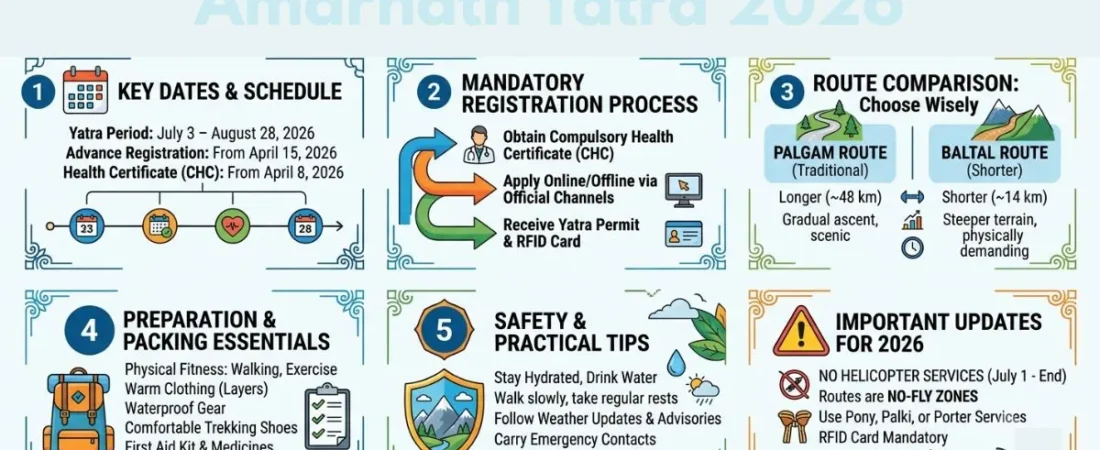
The 2026 Shri Amarnath pilgrimage is scheduled to begin on July 3 and conclude on August 28, 2026. The advance registration process started on April 15, while the required Compulsory Health Certificate became available from April 8, 2026, according to official and current 2026 information.
The pilgrimage takes place through the two principal approaches, Baltal and Pahalgam. Both routes lead pilgrims toward the Amarnath Cave, but their distance, terrain, duration, and physical demands differ considerably.
A particularly important 2026 update is the suspension of helicopter services for pilgrim travel. The J&K government declared the Pahalgam and Baltal pilgrimage corridors No-Fly Zones from July 1 until the completion of the Yatra. Pilgrims therefore need to plan for travel on foot or through authorized pony and palki services.
Amarnath Yatra 2026 Dates and Schedule
The main pilgrimage period runs from July 3 to August 28, 2026. This 57-day schedule gives pilgrims flexibility when selecting their preferred travel date, subject to registration availability and the rules applicable to their chosen route.
Registration opened on April 15, 2026. The medical process is also important because the health certificate required for registration must meet the Shrine Board’s current validity requirements. Pilgrims should therefore arrange the CHC before attempting to complete registration.
Because Amarnath is located in a high-altitude Himalayan environment, the official schedule should not be interpreted as a guarantee that the trail will remain open every day. Rain, landslides, snow, or other safety concerns can lead authorities to temporarily restrict movement.
Amarnath Yatra Registration 2026
Registration is compulsory for pilgrims travelling to the Holy Cave. The process is designed to record the pilgrim’s identity, travel date, route, and health eligibility before entry to the pilgrimage area.
For 2026, registration is available through the designated channels specified by the Shri Amarnathji Shrine Board. Pilgrims should provide accurate identity and contact information and carefully select the route and date they intend to use.
The registration process should never be completed through an unknown travel website simply because it promises a guaranteed permit. Use official or authorized channels and verify the current instructions before paying any registration or service fee.
Documents Required for Amarnath Yatra 2026
Proper documentation can prevent unnecessary delays at the registration and access points. Pilgrims should keep their valid identity proof, registration details, Yatra permit, health certificate, and other documents required by the Shrine Board safely accessible.
The Compulsory Health Certificate (CHC) is especially important. It is not simply an optional medical recommendation; it forms part of the eligibility and registration process for the pilgrimage.
Keep digital copies of important documents as a backup, but carry the required physical documents wherever the official instructions require them. A waterproof document pouch is useful because rain and moisture are common concerns on the mountain route.
Amarnath Yatra Health Certificate and Eligibility
The Compulsory Health Certificate confirms that a pilgrim has been medically assessed and is fit to undertake the demanding high-altitude journey. For 2026, the Shrine Board specifies the applicable CHC validity period and authorized medical process.
The official registration rules restrict participation based on age and pregnancy. Pilgrims should check the latest Shrine Board eligibility conditions before making non-refundable travel arrangements.
A health certificate should not be viewed as a formality. The journey involves altitude, prolonged walking, uneven terrain, cold conditions, and rapidly changing weather. Anyone with a medical concern should obtain professional medical advice before planning the trip.
Baltal vs Pahalgam Amarnath Yatra Route
The Baltal route and Pahalgam route are the two main approaches to the Amarnath Cave. Choosing between them is one of the most important decisions for a first-time pilgrim.
The Baltal route is the shorter approach, generally described as around 14 km to the Holy Cave, but its shorter distance comes with steeper and more demanding terrain. It can suit physically fit pilgrims who want a shorter trekking experience.
The Pahalgam route is considerably longer, generally around 48 km from the traditional base area to the cave. It takes more time but offers a more gradual pilgrimage experience and is often preferred by people who want to experience the traditional route.
Distance alone shouldn’t determine your decision. Your fitness, age, available time, weather conditions, and ability to manage high-altitude walking are more important factors when choosing the route.
| Feature | Baltal Route | Pahalgam Route |
| Approx. distance | Shorter | Longer |
| Terrain | Steeper | More gradual |
| Trek difficulty | Challenging | Long but comparatively gradual |
| Time required | Less | More |
| Best for | Fit pilgrims with limited time | Longer traditional pilgrimage |
| Starting area | Baltal | Nunwan/Pahalgam |
Which Amarnath Route Is Better?
For a physically fit pilgrim with limited time, the Baltal approach can be practical because it is considerably shorter. However, the steeper terrain can make the trek strenuous, particularly during the descent.
The Pahalgam approach is better suited to pilgrims who have more time and prefer a longer mountain journey. Families and first-time visitors should consider the physical ability of every member of their group rather than choosing a route simply because it looks easier online.
Your registered route should also match your travel plan. Always check the current Shrine Board instructions because access arrangements and route controls can change according to operational and security conditions.
Amarnath Trek Difficulty and Physical Preparation
The Amarnath trek can be physically demanding even for people who regularly walk or exercise. High altitude reduces the amount of oxygen available, while steep sections, cold weather, rain, and long walking hours can increase fatigue.
Begin preparing several weeks before the journey. Regular walking, stair climbing, and moderate endurance training can help your body adapt to sustained physical activity.
Don’t try to complete the trek by racing other pilgrims. Walk at a comfortable pace, drink water regularly, rest when necessary, and pay attention to unusual symptoms such as severe breathlessness, dizziness, persistent headache, or weakness.
Amarnath RFID Card and Yatra Permit
A valid registration is only one part of the access process. Registered pilgrims also need to follow the Shrine Board’s RFID and permit requirements before entering the designated pilgrimage route.
The RFID system helps authorities manage pilgrim movement and strengthens security arrangements. The Shrine Board advises pilgrims to wear their RFID card or tag during the Yatra and follow access-control instructions.
Keep the permit and identification details secure throughout the journey. Do not lend your permit or RFID identification to another person because these systems are connected to the registered pilgrim.
Helicopter Service for Amarnath Yatra 2026
One of the most important changes for Amarnath Yatra 2026 is that helicopter services for pilgrim travel are not available during the pilgrimage.
The competent authority declared all Amarnath Yatra routes, including the Baltal and Pahalgam axes, No-Fly Zones from July 1, 2026, until the completion of the pilgrimage. The official Shrine Board therefore advises pilgrims to reach the Holy Cave on foot or use pony and palki services.
This update matters because older articles and travel pages may still describe helicopter booking as an available option. Don’t rely on outdated pages offering helicopter tickets for the 2026 pilgrimage. Verify any major travel arrangement against the latest official Shrine Board notice.
How to Reach Amarnath Yatra Base Camps
Most pilgrims travel through Jammu or Srinagar before continuing toward their selected base camp. Your choice depends on your transport connection, itinerary, and selected route.
Pilgrims using the Baltal approach generally travel toward the Baltal and Sonmarg area. Those selecting the traditional Pahalgam approach continue toward Pahalgam and the Nunwan base area.
If you are travelling from another Indian city, Srinagar can provide a convenient air connection, while Jammu is an important rail and road gateway. Allow additional travel time during the pilgrimage season because traffic controls, security arrangements, and weather can affect road journeys.
Amarnath Yatra Cost and Budget
The total cost of the pilgrimage varies according to your starting city, transport, accommodation, food, route, and use of pony, palki, or porter services.
The standard registration fee is one component of the total expense. Your overall budget should also account for transportation to Jammu or Srinagar, local transfers, accommodation, meals, clothing, trekking equipment, and emergency expenses.
Don’t rely on old blog posts for current service prices. The Shrine Board publishes government-notified rates for services such as pony rides, porters, palkis, and accommodation, so check the latest official rates before finalizing your budget.
It is also wise to keep an emergency financial buffer. A weather-related delay can require an additional night, a change of transport, or other unexpected expenses.
Pony, Palki and Porter Services
Pony, palki, and porter services can be useful for pilgrims who cannot comfortably complete every section on foot. These services become particularly important in 2026 because helicopter travel for pilgrims is unavailable during the Yatra.
Use authorized services and check government-notified rates before making arrangements. Be cautious of intermediaries who promise special access, discounted permits, or a way around official procedures.
Pilgrims should also understand that using a pony or palki does not remove the challenges associated with altitude and mountain weather. You may still need to walk sections of the route and should remain prepared for changing conditions.
Amarnath Yatra Weather and Best Time to Travel
The official pilgrimage period falls during the summer and monsoon season, but conditions around the Amarnath Cave can remain cold and unpredictable. Rain, strong winds, slippery paths, and sudden changes in temperature can affect the trekking experience.
There is no single “perfect” date that guarantees ideal weather. Instead, choose your travel window based on available registration dates and remain flexible enough to adjust your itinerary if authorities issue a weather-related advisory.
The Shrine Board provides current weather information and pilgrimage updates. Checking official advisories immediately before leaving your accommodation is a sensible part of daily Yatra planning.
What to Pack for Amarnath Yatra
Packing for Amarnath should focus on protection, comfort, and low weight. Warm clothing is essential because temperatures can drop considerably at high altitude.
Carry waterproof protection, comfortable trekking shoes with good grip, spare socks, basic personal medicines, necessary documents, a power bank, a flashlight, and a waterproof bag for valuables.
Avoid carrying a heavy backpack filled with unnecessary items. Every extra kilogram becomes more noticeable during a long mountain walk.
Amarnath Yatra Safety Tips
Safety should take priority over reaching the cave quickly. Follow instructions from security personnel, medical teams, local authorities, and Shrine Board officials even when those instructions require you to change your original plan.
Never continue walking through an officially restricted route or attempt to bypass a safety barrier. Mountain weather can deteriorate rapidly, and a trail that appears manageable in clear weather may become dangerous during heavy rain.
Keep your group together, stay hydrated, rest when needed, and seek medical assistance if you experience serious symptoms. Don’t assume that severe altitude-related symptoms are simply part of the pilgrimage.
Accommodation and Langar Facilities
Accommodation is available around important transit points and base-camp areas, while organized langars provide food and other assistance during the pilgrimage season.
Demand can be high during busy periods, so pilgrims should plan accommodation rather than assuming that a room will always be available upon arrival.
Before travelling, check current arrangements through official sources because facilities, operating dates, prices, and access rules can change between seasons.
Amarnath Yatra Tips for First-Time Pilgrims
First-time pilgrims should begin with the paperwork rather than the packing. Confirm eligibility, arrange the CHC, complete registration, verify the selected route, and understand the RFID and permit requirements before travelling.
Next, prepare physically and mentally for a high-altitude journey. A shorter route is not automatically easier, and a longer route is not necessarily more difficult for every pilgrim.
Most importantly, leave flexibility in your itinerary. A pilgrimage in the Himalayas cannot be planned like an ordinary city holiday, and weather or administrative decisions can affect the route with little notice.
Common Mistakes to Avoid
One of the biggest mistakes is trusting outdated information. Amarnath arrangements change from year to year, and information about dates, helicopter services, registration, fees, and route conditions can quickly become obsolete.
Another mistake is purchasing services from unofficial websites. The official Shrine Board specifically provides current Yatra notices, authorized service information, government-notified rates, and pilgrim guidance.
Finally, don’t underestimate the physical challenge. Proper preparation, suitable clothing, good footwear, sufficient rest, and respect for weather advisories can make the difference between a stressful journey and a safer pilgrimage.
Conclusion
Amarnath Yatra 2026 is a spiritually significant Himalayan pilgrimage that requires careful preparation as well as devotion. Confirm your registration and CHC, choose the Baltal or Pahalgam route according to your fitness, carry appropriate clothing and documents, follow RFID and permit requirements, and monitor official weather updates. With helicopter services unavailable during the 2026 pilgrimage, plan around trekking or authorized pony and palki services. Most importantly, use the Shri Amarnathji Shrine Board for current information so your journey to the Holy Cave is safer, smoother, and better prepared.
FAQ’s
How to register for Amarnath Yatra 2026?
Register through the official Shri Amarnathji Shrine Board process after obtaining the required Compulsory Health Certificate (CHC) and submitting the necessary identity and registration documents.
How many days is the Amarnath Yatra in 2026?
The Amarnath Yatra 2026 is scheduled for 57 days, from July 3 to August 28, 2026.
Which route is best for Amarnath Yatra 2026?
The Baltal route is shorter but steeper, while the Pahalgam route is longer and more gradual. Choose according to your fitness, available time, and trekking ability.
Is there security in Amarnath Yatra 2026?
Yes. Extensive security, medical, access-control, and monitoring arrangements are in place along the pilgrimage routes to help protect pilgrims throughout the Yatra.
What is the cost of the Amarnath Yatra 2026?
The total cost depends on transportation, accommodation, food, and optional services such as pony or palki. The official registration fee is separate from these travel expenses.