
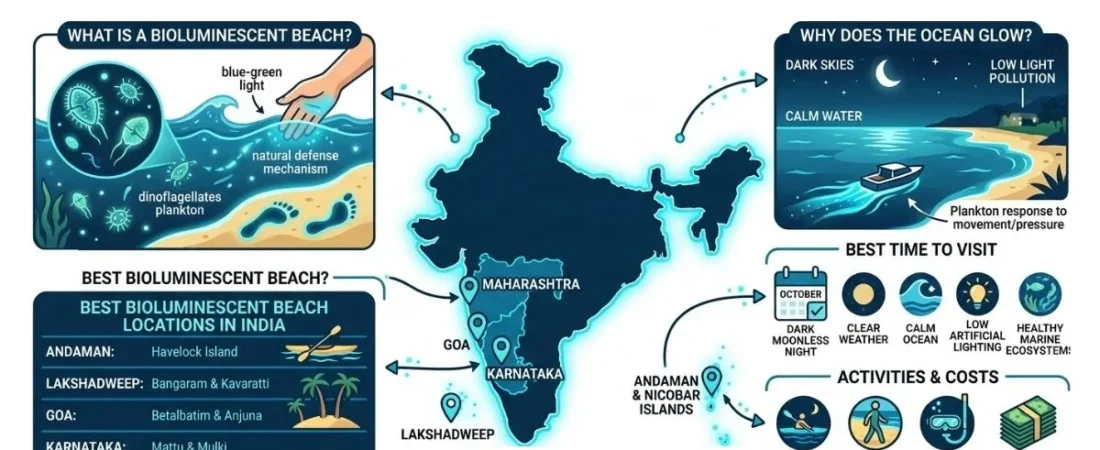
A Bioluminescent Beach in India offers a rare opportunity to witness the ocean glowing naturally after sunset. This magical phenomenon happens when tiny marine organisms called plankton release a blue-green light in response to movement in the water. Travelers visiting India’s coastline can discover this unique experience at destinations like Andaman, Lakshadweep, Goa, and Karnataka. The sight of glowing beaches in India creates a breathtaking atmosphere where waves sparkle like stars. Understanding the science behind marine bioluminescence, choosing the right season, and visiting locations with low light pollution can increase the chances of enjoying this unforgettable natural ocean glow experience. These beaches represent some of India’s most fascinating night beach experiences for nature lovers.
What Is a Bioluminescent Beach?
A bioluminescent beach is a shoreline where marine organisms produce natural light, causing seawater to glow when disturbed. When waves move, footsteps touch the sand, or a boat passes through the water, these tiny organisms release flashes of blue-green light.
The phenomenon occurs because of a chemical reaction inside living organisms. Marine microorganisms contain compounds such as luciferin and enzymes like luciferase, which create visible light when activated.
The most common organisms responsible for glowing beaches are dinoflagellates, a type of microscopic plankton found in oceans around the world. These organisms use light production as a natural defense mechanism against predators.
The glowing effect is sometimes called the “blue tears phenomenon” because the tiny flashes resemble glowing drops scattered across the sea surface.
Unlike regular beach experiences focused on sunsets and landscapes, bioluminescent beaches offer a completely different nighttime adventure where the ocean itself becomes the attraction.
Why Does the Ocean Glow at Night?
The glowing ocean phenomenon happens because millions of microscopic marine organisms gather in coastal waters. When these organisms sense movement or pressure, they produce a blue-green flash of light.
This reaction helps scientists understand marine ecosystems because bioluminescent organisms play an important role in ocean biodiversity. They exist naturally in many marine environments and become more visible when environmental conditions support their growth.
Several factors influence whether travelers can see glowing waves clearly:
Dark skies improve visibility because moonlight can reduce the contrast of the glow.
Calm water allows plankton activity to remain concentrated near the surface.
Low light pollution makes the natural blue glow easier to observe.
Suitable temperatures and nutrient-rich water support plankton growth.
Because these conditions constantly change, seeing bioluminescence requires some luck along with proper planning.
Best Bioluminescent Beach in India
India has several coastal destinations where visitors have reported glowing waters. Some locations are famous for regular sightings, while others experience seasonal appearances depending on marine conditions.
| Beach Destination | State/Region | Best Time | Main Experience |
| Havelock Island | Andaman and Nicobar Islands | November to February | Night kayaking and glowing waters |
| Bangaram Island | Lakshadweep | October to March | Peaceful island glow |
| Betalbatim Beach | Goa | October to March | Quiet shoreline experience |
| Mattu Beach | Karnataka | June to September | Local coastal adventure |
| Mulki | Karnataka | Monsoon and post-monsoon | Kayaking experience |
| Tarkarli Beach | Maharashtra | September to January | Hidden coastal beauty |
| Kavaratti Island | Lakshadweep | October to March | Lagoon-based experience |
| Morjim Beach | Goa | Seasonal sightings | Night beach walks |
Havelock Island, Andaman: India’s Famous Glowing Water Destination
Havelock Island, officially known as Swaraj Dweep, is one of the most recognized destinations for experiencing marine bioluminescence in India. The island is already famous for white sandy beaches, coral reefs, and tropical forests, but its nighttime beauty creates an entirely different experience.
The glowing effect around Havelock is linked to bioluminescent plankton activity in coastal waters and mangrove areas. Beaches such as Radhanagar Beach, Elephant Beach, and Beach No. 5 are often associated with sightings during suitable conditions.
One of the most memorable ways to experience this phenomenon is through night kayaking. Moving through dark mangrove channels while the water lights up around the kayak creates a rare connection with nature.
The best chances usually come during clear nights with little moonlight. Many travelers prefer visiting between November and February because calmer conditions and darker skies can improve visibility.
Bangaram Island, Lakshadweep: A Tropical Glow Experience
Bangaram Island is one of the most beautiful destinations for travelers searching for untouched beaches and crystal-clear waters. Located in Lakshadweep, this island offers a peaceful environment away from crowded tourist destinations.
The surrounding waters can display a beautiful blue glow when bioluminescent plankton are disturbed by waves or movement. The island’s low light pollution and clean marine environment make it an ideal location for observing natural ocean sparkle.
Visitors often combine the experience with snorkeling, island exploration, and relaxing beach activities.
Because Lakshadweep has limited tourism facilities compared with mainland destinations, travelers should plan transportation, permits, and accommodation before visiting.
Betalbatim Beach, Goa: A Peaceful Glowing Shoreline
Goa is known worldwide for beaches, nightlife, and coastal adventures, but some of its shores offer a completely different experience after sunset. Betalbatim Beach in South Goa is one of the locations where visitors have reported seeing blue glowing waves created by marine microorganisms.
Unlike crowded beaches filled with artificial lights, Betalbatim provides a quieter environment where travelers can enjoy the beauty of the ocean at night. When conditions are favorable, small movements in the water can trigger tiny flashes of blue-green light, making the shoreline appear magical.
The best time to visit is usually between October and March, especially during darker nights with less moonlight. Visitors should move away from bright beach lights and allow their eyes to adjust to darkness for a better chance of seeing the natural glow.
Anjuna Beach and Other Glowing Beaches in Goa
Apart from Betalbatim, some other Goan beaches have also experienced seasonal bioluminescence. Anjuna Beach and certain areas of South Goa may show glowing waves when marine conditions support plankton activity.
These sightings are usually unpredictable because bioluminescence depends on natural factors rather than tourism schedules. A beach may glow strongly one night and appear completely normal on another night.
Travelers visiting Goa for this experience should combine their trip with other coastal activities such as sunset views, local food experiences, water sports, and beach exploration. This makes the journey worthwhile even if the glow is not visible.
Mattu Beach, Karnataka: A Hidden Coastal Wonder
Mattu Beach near Udupi is one of Karnataka’s most recognized destinations for bioluminescent water experiences. This peaceful beach remains less commercial compared with famous tourist destinations, making it attractive for travelers searching for a quiet natural escape.
The glowing effect at Mattu Beach is linked to bioluminescent plankton activity. During suitable conditions, waves create a beautiful blue sparkle that becomes visible after sunset.
The beach is surrounded by coconut trees and coastal landscapes, creating a relaxing atmosphere for nighttime visits. The experience feels different from crowded tourist beaches because visitors can enjoy the glowing shoreline in a calm environment.
The ideal viewing period often depends on seasonal conditions, with post-monsoon months and darker nights generally offering better opportunities.
Mulki Beach, Karnataka: Experience Glow Through Kayaking
Mulki, located near Mangalore, has gained popularity among adventure travelers because of its combination of coastal beauty and water activities. The region is known for surfing, kayaking, and occasional bioluminescent experiences.
One of the most exciting ways to experience the glowing water phenomenon is through night kayaking. As the paddle moves through the water, tiny flashes of blue light may appear around the kayak, creating a memorable adventure.
The area’s connection between river and sea environments creates conditions where marine microorganisms can gather. Calm waters and low light pollution can improve the chances of observing the glow.
For travelers who want both adventure and nature, Mulki offers a unique alternative to traditional beach tourism.
Tarkarli Beach, Maharashtra: A Lesser-Known Bioluminescent Destination
Tarkarli Beach in Maharashtra is famous for clear waters, coral experiences, and peaceful coastal scenery. Some reports have highlighted seasonal bioluminescent activity in Maharashtra’s coastal areas, including beaches around Malvan and Tarkarli.
The experience here is usually dependent on environmental conditions. When plankton populations increase and the sea remains calm, visitors may observe glowing waves during nighttime walks.
Tarkarli is ideal for travelers who want to explore a less crowded beach destination while enjoying activities such as snorkeling, scuba diving, and local seafood experiences.
Kavaratti Island, Lakshadweep: Calm Lagoon Waters
Kavaratti Island is another beautiful destination in Lakshadweep where marine conditions can support bioluminescent displays. The island’s protected lagoon creates a calm environment where plankton activity may become more visible.
The combination of clear waters, limited light pollution, and tropical surroundings creates an ideal atmosphere for nature lovers. Visitors can enjoy peaceful beaches during the day and explore the island’s natural beauty after sunset.
Lakshadweep requires careful travel planning because permits, transportation, and accommodation availability can vary. However, the untouched environment makes it a rewarding destination.
Best Time to Visit Bioluminescent Beach in India
Planning the right time is one of the most important factors for experiencing glowing beaches. Unlike regular tourist attractions, bioluminescence depends on living organisms and environmental conditions.
Generally, October to March is considered a favorable period for many Indian destinations, especially islands and western coastal regions. Some Karnataka beaches may show activity during monsoon and post-monsoon periods because nutrient-rich waters can support plankton growth.
The best conditions usually include:
A dark or moonless night.
Clear weather.
Calm ocean conditions.
Low artificial lighting.
Healthy marine ecosystems.
A full moon can make the glow harder to notice because additional natural light reduces the contrast between the glowing plankton and the surrounding water.
How Much Does a Bioluminescent Beach Trip Cost?
The cost of visiting a Bioluminescent Beach in India depends completely on the destination, transportation, and type of experience.
A Goa trip can be budget-friendly because transportation and accommodation options are widely available. Travelers may spend around ₹5,000 to ₹20,000 depending on trip duration and comfort level.
Andaman trips usually require a higher budget because flights, island transfers, and activities increase expenses. A typical trip may range from ₹15,000 to ₹50,000 or more.
Lakshadweep is generally more expensive because of limited access, permits, and accommodation options. Travelers should plan a higher budget for island experiences.
Choosing local stays, traveling during off-season periods, and booking transportation early can help reduce costs.
Conclusion
A Bioluminescent Beach in India is a rare natural wonder where science and beauty come together to create an unforgettable travel experience. From Havelock Island and Bangaram Island to Goa, Karnataka, Maharashtra, and Lakshadweep, India offers several destinations where travelers may witness glowing ocean waves. By choosing the right season, respecting marine ecosystems, and keeping realistic expectations, visitors can enjoy one of nature’s most fascinating nighttime displays.
FAQ’s
Which is the best Bioluminescent Beach in India?
Havelock Island, Bangaram Island, Betalbatim Beach, and Mattu Beach are among the most popular destinations for experiencing glowing waters in India.
Does Betalbatim Beach glow every night?
No, Betalbatim Beach does not glow every night. Bioluminescence depends on natural conditions like plankton activity, water quality, weather, and moonlight.
Can bioluminescence be seen in India?
Yes, bioluminescence can be seen in India at places like Havelock Island, Lakshadweep, Goa, and beaches in Karnataka when conditions are suitable.
What is the most famous bioluminescent beach?
Havelock Island in the Andaman and Nicobar Islands is one of the most famous destinations in India for experiencing glowing waters, especially through night kayaking.
What month can you see bioluminescence?
The best time to see bioluminescence in India is usually between October and March, though the ideal months can vary by location and weather conditions.