
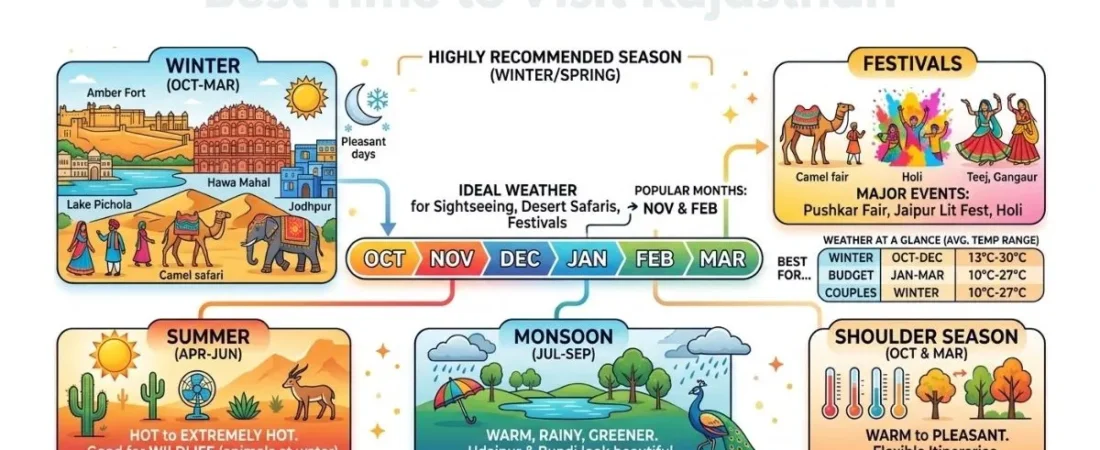
Rajasthan’s royal forts, golden deserts, colorful markets, and vibrant festivals attract travelers throughout the year. However, choosing the right season can make your trip far more comfortable and memorable. The Best Time to visit Rajasthan is generally between October and March, when pleasant weather makes sightseeing, desert safaris, and outdoor activities easier. November to February is especially popular for exploring Jaipur, Udaipur, Jodhpur, and Jaisalmer. Travelers seeking fewer crowds or lower costs can also consider the summer and monsoon seasons, depending on their itinerary. Understanding Rajasthan weather, travel seasons, Rajasthan festivals, and desert safari conditions will help you choose the right month for an enjoyable and well-planned Rajasthan trip.
When Is the Best Time to Visit Rajasthan?
For most travelers, October to March is the most comfortable travel window. Winter brings pleasant days, cooler evenings, clearer skies, and better conditions for exploring Jaipur, Udaipur, Jodhpur, Jaisalmer, Pushkar, and other popular destinations. Rajasthan Tourism also identifies winter as the preferred season while noting that the ideal timing depends on what you plan to do.
If you want one month that balances weather, sightseeing, festivals, and overall travel comfort, November is an excellent choice. February is another strong option, particularly for travelers who want comfortable weather and desert experiences. However, the right month depends on your itinerary, budget, and tolerance for heat.
Rajasthan Weather at a Glance
Rajasthan has a predominantly dry climate with significant seasonal temperature changes. Official Rajasthan Tourism data places January–March around 10°C–27°C, April–June around 24°C–45°C, July–September around 21°C–35°C, and October–December around 13°C–30°C.
The western desert can experience more extreme conditions than other parts of the state. That’s why choosing a travel month based only on a statewide average isn’t enough. Jaipur, Udaipur, Jaisalmer, Mount Abu, and Ranthambore can offer very different experiences during the same season.
| Season | Months | Weather | Crowds | Budget | Best For |
| Winter | October–March | Pleasant days, cold nights | High | Higher | Sightseeing, festivals, desert |
| Summer | April–June | Hot to extremely hot | Low | Lower | Wildlife, Mount Abu, budget travel |
| Monsoon | July–September | Warm, rainy, greener | Low–Moderate | Lower | Udaipur, Bundi, quiet trips |
| Shoulder | October & March | Warm to pleasant | Moderate | Moderate | Flexible itineraries |
Best Time to Visit Rajasthan by Season
Rajasthan in Winter: October to March
Winter is the most popular travel season because outdoor sightseeing becomes considerably easier. Days are usually pleasant, while nights can become cold, especially in desert areas such as Jaisalmer. Rajasthan Tourism notes that December and January can have a substantial difference between daytime and nighttime temperatures.
This period is ideal for a classic Rajasthan itinerary covering forts, palaces, markets, lakes, heritage hotels, camel safaris, and desert camps. The downside is that peak winter also brings higher demand, so popular hotels and experiences can become more expensive.
Rajasthan in Summer: April to June
Summer is the toughest season for conventional sightseeing. Temperatures can rise to around 48°C in parts of Rajasthan, particularly around the hotter desert regions. Long walks around forts and outdoor attractions can become uncomfortable during the afternoon.
Still, summer has advantages. Tourist numbers can fall, accommodation may offer better value, and wildlife trips can become interesting. Mount Abu, Kumbhalgarh, and Ranakpur are also more suitable alternatives because of their comparatively pleasant conditions.
Rajasthan in Monsoon: July to September
Monsoon creates a different side of Rajasthan. The southeastern and eastern areas receive more rainfall, while the western desert remains considerably drier. The Aravalli range contributes to these regional differences.
For travelers who don’t mind occasional rain, monsoon can mean fewer tourists, greener scenery, and potentially better accommodation value. Udaipur and Bundi are particularly attractive choices during this period, while Teej adds a cultural dimension to the season. RTDC also highlights Udaipur, Bundi, and Keoladeo National Park as interesting monsoon destinations.
Rajasthan Month-by-Month Travel Guide
Understanding each month is more useful than simply labeling winter as good and summer as bad. Your ideal travel month should match your preferred weather, budget, activities, and destinations.
| Month | Weather Feel | Crowds | Best For | Overall |
| January | Cool days, cold nights | High | Sightseeing, festivals | Excellent |
| February | Pleasant and dry | High | Desert, sightseeing | Excellent |
| March | Warming gradually | Moderate | Holi, heritage trips | Very Good |
| April | Hot and dry | Low | Wildlife, Mount Abu | Fair |
| May | Very hot | Very Low | Mount Abu, budget trips | Challenging |
| June | Extremely hot | Very Low | Wildlife, value travel | Challenging |
| July | Warm and rainy | Low | Udaipur, greenery | Good |
| August | Humid and rainy | Low | Teej, quiet travel | Good |
| September | Rain easing | Low–Moderate | Udaipur, landscapes | Very Good |
| October | Warm and improving | Rising | Sightseeing, festivals | Excellent |
| November | Pleasant and dry | High | All-round Rajasthan | Excellent |
| December | Cool days, cold nights | High | Desert, heritage, festivals | Excellent |
January: Cool Weather and Classic Sightseeing
January is one of the coolest months in Rajasthan. Days are suitable for forts, palaces, markets, and city walks, while mornings and evenings can feel particularly cold.
It’s an excellent choice for first-time visitors, although desert destinations require warm layers after sunset.
February: Excellent Weather for a Rajasthan Trip
February offers a strong combination of comfortable temperatures and outdoor-friendly conditions. It’s particularly attractive for Jaisalmer, desert camping, camel safaris, and long sightseeing days.
For many travelers, February provides one of the best overall combinations of weather and experiences.
March: Festivals and the Start of Warmer Weather
March marks the transition toward hotter conditions. Early March can remain comfortable, while temperatures become increasingly noticeable toward the end of the month.
Holi and Gangaur make this month particularly interesting for travelers seeking cultural experiences. It’s also useful for those who want slightly fewer crowds than the heart of winter.
April: Hot but Interesting for Wildlife
April brings increasingly intense heat, especially in western Rajasthan. Outdoor sightseeing should be scheduled during the early morning or evening.
The heat can nevertheless benefit wildlife travelers because animals may become easier to locate around water sources in some reserves. Plan a trip to India’s wildlife according to current park conditions rather than assuming that every reserve follows the same pattern.
May: Extreme Heat and Fewer Tourists
May is among the hottest months, making it unsuitable for travelers who want long days of sightseeing. Tourist numbers can be significantly lower, however.
Mount Abu and other elevated destinations become more attractive, while budget travelers may find better accommodation availability.
June: The Hottest Period
June continues the severe summer conditions, and pre-monsoon humidity can begin increasing. Desert travel and long daytime walks are particularly demanding.
If you must travel during June, prioritize cooler destinations, early-morning sightseeing, air-conditioned accommodation, and a flexible itinerary.
July: Monsoon Arrives
July brings monsoon conditions and a noticeable change in the landscape. Some areas become greener, while temperatures generally become more manageable than during peak summer.
Udaipur and Bundi can be good choices for travelers who want fewer crowds and atmospheric scenery.
August: Rain, Culture, and Quiet Travel
August remains part of the monsoon period. Rainfall can interrupt outdoor plans, but the season also gives Rajasthan a greener appearance.
Teej celebrations can make August culturally rewarding, particularly for visitors interested in traditional festivals and local customs.
September: An Underrated Month
September can be a useful shoulder-season option as monsoon conditions begin easing. Landscapes may still look fresh, and tourist pressure can remain lower than during winter.
It’s particularly appealing for travelers who prefer quieter trips and don’t mind some weather uncertainty.
October: The Travel Season Returns
October marks the beginning of the more comfortable Rajasthan travel season. Temperatures start becoming easier for sightseeing, while post-monsoon landscapes can add visual appeal.
It’s a strong month for travelers who want to avoid the busiest winter period while still enjoying increasingly pleasant conditions.
November: The Best All-Round Month
November stands out because it combines comfortable weather with Rajasthan’s cultural energy. Jaipur, Jodhpur, Udaipur, Jaisalmer, and Pushkar become much easier to explore.
The Pushkar Camel Fair usually falls around this period, making November particularly attractive for travelers interested in Rajasthan’s fairs and traditions. Festival dates can change each year, so confirm dates before booking.
December: Peak Winter Travel
December offers pleasant daytime sightseeing conditions but colder nights, especially in Jaisalmer and other desert areas.
It’s excellent for heritage hotels, desert camps, festivals, and classic Rajasthan itineraries. However, Christmas and New Year demand can make accommodation more expensive.
Best Time to Visit Rajasthan by Destination
Jaipur
The cooler months are best for exploring Amber Fort, City Palace, Hawa Mahal, markets, museums, and other outdoor attractions. October to March provides the most comfortable conditions for a traditional Jaipur itinerary.
Udaipur
October to March is ideal for comfortable sightseeing around Lake Pichola, City Palace, gardens, and surrounding attractions. Monsoon also deserves consideration because rainfall can refresh the landscape and lakeside scenery.
Jodhpur
Jodhpur is best explored during cooler months when walking around Mehrangarh Fort, the Blue City, markets, and historic streets is easier.
Jaisalmer
November to February is particularly suitable for desert experiences. Camel safaris, dune sunsets, and overnight desert camping are much more comfortable when daytime temperatures are moderate.
Ranthambore
Ranthambore requires a different approach because wildlife viewing is the main goal. Warmer months can sometimes improve animal visibility around water, but the heat is intense. Always check current park rules, opening periods, and safari availability before planning.
Mount Abu
Mount Abu is Rajasthan’s key high-altitude escape from the summer heat. It can be particularly useful from April to June when many other parts of the state become extremely hot. Rajasthan Tourism specifically highlights Mount Abu, Kumbhalgarh, and Ranakpur as summer alternatives.
Best Time to Visit Rajasthan for Different Travelers
For First-Time Visitors
November to February is the safest recommendation for a first Rajasthan trip. Comfortable weather allows you to combine multiple cities without constantly planning around extreme heat.
For Budget Travelers
Summer and monsoon can offer better value because demand is generally lower. The trade-off is less predictable weather and reduced comfort for some outdoor activities.
October and March can provide a better compromise if your budget allows some flexibility.
For Couples
Winter is excellent for romantic palace stays, Udaipur’s lakes, Jaisalmer’s desert camps, and evening walks through historic cities. Monsoon can also be appealing for couples seeking a quieter Udaipur travel experience.
For Families
Cooler months are generally preferable because children can spend more time outdoors comfortably. November through February is especially convenient for combining sightseeing with cultural and recreational experiences.
For Wildlife Lovers
Wildlife timing depends on the reserve and the species you’re hoping to see. Hotter periods can create useful viewing opportunities in some parks, but conditions are more demanding. Check current park information before booking.
For Desert Safari
November through February is generally the most comfortable period for camel rides, dune excursions, sunset experiences, and overnight desert camps in Jaisalmer.
Best Time to Visit Rajasthan for Festivals
Rajasthan’s festival calendar can be a major reason to choose specific travel dates. Winter is particularly active, with events such as the Pushkar Fair, Camel Fair, Jaipur Literature Festival, and Udaipur World Music Festival highlighted by Rajasthan Tourism.
Other seasons also have important celebrations. Teej occurs during the monsoon period, while Holi and Gangaur bring cultural color around March. Because festival dates can change, confirm the official schedule for your travel year before making reservations.
Peak, Shoulder, and Off-Season in Rajasthan
Peak season: November to February generally attracts the most travelers because weather conditions are comfortable and festival activity is strong. Hotel demand can rise considerably in popular destinations.
Shoulder season: October and March can provide a useful middle ground. Conditions are becoming warmer, but sightseeing remains manageable, while crowds may be lower than during peak winter.
Off-season: April to September is generally quieter. Summer brings severe heat, while monsoon introduces rainfall and humidity. However, lower demand can make this period attractive to budget-conscious travelers.
Cheapest Time to Visit Rajasthan
The cheapest time to visit Rajasthan is usually found during lower-demand periods rather than peak winter. Summer and monsoon can provide better hotel availability and potentially lower prices, particularly outside major festivals.
However, the cheapest month isn’t automatically the best month for everyone. If extreme heat limits your sightseeing, paying slightly more for October or March may deliver better value overall.
How to Choose Your Ideal Travel Month
The easiest way to decide is to start with your travel goal. Choose November to February for classic sightseeing and desert experiences, October or March for a shoulder-season balance, and July to September if lower crowds and greener landscapes matter more.
For wildlife, summer can be strategically useful in some parks. For festivals, choose your dates around confirmed events. For a budget trip, compare hotel prices across shoulder and off-season months before booking.
What to Pack for Rajasthan by Season
Winter travelers should carry layers because sunny afternoons can contrast sharply with cold mornings and nights. A jacket or warm sweater is particularly useful for Jaisalmer and overnight desert camps.
Summer calls for lightweight cotton clothing, sunscreen, sunglasses, comfortable footwear, and strong hydration planning. During monsoon, quick-drying clothes and rain protection are useful, especially when moving between cities.
Practical Tips Before Booking Your Rajasthan Trip
Don’t assume every part of Rajasthan experiences the same weather. The desert west, Aravalli region, southeastern cities, and higher destinations can differ considerably.
Check festival dates before booking hotels, especially if you plan to visit Pushkar or major festival cities. During peak season, popular heritage properties and desert camps can fill quickly.
For summer travel, plan outdoor sightseeing around early mornings and evenings. During monsoon, keep your itinerary flexible enough to accommodate rainfall.
Conclusion
The ideal Rajasthan trip depends on more than a single season. The best time to visit Rajasthan is generally October to March, while November and February stand out for comfortable weather and classic experiences. October and March offer useful shoulder-season alternatives, whereas summer and monsoon can work for budget travelers, wildlife enthusiasts, and visitors seeking fewer crowds. Match your travel month with your destinations, festivals, activities, budget, and weather preferences, and Rajasthan can deliver an unforgettable journey of forts, palaces, deserts, wildlife, and vibrant culture.
FAQ’s
What Is the Best Time to Visit Rajasthan?
The most comfortable period is generally October to March, with November to February being particularly suitable for first-time visitors, sightseeing, desert experiences, and cultural travel.
Which Is the Best Month to Visit Rajasthan?
November is an excellent all-round choice because it combines comfortable weather with major cultural activity. February is another strong option for pleasant weather and desert experiences.
Is October a Good Month to Visit Rajasthan?
Yes. October marks the return of the main travel season, with improving weather and generally less intense conditions than summer. It can be a good shoulder-season choice.
Is Rajasthan Worth Visiting During Summer?
Yes, but summer requires careful planning. Mount Abu, Kumbhalgarh, and Ranakpur are more suitable than the hottest desert areas, while wildlife trips can be considered depending on current conditions.
Is Monsoon a Good Time to Visit Rajasthan?
Yes, particularly if you want fewer tourists, greener landscapes, and potentially better-value accommodation. Udaipur and Bundi can be attractive monsoon destinations.
What Is the Cheapest Time to Visit Rajasthan?
Summer and monsoon are generally lower-demand periods, although prices vary by destination, hotel, weekend, and festival. Shoulder months can provide a better balance between cost and weather.