
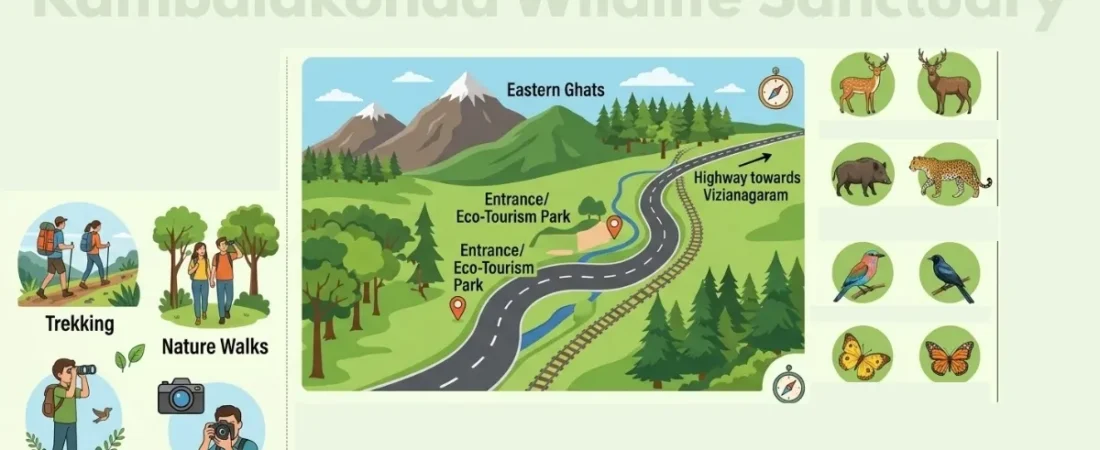
Located near Visakhapatnam, Kambalakonda Wildlife Sanctuary is a peaceful natural retreat where forest landscapes, wildlife, and outdoor adventure come together. Set within the scenic Eastern Ghats, this protected area is home to diverse flora and fauna, including mammals, birds, reptiles, and butterflies. Its green surroundings and natural trails make it an appealing destination for nature lovers, birdwatchers, photographers, and travellers seeking a break from the city. Visitors can explore designated eco-tourism areas, enjoy nature walks, experience trekking, and observe the region’s rich biodiversity. With its convenient location near Vizag and opportunities for a refreshing wildlife experience, Kambalakonda offers an engaging way to discover Andhra Pradesh’s natural side.
Kambalakonda Wildlife Sanctuary at a Glance
Established in 1970, the sanctuary represents an important forest ecosystem around Visakhapatnam. The designated eco-tourism area covers only a small portion of the larger sanctuary, providing visitors with managed opportunities to experience the natural surroundings.
| Information | Details |
| Location | Visakhapatnam, Andhra Pradesh |
| Region | Eastern Ghats |
| Sanctuary area | About 70.70 sq km |
| Established | 1970 |
| Main attraction | Forest and wildlife |
| Activities | Trekking, nature walks and birdwatching |
| Wildlife | Mammals, birds, reptiles and butterflies |
| Eco-tourism | Designated visitor area |
| Nearby attraction | Indira Gandhi Zoological Park |
The distinction between the wildlife sanctuary and its designated eco-tourism zone is useful when planning a visit because not every part of the protected forest functions as a conventional tourist park.
Where Is Kambalakonda Wildlife Sanctuary?
The sanctuary is situated near Visakhapatnam and is easily accessible from the city by road. The eco-tourism park is located beside the highway towards Vizianagaram and Srikakulam, while the Indira Gandhi Zoological Park is situated across the highway.
This location is one of its biggest advantages for foreigners and indian travellers. You can combine a visit to the forest with other Visakhapatnam attractions and create a varied itinerary featuring wildlife, beaches, viewpoints, and cultural sites.
History and Natural Landscape
Kambalakonda was established as a wildlife sanctuary in 1970 and forms part of the distinctive Eastern Ghats landscape. Its terrain combines forested areas, open spaces, and natural slopes that support a range of plant and animal species.
The surrounding environment gives the sanctuary a different character from Visakhapatnam’s coastal attractions. Instead of beaches and urban sightseeing, visitors encounter greenery, forest trails, birds, and the quieter atmosphere of a protected natural area.
Flora and Fauna of Kambalakonda
The sanctuary has considerable floral diversity, with species such as neem, teak, banyan, jamun, Indian rosewood, golden shower tree, and several other native trees and shrubs. This vegetation provides food and shelter for different forms of wildlife.
The wider ecosystem supports mammals, reptiles, birds, and butterflies. This biodiversity is one of the strongest reasons to explore the sanctuary slowly rather than treating it as a quick sightseeing stop.
Wildlife You Can See
Wildlife enthusiasts may encounter animals such as spotted deer, sambar, wild boar, jungle cat, Indian hare, Indian crested porcupine, and other mammals. Indian leopard is also recorded in the sanctuary, although sightings of elusive wildlife should never be considered guaranteed.
The area also supports several reptiles, including Indian python, rat snake, Indian cobra, Indian chameleon, and Bengal monitor. Visitors should observe animals from a safe distance and never attempt to approach, feed, or disturb them.
Birds and Butterflies
Birdwatching adds another dimension to the Kambalakonda experience. Recorded species include Indian paradise flycatcher, Indian roller, green bee-eater, black drongo, Indian peafowl, Indian grey hornbill, spotted owlet, and several other birds.
Butterflies are also part of the sanctuary’s biodiversity, with species such as lemon pansy, plain tiger, common crow, common Mormon, lime swallowtail, and blue tiger recorded in the area. Their presence makes the forest interesting for casual observers as well as nature photographers.
Things to Do at Kambalakonda Wildlife Sanctuary
Trekking is one of the main outdoor experiences available through the eco-tourism area. Designated trekking routes allow visitors to explore the natural landscape on foot, with guided arrangements available for groups.
Nature walks and wildlife observation are ideal for travellers who prefer a relaxed experience. Birdwatching and photography can also be rewarding because the forest contains a variety of habitats and species.
Kambalakonda Trekking Experience
The eco-tourism facility lists trekking routes that begin early in the morning. The currently published information states that trekking starts around 6:00 AM and takes approximately three hours, with guide arrangements made through the reception in advance.
An early start is useful because outdoor conditions are generally more comfortable before the day becomes hot. Anyone planning a trek should confirm the current route, guide availability, charges, and operating arrangements before arriving.
Entry Fee and Timings in Kambalakonda Wildlife Sanctuary
The currently published district information lists an entry fee of ₹10 for adults and ₹5 for children. It also lists a vehicle charge of ₹200, including entry for five members, and cottages at ₹250. These figures should be treated as current published information rather than permanent prices.
The eco-tourism park is currently listed as operating from 9:00 AM to 4:30 PM, while trekking is described as an early-morning activity. Because entry charges, facilities, and operating schedules can change, it is sensible to confirm the latest information before making a dedicated trip.
Must Read: Budget Travel in India
Best Time to Visit Kambalakonda Wildlife Sanctuary
Winter is generally a comfortable season for spending time outdoors, and the local tourism information specifically notes that visitors come during winter for jungle walks and time inside the forest.
For trekking, nature walks, and birdwatching, early morning is particularly useful. Summers can be hotter, while the monsoon can make trails wetter and more challenging, so visitors should consider weather conditions when planning outdoor activities.
How to Reach Kambalakonda Wildlife Sanctuary
Road travel is the most convenient way to reach the eco-tourism area from Visakhapatnam. Its position beside the highway towards Vizianagaram and Srikakulam makes it relatively straightforward to include in a city-based travel itinerary.
Travellers arriving in Visakhapatnam by train or air can continue by local taxi or other road transport. Since the sanctuary is close to the city, it can work well as a half-day nature outing or as part of a longer sightseeing plan.
Kambalakonda for Birdwatching and Photography
The combination of trees, open areas, and forest habitat creates opportunities for birdwatching throughout the year. Visitors who enjoy photography can focus on birds, butterflies, vegetation, landscapes, and other details rather than expecting close encounters with large animals.
A quiet approach is important. Avoid loud conversations and sudden movements, and never enter restricted areas simply to get a better photograph. Responsible photography protects both wildlife and the visitor experience.
Visitor Facilities and Eco-Tourism
The designated eco-tourism area has facilities intended to make a forest visit more accessible. Current district information mentions a canteen, cottages, a small rainwater storage lake, and boating facilities.
Availability can depend on operating conditions and current management arrangements. If a particular facility is important to your trip, verify it beforehand rather than assuming that every listed service will be operating on the day of your visit.
Travel Tips for a Safe Visit
Kambalakonda should be treated as a protected natural environment rather than an ordinary recreational park. Stay on permitted routes, follow staff or guide instructions, avoid feeding animals, and maintain a safe distance from wildlife.
Wear comfortable footwear if you plan to walk or trek and carry drinking water, sun protection, and suitable clothing. Early morning visitors should also plan their transport and meeting arrangements, particularly when participating in guided trekking.
Must Read: Karimnagar Deer Park
Places to Visit Near Kambalakonda
The location makes it easy to combine the sanctuary with other attractions in and around Visakhapatnam. The Indira Gandhi Zoological Park is particularly convenient because it lies across the highway from the eco-tourism area.
For a longer itinerary, travellers can explore Visakhapatnam’s coastal attractions and viewpoints, bridges, or continue towards the Eastern Ghats. Araku Valley and Borra Caves are among the wider regional attractions promoted as part of Visakhapatnam tourism.
How Long Should You Spend at Kambalakonda?
A few hours can be enough for visitors who simply want to explore the eco-tourism area, enjoy a nature walk, and spend some time observing the surroundings. This makes the sanctuary convenient for travellers with limited time in Visakhapatnam.
If trekking is part of your plan, allow additional time because the published trekking experience takes around three hours. Combining the sanctuary with nearby attractions can turn it into a fuller day itinerary.
Is Kambalakonda Wildlife Sanctuary Suitable for Families?
The designated eco-tourism area can be suitable for families who enjoy nature and outdoor sightseeing. The opportunity to see spotted deer, birds, butterflies, and forest vegetation can make the visit interesting for children as well as adults.
Families planning to trek should consider the fitness and comfort of all members before choosing a route. Children should remain supervised and should not be allowed to approach animals or wander away from permitted paths.
Why Visit Kambalakonda?
The biggest attraction is the combination of accessibility and natural surroundings. Travellers do not need to travel far from Visakhapatnam to experience a forest environment, observe wildlife, and enjoy outdoor activities.
It is particularly appealing to people interested in eco-tourism, birdwatching, trekking, photography, and peaceful nature experiences. The sanctuary also provides an opportunity to understand the biodiversity associated with the Eastern Ghats.
Must Read: Srivani Trust
Conclusion
Kambalakonda Wildlife Sanctuary offers an accessible combination of forest scenery, biodiversity, wildlife observation, and eco-tourism near Visakhapatnam. With trekking, birdwatching, nature walks, and nearby attractions, it can be a rewarding addition to a Vizag itinerary. Check current visitor information before travelling, follow responsible tourism practices, and enjoy the sanctuary at a relaxed pace.
FAQ’s
Where is Kambalakonda Wildlife Sanctuary located?
It is located near Visakhapatnam in Andhra Pradesh, alongside the highway towards Vizianagaram and Srikakulam. The designated eco-tourism area is close to the Indira Gandhi Zoological Park.
What is the Kambalakonda entry fee?
The currently published information lists ₹10 for adults and ₹5 for children. A vehicle charge of ₹200, including entry for five members, is also listed. Charges may change, so visitors should verify the latest rates before travelling.
What are the Kambalakonda timings?
The eco-tourism park is currently listed as open from 9:00 AM to 4:30 PM. Trekking is separately described as starting around 6:00 AM. Visitors should confirm the latest operating schedule before their trip.
What is the best time to visit Kambalakonda?
Winter is generally comfortable for outdoor activities, while early morning is a good time for trekking, nature walks, and birdwatching. Weather conditions should always be considered before planning a trek.
Is boating available at Kambalakonda?
The current district information describes a small rainwater storage lake with boating facilities within the eco-tourism area. Because individual activities may depend on current operating conditions, confirm availability before visiting.