
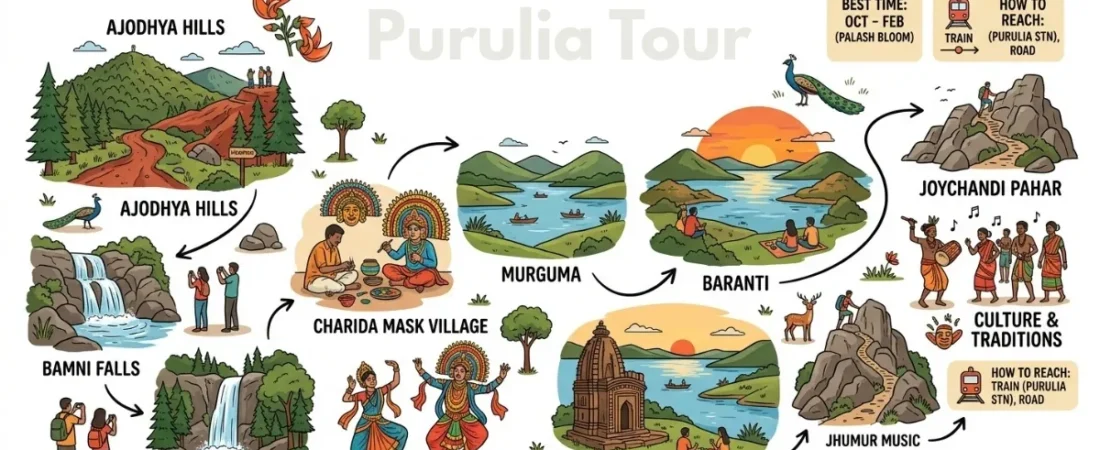
Planning a Purulia Tour means escaping into a captivating world of red-soil hills, dense forests, waterfalls, reservoirs, and vibrant tribal culture. Nestled in West Bengal, Purulia offers a refreshing blend of nature, adventure, heritage, and rural charm. Explore the scenic Ajodhya Hills, witness the beauty of Bamni and Turga Falls, or discover traditional mask-making at Charida Village. The peaceful landscapes of Baranti and Murguma are perfect for photography, relaxation, and memorable sunsets. Whether you’re planning a weekend getaway, family holiday, or adventurous road trip, this Purulia travel guide helps you discover the best places to visit in Purulia, ideal travel season, convenient routes, suggested itineraries, and practical tips for a memorable journey.
Why Is Purulia Worth Visiting?
Purulia offers a distinctive combination of hills, forests, rocky landscapes, reservoirs, waterfalls, and traditional village culture. Its appeal isn’t limited to sightseeing; the destination gives travellers an opportunity to experience a quieter side of Bengal away from heavily commercialised tourist centres.
The region is also culturally significant for Purulia Chhau, Jhumur traditions, tribal communities, and the mask-making heritage of Charida. The Purulia district administration identifies Charida’s masks as part of the internationally known Chhau tradition and notes the involvement of around 250 artisans in the village.
Best Places to Visit in Purulia
The biggest mistake first-time visitors make is treating Purulia as a destination with only a few isolated tourist spots. In reality, attractions are spread across several sightseeing circuits. Planning them geographically can save hours of unnecessary driving.
Ajodhya Hills
Ajodhya Hills is the heart of most Purulia tour itineraries. The landscape features forested slopes, viewpoints, reservoirs, and waterfalls, making it the best area for travellers seeking nature and outdoor experiences.
The surrounding attractions include Bamni Falls, Turga Falls, Marble Lake, Mayur Pahar, Matha Forest, Pakhi Pahar, Upper Dam, Lower Dam, Turga Dam, and several village and temple stops. Current tour itineraries consistently build their core Purulia circuits around these attractions.
Bamni Falls
Bamni Falls is one of the most memorable natural attractions around Ajodhya Hills. The waterfall and surrounding rocky landscape create excellent opportunities for photography and nature exploration.
The route can involve steps and uneven terrain, so comfortable footwear is important. During wet weather, travellers should be particularly careful around slippery surfaces and avoid rushing the visit.
Turga Falls
Turga Falls is another popular stop on the Ajodhya circuit. Its cascading water, forest surroundings and peaceful atmosphere make it an ideal addition to a nature-focused itinerary.
Rather than visiting every waterfall in a hurry, allow enough time to enjoy the landscape. The experience is much better when sightseeing is organised according to location and daylight.
Charida Mask Village
Charida is more than another sightseeing stop. It is the cultural soul of a Purulia Tour, especially for travellers interested in traditional crafts.
The village is famous for handcrafted masks associated with Purulia Chhau. Visitors can see artisans working on colourful traditional designs and understand how a local craft became closely connected with the region’s performing arts. The official district tourism page confirms Charida’s role in Chhau mask production and its artisan community.
Murguma
Murguma is known for its reservoir, surrounding hills, and peaceful rural setting. It works particularly well for travellers who want to slow down after a busy day of sightseeing.
Instead of treating Murguma as just another photo stop, combine it with nearby viewpoints and cultural attractions. Current itineraries frequently connect Murguma with the Ajodhya and Matha circuits.
Baranti
Baranti offers a completely different atmosphere from Ajodhya Hills. Its reservoir, surrounding hillocks and open landscape make it especially attractive for sunrise, sunset and relaxed photography.
A stay around Baranti is ideal if you don’t want every hour of your holiday filled with sightseeing. It is also useful as part of a wider circuit involving Joychandi Pahar, Garh Panchkot and Panchet Dam.
Garh Panchkot and Joychandi Pahar
History and landscape come together around Garh Panchkot. The area provides a change from waterfalls and reservoirs, making it a worthwhile addition to a longer itinerary.
Joychandi Pahar is another popular stop and can be combined with the Baranti or Garh Panchkot circuit. If you have only two days, however, don’t overload your schedule with distant attractions simply to increase the number of places visited.
Purulia Tour Itinerary: How Many Days Do You Need?
For a first visit, 2 nights and 3 days is one of the most practical choices. Current Purulia travel packages and itineraries repeatedly use this duration to combine Ajodhya Hills, Murguma, Charida, and Baranti-related attractions.
| Duration | Ideal Plan | Best For |
| 1 Night / 2 Days | Ajodhya Hills + waterfalls + Charida | Quick weekend trip |
| 2 Nights / 3 Days | Ajodhya + Murguma + Baranti | First-time visitors |
| 3 Nights / 4 Days | Ajodhya + Murguma + Baranti + Garh Panchkot | Relaxed exploration |
| 4 Nights / 5 Days | Major circuits + additional heritage and nature sites | Slow travel |
The most important planning rule is simple: don’t try to cover the entire district in one trip. A shorter itinerary with enough time at each destination is more enjoyable than a rushed checklist.
Best 2 Nights 3 Days Purulia Tour Plan
Day 1: Ajodhya Hills, Waterfalls and Charida
Arrive at Purulia, Barabhum, or another suitable railway station and transfer to your accommodation around Ajodhya or Baghmundi. After check-in, begin the main sightseeing circuit.
Depending on arrival time, explore Marble Lake, Bamni Falls, Turga Falls, Kestobazar Dam, Lower Dam, and Upper Dam. If possible, keep the evening for the Hill Top or another suitable viewpoint.
Charida can be included according to the route and available daylight. Spending time with the local artisans makes the day more meaningful than simply photographing the village and leaving.
Day 2: Murguma and the Lesser-Explored Side
Start early and explore the Murguma and Matha areas. Mayur Pahar, Matha Forest, Pakhi Pahar and Murguma Dam can form part of this circuit, depending on local road and weather conditions.
Current detailed itineraries also combine destinations such as Sita Kund, Ram Mandir, Durga Mandir and Deulghata with the Murguma/Matha circuit.
The benefit of this route is that you experience more than the standard waterfall circuit. It introduces you to Purulia’s villages, forests, reservoirs and cultural landscape.
Day 3: Baranti and Heritage Circuit
On the final day, head towards Baranti and combine it with suitable nearby attractions such as Joychandi Pahar, Garh Panchkot or Panchet Dam, depending on your departure time.
If you’re travelling by train, leave sufficient buffer for reaching the station. Don’t add a distant sightseeing point simply because you have a few spare hours; unexpected road delays can turn a comfortable journey into a stressful one.
Best Time to Visit Purulia
The best time for a Purulia Tour is generally from October to February, when temperatures are more comfortable for sightseeing, hiking, and outdoor exploration. Winter is especially suitable for travellers planning long days around Ajodhya Hills.
February and March can be particularly appealing for photographers because of the seasonal Palash blooms. The red flowers against Purulia’s earthy landscape create one of the region’s most distinctive visual experiences.
Monsoon transforms the landscape into a greener destination and can enhance waterfalls, but wet roads and slippery trails require additional caution. Summer can be hot, so outdoor sightseeing is better planned during mornings and late afternoons.
How to Reach Purulia
Purulia has good rail and road connectivity, making it accessible for travellers from Kolkata and nearby cities. The official district administration states that Purulia railway station is on the Adra–Tatanagar route and that regular trains connect Purulia with Kolkata. It also confirms road links with places including Bankura, Asansol, Bokaro, Jamshedpur and Ranchi.
For a trip centred around Ajodhya Hills, reaching a convenient railway station and arranging local transport can be more important than simply choosing the fastest train. Several attractions are spread across rural and hilly areas, so a local car is often useful for sightseeing.
Before travelling, check the latest railway schedules and local road conditions rather than relying on old itinerary timings. Transport schedules and local conditions can change.
Purulia Tour from Kolkata
A Purulia Tour from Kolkata is particularly popular because the destination works well as a short escape. Train travel is a practical option, while a private car gives greater flexibility for families and groups.
The official Purulia district tourism information currently states that the rail distance from Kolkata is about 322 km and lists regular train services, with the fastest listed journey taking around 5 hours 25 minutes.
If you’re travelling for only a weekend, an overnight train or carefully timed departure can help maximise sightseeing time. For longer trips, a private vehicle allows you to create a more flexible route between Ajodhya, Murguma and Baranti.
Purulia Tour Cost and Budget
The total Purulia Tour cost depends on your transport, accommodation, group size, food preferences and sightseeing vehicle. A couple travelling independently will have a very different budget from a family or group sharing a private car.
Current local tour listings show that sightseeing vehicle charges can vary according to pickup point, vehicle size and route. For example, one current Baranti-area operator lists different rates for Purulia pickup and Ajodhya sightseeing circuits, demonstrating why a single fixed “Purulia trip cost” can be misleading.
For an accurate budget, calculate accommodation, train or road travel, local transport, meals, sightseeing, and miscellaneous expenses separately. This also helps you compare a self-planned trip with a Purulia tour package.
Where to Stay in Purulia
Choosing the right base can significantly improve your trip. Staying around Ajodhya or Baghmundi is convenient when waterfalls, viewpoints, and hill attractions are your priority.
Baranti is better for travellers seeking peaceful surroundings and reservoir views. Purulia town can be practical when railway access, restaurants, and local services are more important than staying close to nature.
For a longer Purulia travel experience, splitting your stay between Ajodhya and Baranti can be worthwhile. It reduces the need for long daily drives and gives you two distinctly different sides of the destination.
Purulia Chhau, Charida and Local Culture
Nature is only half of the Purulia experience. The region’s cultural identity makes the destination much more distinctive than an ordinary weekend hill trip.
The traditional Purulia Chhau dance uses masks, elaborate costumes, music and dramatic movements. Charida’s artisans create the masks associated with this cultural tradition, making a village visit an important part of understanding Purulia rather than merely collecting another sightseeing photograph.
Travellers should also take time to experience local villages, traditional crafts and regional food where possible. Buying authentic handicrafts directly from artisans can support the communities that preserve these traditions.
Purulia Tour for Couples, Families and Friends
Couples can combine Ajodhya’s scenic landscape with a peaceful Baranti stay. Sunrise, sunset, village walks and photography provide a more relaxed experience than trying to visit ten attractions in one day.
Families should prioritise comfortable accommodation and shorter driving stretches. Some waterfalls and viewpoints involve walking over uneven terrain, so parents travelling with young children or older family members should plan accordingly.
Friends and adventure seekers can choose a more active itinerary involving trekking, viewpoints, camping, or other outdoor experiences where locally permitted. The important thing is to select attractions that match your group’s fitness and interests.
What to Eat During Your Purulia Trip
Food is often overlooked in a Purulia Tour, but local meals can add another dimension to the journey. Look for simple Bengali dishes, rice-based meals, seasonal vegetables, fish preparations, and regional snacks at local eateries or homestays.
Don’t expect every rural sightseeing area to have a wide restaurant selection. When travelling through remote parts of Ajodhya and Murguma, planning meals and carrying drinking water can prevent unnecessary inconvenience.
Conclusion
A memorable Purulia Tour is about more than visiting waterfalls and viewpoints. The best experience combines Ajodhya Hills, Bamni Falls, Turga Falls, Murguma, Baranti, Charida, Chhau culture, and local heritage with a realistic itinerary and sensible travel pace. Choose the right season, stay close to your main sightseeing circuit, plan local transport, and leave room for authentic village experiences. With thoughtful planning, Purulia can become one of the most rewarding short escapes in West Bengal.
FAQ’s
What is Purulia famous for?
Purulia is famous for Ajodhya Hills, waterfalls, Palash landscapes, Baranti, tribal culture, Purulia Chhau, Charida’s masks, reservoirs and historic attractions.
Which month is best for a Purulia Tour?
October to February is generally the most comfortable period for sightseeing. February and March can be especially attractive for travellers who want to see Palash flowers.
Is Purulia suitable for a weekend trip?
Yes. Its combination of hills, waterfalls, culture, and relatively compact sightseeing circuits makes it an excellent weekend destination, particularly for travellers from Kolkata and nearby cities.
Is Ajodhya Hills or Baranti better?
They offer different experiences. Ajodhya Hills is better for waterfalls, hills, and adventure, while Baranti is better for peaceful reservoir views, sunsets, and relaxed stays.