
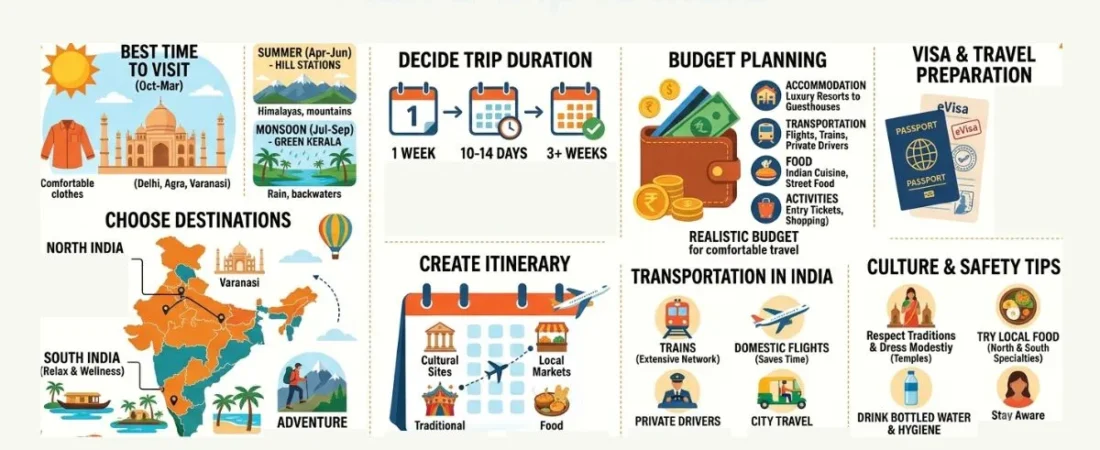
Planning a trip to India is an exciting journey that requires thoughtful preparation because this diverse country offers endless experiences, from ancient landmarks and vibrant cities to peaceful landscapes and cultural traditions. Whether you are visiting for the first time or returning for a deeper exploration, understanding the right destinations, travel seasons, and local experiences can make your journey smoother. A well-planned India travel itinerary, realistic travel budget, and proper knowledge of Indian destinations will help you enjoy every moment. This guide will help you plan a trip to India with practical tips, essential information, and expert advice for an unforgettable adventure.
Understand the Best Time to Visit India
One of the first steps when you plan a trip to India is deciding the right time to travel. India has different climates across its regions, so the ideal travel season depends on where you want to go.
The winter months from October to March are generally considered the best time to visit many popular destinations. During this period, cities like Delhi, Agra, Jaipur, and Varanasi have comfortable weather for sightseeing.
The summer season from April to June can be extremely hot in many parts of India, especially northern and central regions. However, hill destinations such as Himachal Pradesh, Uttarakhand, and Kashmir offer cooler temperatures and beautiful mountain views.
The monsoon season from July to September brings heavy rainfall to some areas but creates a refreshing atmosphere in places like Kerala and parts of western India. Travelers who enjoy nature, greenery, and fewer crowds may find this season appealing.
Choose the Right Indian Destinations
India is a large country with incredible regional diversity. Choosing destinations based on your interests is an important part of planning your journey.
Northern India is ideal for travelers interested in history, architecture, and cultural experiences. The famous Golden Triangle route connecting Delhi, Agra, and Jaipur is one of the most popular options for first-time visitors.
Delhi introduces travelers to India’s modern and historic sides, while Agra is home to the iconic Taj Mahal. Jaipur offers royal palaces, colorful markets, and traditional Rajasthani culture.
For nature lovers and travelers seeking relaxation, South India offers a distinct experience. Kerala is famous for peaceful backwaters, tropical landscapes, and wellness retreats, while Goa attracts visitors with beaches, nightlife, and coastal charm.
Adventure seekers can explore the Himalayas in regions like Ladakh, Himachal Pradesh, and Uttarakhand. These destinations offer trekking, mountain views, and outdoor experiences.
Decide How Long You Should Spend in India
The duration of your trip depends on your interests, budget, and the number of regions you want to explore. India is not a destination where you can experience everything in a few days.
A one-week India itinerary works well for visiting one specific region. For example, you can explore Delhi, Agra, and Jaipur within seven days.
A 10 to 14-day itinerary allows more flexibility. You can combine cultural attractions with natural experiences by adding destinations such as Udaipur, Varanasi, or Kerala.
If you plan a trip to India for three weeks or more, you can explore multiple regions and experience the incredible differences between northern and southern India.
When you plan a trip to India, avoid adding too many destinations to your itinerary. Long travel distances can take more time than expected, so a balanced schedule creates a more enjoyable experience.
Create a Practical India Travel Itinerary
A well-designed itinerary helps you save time and avoid unnecessary travel stress. Instead of trying to visit every famous location, focus on experiences that match your travel style.
For first-time visitors, a classic route could include Delhi, Agra, Jaipur, and Udaipur. This route provides a combination of historical landmarks, local food, traditional markets, and royal architecture.
Travelers interested in spirituality may prefer adding Varanasi, one of the oldest living cities in the world, known for its sacred Ganges River ceremonies and cultural traditions.
Those looking for relaxation can choose a slower itinerary focused on Kerala, Goa, or Rajasthan’s luxury heritage hotels.
When you plan a trip to India, build enough flexibility into your itinerary for unexpected discoveries. Some of the most memorable travel moments often happen while exploring local streets, trying regional cuisine, or meeting local people.
Understand India Travel Costs and Budget Planning
Your travel budget plays an important role when you plan a trip to India. The country offers options for budget, mid-range, and luxury travelers.
Accommodation costs vary depending on location and comfort level. India has affordable guesthouses, comfortable hotels, boutique stays, and luxury resorts.
Food is usually affordable, especially when enjoying local restaurants and traditional Indian cuisine. Street food is popular, but travelers should choose clean and busy food places to reduce health risks.
Transportation costs depend on your travel style. Trains are an affordable way to travel between cities, while domestic flights save time on longer routes.
A realistic budget should include accommodation, transportation, meals, attraction tickets, shopping, travel insurance, and emergency expenses.
Complete Visa and Travel Preparation
Before visiting India, travelers should understand visa requirements and entry rules. Many international visitors can apply for an Indian eVisa through the official government portal.
Your passport should have enough validity before traveling, and you should check the latest entry requirements before booking flights.
Travel insurance is another important part of preparation. A good policy can help with medical emergencies, flight delays, lost luggage, and unexpected situations.
It is also useful to keep digital copies of important documents, including your passport, visa, travel insurance details, and hotel reservations.
Learn About Transportation in India
Transportation is one of the biggest considerations when you plan a trip to India because distances between destinations can be large.
India has an extensive railway network that connects major cities and tourist destinations. Trains are affordable and offer a unique local travel experience.
Domestic flights are a better option when traveling between distant regions. For example, flying between Delhi and Kerala saves significant time compared to traveling by road or train.
Private drivers are also popular among international travelers because they provide comfort, flexibility, and local knowledge, especially for multi-city routes.
Within cities, travelers can use metro systems, taxis, auto-rickshaws, and ride-sharing services depending on availability.
Prepare for Indian Culture and Local Experiences
India’s culture is one of its biggest attractions. Every state has different languages, traditions, clothing styles, festivals, and cuisines.
Respecting local customs helps create positive interactions with communities. Dressing appropriately when visiting religious sites and learning basic cultural etiquette can improve your travel experience.
Food is an essential part of Indian travel. Each region has unique dishes, from North Indian curries and breads to South Indian dosas and seafood specialties.
Trying local experiences such as cooking classes, traditional bazzars & markets, village tours, and cultural performances can make your journey more meaningful.
Safety Tips for Traveling in India
India is generally welcoming to tourists, but travelers should take normal precautions like they would in any international destination.
Keep your belongings secure in crowded areas, use trusted transportation services, and avoid accepting unsolicited offers from strangers.
Food and water safety are also important. Drinking bottled or filtered water and choosing hygienic restaurants can help prevent common travel illnesses.
Female travelers and solo visitors should research destinations, choose reliable accommodations, and stay aware of their surroundings.
Understanding local customs and preparing in advance can make your trip safer and more comfortable.
What to Pack for Your India Trip
Packing depends on your destination and travel season. Lightweight and comfortable clothing is useful for most regions, especially during warmer months.
Comfortable walking shoes are essential because many attractions involve exploring large historical sites, markets, and city areas.
Travel essentials such as a universal adapter, personal medicines, sunscreen, a reusable water bottle, and basic toiletries can make your journey easier.
If visiting religious places, carrying modest clothing that covers shoulders and knees is recommended.
Common Mistakes to Avoid When Visiting India
Many first-time travelers make the mistake of trying to cover too many destinations in a short period.
India’s size means transportation between cities can take longer than expected. A slower itinerary often provides a better experience.
Another common mistake is not researching local weather, festivals, and regional differences before traveling.
Understanding your destination before arrival allows you to prepare properly and enjoy your experience without unnecessary stress.
How to Plan a Trip to India Successfully
The best way to plan a trip to India is by creating a balance between preparation and flexibility. Research your destinations, understand transportation options, set a realistic budget, and leave room for unexpected experiences.
India rewards travelers who take time to explore beyond famous attractions. Local markets, traditional meals, cultural conversations, and hidden destinations often become the highlights of the journey.
A successful India vacation is not only about visiting places. It is about experiencing the country’s history, people, traditions, and incredible diversity.
Conclusion
India offers unforgettable experiences through its history, culture, landscapes, and traditions. By choosing the right destinations, planning your budget, understanding transportation, and preparing properly, you can create a memorable journey. When you plan a trip to India, focus on quality experiences rather than rushing through locations, allowing yourself to truly discover the beauty and diversity of this incredible country.
FAQ’s
How many days are enough for a trip to India?
A minimum of 7 to 10 days is recommended for first-time visitors who want to explore popular destinations. Two to three weeks allows travelers to experience multiple regions without rushing.
What is the best month to visit India?
The best months to visit India are usually October to March because many destinations have pleasant weather. However, the ideal month depends on the region you plan to explore.
Is India expensive for tourists?
India can be affordable for budget travelers while also offering luxury experiences. Accommodation, food, and transportation options are available for different budgets.
Is India safe for first-time travelers?
India is a popular destination for international tourists. Travelers should follow basic safety practices, research destinations, and use trusted services during their visit.
What should I include in my first India itinerary?
First-time visitors often choose destinations like Delhi, Agra, Jaipur, Kerala, Goa, or Varanasi. The best itinerary depends on your interests, travel duration, and preferred experiences.