
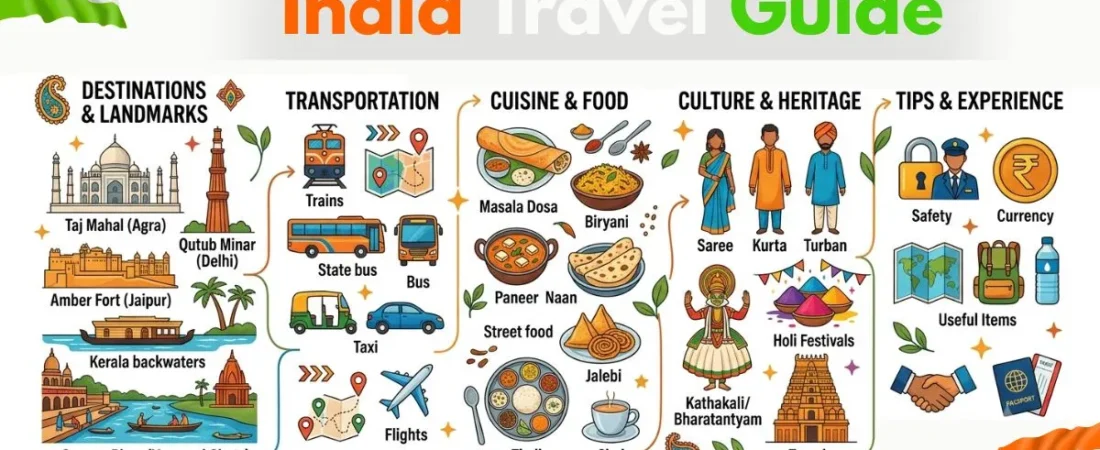
India is a land of incredible diversity, where ancient traditions, breathtaking landscapes, and vibrant cultures come together to create unforgettable travel experiences. This India Travel Guide helps travellers plan their journey with useful information about destinations, transportation, food, safety, and local experiences. From exploring historic monuments and cultural heritage sites to relaxing on beautiful beaches and discovering natural landscapes, India offers something for every type of traveller. Whether you are planning a short vacation or a long adventure, this guide offers practical tips for enjoying Indian cuisine, exploring famous destinations, and experiencing the beauty of one of the world’s most fascinating countries.
1. Planning Your Trip to India
Planning is the first step toward a successful trip to India. Because India is a large country with different climates, cultures, and landscapes, choosing your destinations carefully will make your journey more enjoyable.
Before booking flights or hotels, consider your travel style, budget, available time, and the experiences you want.
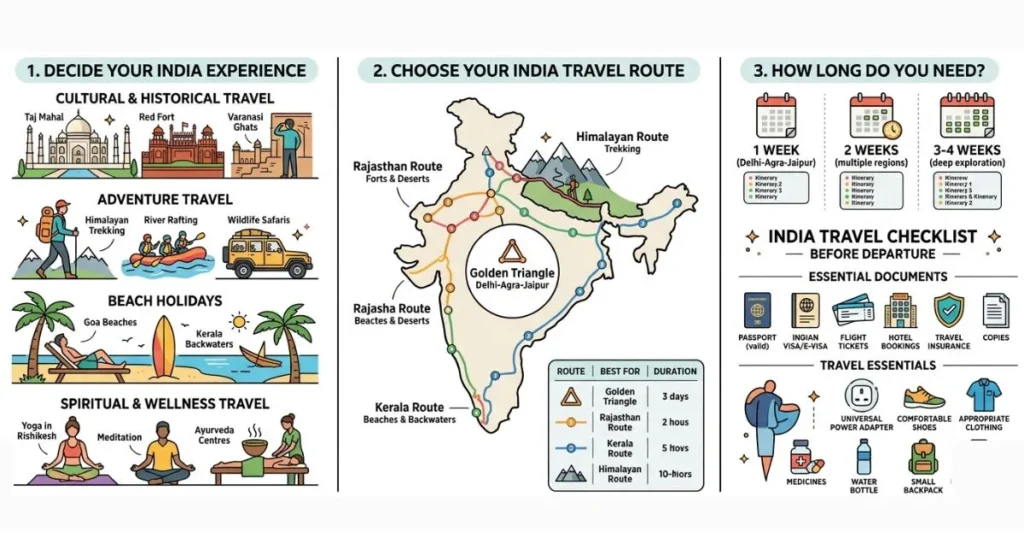
Decide What Type of India Experience You Want
India offers many different travel experiences. Some travellers focus on history and culture, while others prefer nature, adventure, or relaxation.
Popular travel styles include:
Cultural and Historical Travel
India has thousands of years of history. Cities like Delhi, Agra, Jaipur, and Varanasi are perfect for travellers interested in ancient architecture, traditions, and heritage sites.
Popular attractions include:
- Taj Mahal in Agra
- Red Fort in Delhi
- Amber Fort in Jaipur
- Ghats of Varanasi
- Ancient temples of Khajuraho
Adventure Travel
India is also a great destination for adventure lovers.
Popular adventure experiences include:
- Trekking in the Himalayas
- River rafting in Rishikesh
- Desert camping in Rajasthan
- Scuba diving in the Andaman Islands
- Wildlife safaris in national parks
Beach Holidays
For travellers looking for relaxation, India has beautiful coastal destinations.
Top beach locations include:
- Goa
- Kerala
- Andaman and Nicobar Islands
- Gokarna
- Pondicherry
Spiritual and Wellness Travel
India is famous worldwide for yoga, meditation, and spiritual experiences.
Popular destinations include:
- Rishikesh
- Varanasi
- Bodh Gaya
- Dharamshala
- Kerala Ayurveda centres
Choose Your India Travel Route
India is too large to explore completely in one trip. Instead of trying to visit every famous place, create a route based on your interests.
Here are some popular India travel routes:
| Route | Best For | Duration |
| Golden Triangle | First-time visitors, history lovers | 5–7 days |
| Rajasthan Route | Forts, culture, deserts | 7–14 days |
| Kerala Route | Beaches, nature, relaxation | 7–10 days |
| Himalayan Route | Trekking and adventure | 10–20 days |
| South India Route | Temples, food, culture | 10–15 days |
How Long Do You Need for an India Trip?
The ideal duration depends on how many places you want to explore.
1 Week India Trip
A one-week trip is suitable for exploring one region.
Example:
Delhi → Agra → Jaipur
This route allows visitors to experience India’s famous historical landmarks.
2 Week India Trip
With two weeks, travellers can explore multiple destinations.
Example:
Delhi → Agra → Jaipur → Udaipur → Goa
3–4 Week India Trip
A month-long trip allows deeper exploration.
Example:
Delhi → Rajasthan → Varanasi → Kerala → Goa
Longer trips provide more opportunities to experience local culture, food, and hidden destinations.
India Travel Checklist Before Departure
Preparing important items before leaving can make your trip easier.
Essential Documents
Carry:
- Passport with valid expiry date
- Indian visa or e-visa approval
- Flight tickets
- Hotel booking details
- Travel insurance documents
- Copies of important documents
Travel Essentials
Useful items include:
- Universal power adapter
- Comfortable walking shoes
- Weather-appropriate clothing
- Personal medicines
- Reusable water bottle
- Small backpack
- Phone charger and power bank
Digital Preparation
Before arriving in India:
- Download offline maps
- Save emergency contacts
- Install payment apps if supported
- Keep digital copies of documents
- Research local transportation options
2. India Visa, Entry Requirements & Travel Documents
Before travelling to India, international visitors usually need a valid visa unless they are from a visa-exempt country.
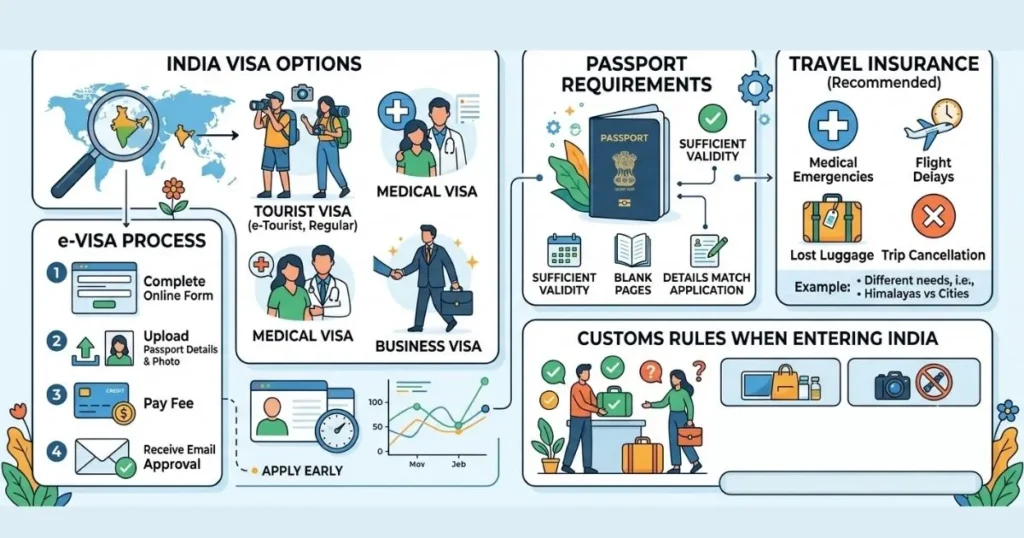
India offers different visa options depending on the purpose and duration of travel.
India Tourist Visa Options
Most travellers visit India using a tourist visa.
Common options include:
| Visa Type | Purpose | Duration |
| e-Tourist Visa | Tourism and short visits | Varies by country |
| Regular Tourist Visa | Longer stays | Depends on approval |
| Medical Visa | Medical treatment | Based on requirement |
| Business Visa | Business activities | Based on approval |
India e-Visa for Tourists
The Indian e-Visa system allows eligible travellers to apply online before arriving.
The application process usually requires:
- Completing the online application form
- Uploading passport details
- Providing a recent photograph
- Paying the visa fee
- Receiving approval by email
Travellers should apply early because processing times can vary.
Passport Requirements for India Travel
Visitors should make sure their passport:
- Has enough validity remaining
- Contains blank pages for immigration stamps
- Matches the details provided during visa application
Always check the latest requirements from official Indian government sources before travelling.
Travel Insurance for India
Travel insurance is highly recommended for international visitors.
A good travel insurance plan can help cover:
- Medical emergencies
- Flight delays
- Lost luggage
- Trip cancellation
- Unexpected travel issues
For example, a traveller visiting remote Himalayan areas may need stronger medical coverage compared with someone staying only in major cities.
Customs Rules When Entering India
Visitors should understand basic customs rules.
Common items travellers carry include:
- Personal electronics
- Clothing
- Personal medicines
- Travel equipment
Avoid carrying restricted items without proper permission.
If you are carrying expensive equipment such as professional cameras, drones, or large electronics, check current regulations before travelling.
3. Best Time to Visit India
Choosing the right time to visit India can completely change your travel experience. Because India covers a vast geographical area, weather conditions vary widely from one region to another.
Some places are best in winter, while others are more enjoyable in summer or during the monsoon season. The best travel time depends on where you want to go and what activities you plan to enjoy.
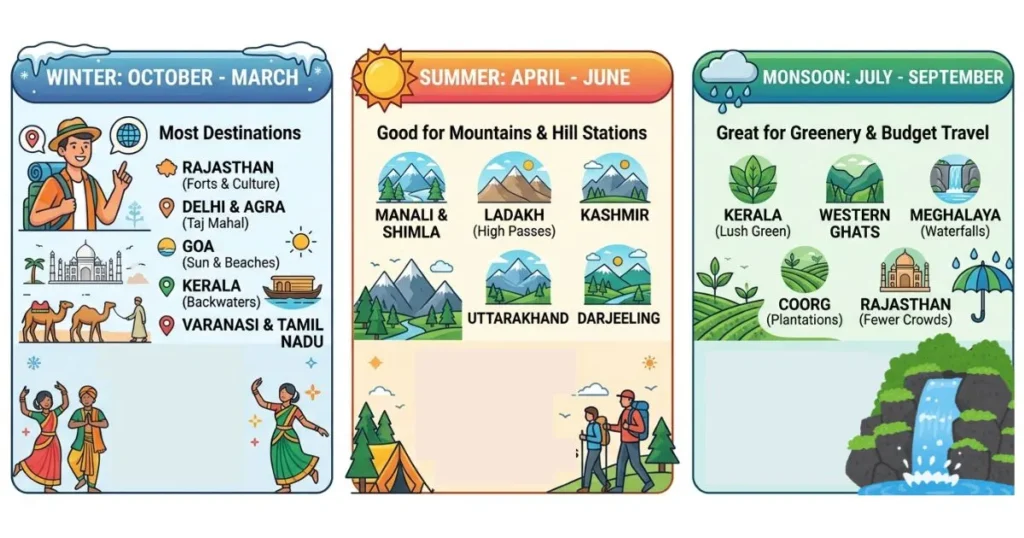
India Weather Seasons Overview
India mainly has three major seasons:
| Season | Months | Travel Experience |
| Winter | October to March | Best season for most destinations |
| Summer | April to June | Good for mountains and hill stations |
| Monsoon | July to September | Great for greenery and budget travel |
Winter Season: Best Time for Most Travellers
Winter is considered the best time to visit many parts of India. The weather is comfortable, making it easier to explore cities, monuments, and outdoor attractions.
Popular winter destinations:
- Rajasthan
- Delhi
- Agra
- Goa
- Kerala
- Varanasi
- Tamil Nadu
During this season, travellers can comfortably explore attractions like the Taj Mahal, forts, markets, and beaches.
Best Winter Experiences
- Watching sunrise at the Taj Mahal
- Exploring Rajasthan forts
- Enjoying Goa beaches
- Taking Kerala houseboat trips
- Attending cultural festivals
Summer Season: Best for Mountain Destinations
Summer temperatures can be very high in many parts of India, especially in the northern plains and major cities.
However, it is a great time to visit cooler mountain regions.
Best summer destinations:
- Manali
- Shimla
- Ladakh
- Kashmir
- Uttarakhand
- Darjeeling
Travellers visit these places to enjoy:
- Mountain views
- Trekking
- Camping
- Adventure activities
- Cooler weather
Monsoon Season: Best for Nature Lovers
The monsoon brings heavy rainfall to many regions, but it also transforms landscapes into beautiful green destinations.
Good monsoon destinations:
- Kerala
- Western Ghats
- Meghalaya
- Coorg
- Rajasthan (for fewer crowds)
Advantages of travelling during monsoon:
- Lower hotel prices
- Fewer tourists
- Beautiful natural scenery
- Fresh waterfalls and forests
However, travellers should check weather conditions before visiting areas affected by heavy rainfall.
4. Best Places to Visit in India
India has thousands of destinations, from famous tourist attractions to hidden villages. Choosing where to go depends on your interests, travel duration, and budget.
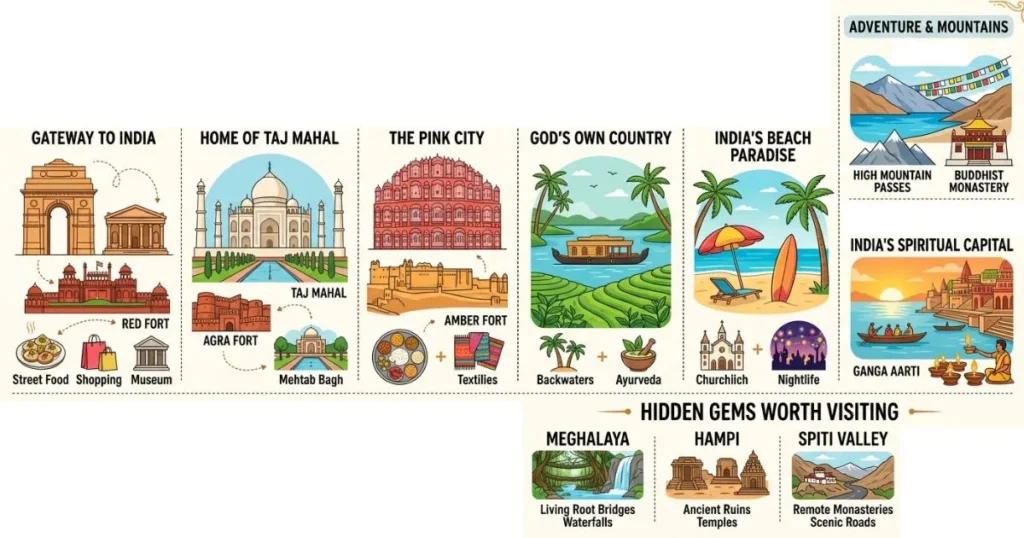
Below are some of the best places to visit in India.
Delhi: The Gateway to India
Delhi is often the starting point for international travellers because it has major airports and excellent connections.
The city combines ancient history with modern lifestyle.
Top Places to Visit in Delhi
- India Gate
- Red Fort
- Qutub Minar
- Humayun’s Tomb
- Lotus Temple
- Jama Masjid
- Chandni Chowk Market
Delhi is perfect for travellers who want to experience:
- Indian history
- Street food
- Shopping
- Museums
- Cultural landmarks
Agra: Home of the Taj Mahal
Agra is one of India’s most famous tourist destinations because it is home to the Taj Mahal, one of the world’s most recognised monuments.
Top Attractions in Agra
- Taj Mahal
- Agra Fort
- Mehtab Bagh
- Fatehpur Sikri
Many travellers visit Agra as part of the Golden Triangle route.
Jaipur: The Pink City of Rajasthan
Jaipur is famous for royal palaces, colourful markets, and traditional culture.
Popular attractions:
- Amber Fort
- City Palace
- Hawa Mahal
- Jantar Mantar
- Nahargarh Fort
Visitors can enjoy:
- Traditional Rajasthani food
- Handicraft shopping
- Palace tours
- Cultural performances
Kerala: God’s Own Country
Kerala is one of India’s most peaceful destinations. It is known for beaches, backwaters, forests, and wellness experiences.
Top Kerala experiences:
- Alleppey houseboat journey
- Munnar tea gardens
- Kovalam beaches
- Wildlife tours
- Ayurveda treatments
Kerala is ideal for:
- Couples
- Families
- Nature lovers
- Relaxation seekers
Goa: India’s Beach Paradise
Goa is famous for beaches, nightlife, seafood, and relaxed coastal culture.
Popular beaches:
- Baga Beach
- Calangute Beach
- Palolem Beach
- Anjuna Beach
Things to do in Goa:
- Beach activities
- Water sports
- Portuguese architecture tours
- Local food experiences
Goa is suitable for both budget travellers and luxury holiday seekers.
Varanasi: India’s Spiritual Capital
Varanasi is one of the oldest continuously inhabited cities in the world.
Located beside the Ganges River, it is famous for spiritual ceremonies and ancient traditions.
Must-see experiences:
- Sunrise boat ride on the Ganges
- Evening Ganga Aarti ceremony
- Old city walking tours
- Traditional markets
Varanasi offers a completely different experience compared with modern Indian cities.
Ladakh: The Land of High Mountains
Ladakh attracts adventure travellers because of its dramatic landscapes and mountain roads.
Popular attractions:
- Pangong Lake
- Nubra Valley
- Magnetic Hill
- Khardung La Pass
- Buddhist monasteries
Best activities:
- Motorcycle tours
- Trekking
- Camping
- Photography
India Destination Comparison Table
| Destination | Best For | Best Time |
| Delhi | History and culture | October–March |
| Agra | Taj Mahal visit | October–March |
| Jaipur | Royal heritage | October–March |
| Kerala | Nature and relaxation | November–February |
| Goa | Beaches and nightlife | November–February |
| Varanasi | Spiritual experiences | October–March |
| Ladakh | Adventure and mountains | May–September |
Hidden Gems in India Worth Visiting
While famous destinations attract millions of tourists, India also has many lesser-known places.
Meghalaya
Known for:
- Living root bridges
- Waterfalls
- Green mountains
- Unique tribal culture
Hampi
A UNESCO World Heritage Site famous for:
- Ancient ruins
- Temples
- Unique landscapes
Spiti Valley
A remote Himalayan destination offering:
- Mountain villages
- Buddhist monasteries
- Scenic roads
Gokarna
A peaceful beach destination that offers a quieter alternative to Goa.
5. Transportation in India
India has a large transportation network, making it possible to travel between cities, towns, and remote areas.
However, travel times can be longer than expected because of distance, traffic, and road conditions.
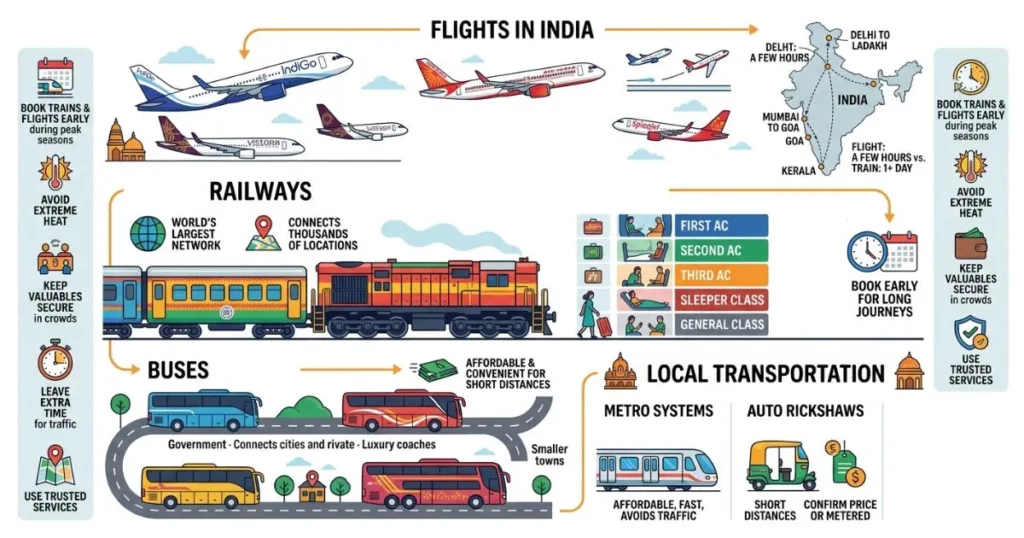
Understanding transportation options will help you plan better.
Flights in India
Domestic flights are the fastest way to travel between major cities.
Popular airlines include:
- IndiGo
- Air India
- Vistara
- SpiceJet
Flying is useful for long distances such as:
- Delhi to Kerala
- Mumbai to Goa
- Delhi to Ladakh
For example, travelling from Delhi to Kerala by train can take more than a day, while a flight takes only a few hours.
Indian Railways: The Classic Travel Experience
Indian Railways is one of the largest railway networks in the world.
Train travel is popular because it is affordable and connects thousands of locations.
Different classes include:
| Class | Experience |
| First AC | Most comfortable private cabins |
| Second AC | Comfortable overnight travel |
| Third AC | Affordable air-conditioned option |
| Sleeper Class | Budget travel without AC |
| General Class | Cheapest option |
For long journeys, booking tickets early is recommended.
Buses in India
Buses connect cities and smaller towns where trains may not be available.
Types of buses:
- Government buses
- Private buses
- Luxury coaches
- Sleeper buses
For short distances, buses are often affordable and convenient.
Local Transportation
Inside cities, travellers can use:
Metro Systems
Major cities like Delhi, Mumbai, and Bengaluru have metro networks.
Advantages:
- Affordable
- Fast
- Avoids traffic
Auto Rickshaws
Auto rickshaws are common for short distances.
Always confirm the price before starting the journey or use a metered ride where available.
Taxi Services
Ride-hailing apps are widely used in major cities.
They offer:
- Fixed pricing
- Digital payments
- Safer booking options
Tips for Transportation in India
Follow these simple tips:
- Book trains and flights early during peak seasons
- Avoid travelling during extreme heat when possible
- Keep valuables secure in crowded areas
- Leave extra time for traffic delays
- Use trusted transportation services
6. Where to Stay in India
Choosing the right accommodation can make your India trip more comfortable and enjoyable. India offers a wide range of places to stay, from affordable hostels to luxury heritage hotels.
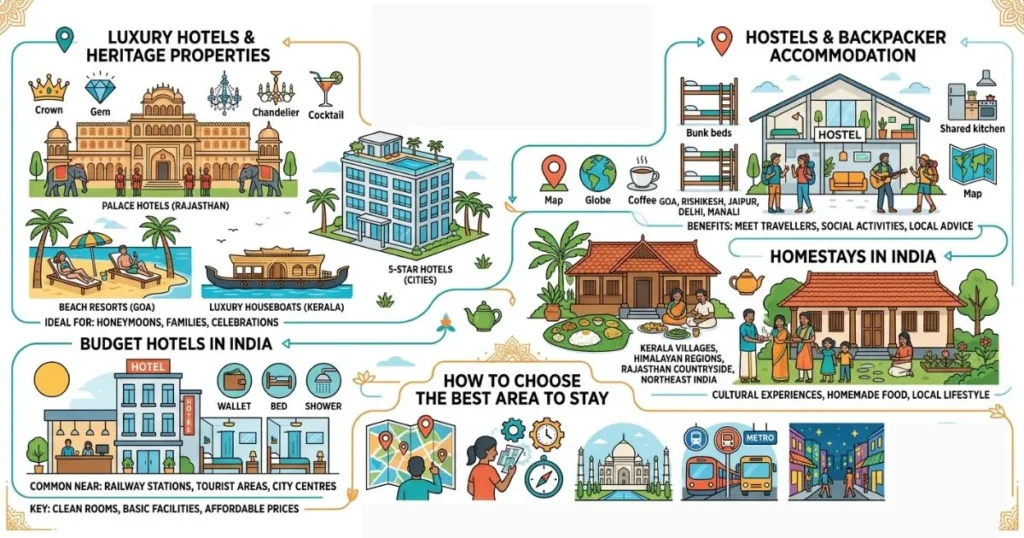
The best option depends on your budget, travel style, location, and the type of experience you want.
Types of Accommodation in India
Luxury Hotels and Heritage Properties
India has many luxury hotels that offer world-class services combined with traditional Indian hospitality.
Many heritage hotels are converted royal palaces, forts, and historical buildings.
Popular luxury experiences include:
- Palace hotels in Rajasthan
- Beach resorts in Goa
- Luxury houseboats in Kerala
- Five-star hotels in major cities
These properties are ideal for:
- Honeymoon travellers
- Luxury vacationers
- Families looking for comfort
- Special celebrations
Budget Hotels in India
Budget hotels are widely available throughout India.
They are suitable for travellers who want:
- Clean rooms
- Basic facilities
- Affordable prices
- Convenient locations
Budget hotels are common near:
- Railway stations
- Tourist areas
- City centres
Before booking, check recent reviews and ratings to ensure good service quality.
Hostels and Backpacker Accommodation
India has a growing hostel culture, especially in popular tourist destinations.
Hostels are popular among:
- Solo travellers
- Backpackers
- Young travellers
- Digital nomads
Benefits include:
- Lower prices
- Meeting other travellers
- Local travel advice
- Social activities
Popular hostel destinations:
- Goa
- Rishikesh
- Jaipur
- Delhi
- Manali
Homestays in India
Homestays provide a chance to experience the local Indian lifestyle.
Visitors can stay with local families and enjoy:
- Homemade food
- Local traditions
- Cultural experiences
- Personal recommendations
Homestays are especially popular in:
- Kerala villages
- Himalayan regions
- Rajasthan countryside
- Northeast India
How to Choose the Best Area to Stay
Location is an important factor when booking accommodation.
A cheaper hotel far away from attractions may increase transportation costs and travel time.
Consider staying near:
- Tourist attractions
- Public transportation
- Safe neighbourhoods
- Restaurants and markets
Recommended Areas to Stay in Popular Cities
| City | Best Areas to Stay |
| Delhi | Connaught Place, Aerocity, South Delhi |
| Mumbai | Colaba, Bandra, Fort Area |
| Jaipur | Near City Palace, C-Scheme |
| Goa | Panjim, North Goa, South Goa beaches |
| Kerala | Fort Kochi, Munnar, Alleppey |
| Varanasi | Near Assi Ghat or central areas |
7. India Travel Budget & Money-Saving Tips
India is considered one of the most affordable international travel destinations. However, your total cost depends on your travel style.
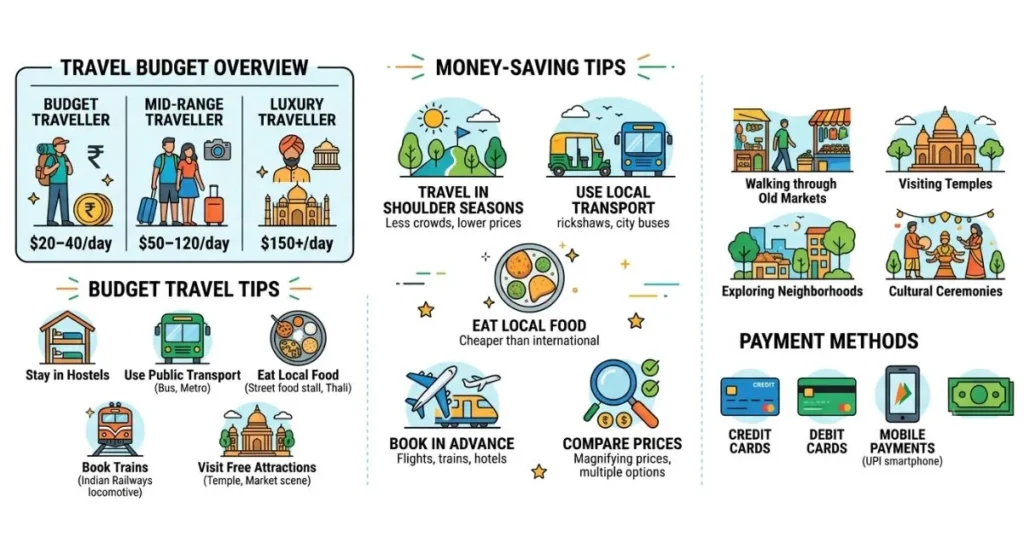
A backpacker can travel on a small budget, while luxury travellers can spend much more on hotels, experiences, and private transportation.
Average India Travel Budget
| Travel Style | Approximate Daily Budget |
| Budget Traveller | $20–40 per day |
| Mid-Range Traveller | $50–120 per day |
| Luxury Traveller | $150+ per day |
Costs vary depending on location, season, and personal choices.
Budget Travel in India
Budget travellers can save money by:
- Staying in hostels
- Using public transport
- Eating local food
- Booking trains instead of flights
- Visiting free attractions
Many famous experiences in India are affordable or completely free.
Examples:
- Walking through old markets
- Visiting temples
- Exploring local neighbourhoods
- Watching cultural ceremonies
Mid-Range Travel in India
Most international visitors choose a comfortable mid-range travel style.
This usually includes:
- Good hotels
- Private taxis sometimes
- Restaurant meals
- Paid attractions
- Domestic flights when needed
This option provides comfort without excessive spending.
Luxury Travel in India
Luxury travellers can enjoy:
- Palace hotels
- Private guides
- Luxury train journeys
- Premium restaurants
- Exclusive experiences
Famous luxury experiences include:
- Palace stays in Rajasthan
- Luxury trains like Palace on Wheels
- Private wildlife safaris
- Premium Kerala resorts
Money-Saving Tips for India Travel
Travel During Shoulder Seasons
Avoiding peak tourist months can help reduce:
- Hotel prices
- Flight costs
- Crowd levels
Use Local Transport
Trains, buses, and metro systems are affordable compared with private transportation.
Eat Local Food
Local restaurants and street food are usually cheaper than international restaurants.
Book in Advance
Early booking can help save money on:
- Flights
- Hotels
- Train tickets
Compare Prices
Check multiple options before booking accommodation or transportation.
Payment Methods in India
India has rapidly adopted digital payments.
Common payment methods include:
- Credit cards
- Debit cards
- Mobile payments
- Cash
However, keeping some Indian currency is recommended because smaller shops and rural areas may only accept cash.
8. Indian Food, Culture & Local Etiquette
Food and culture are among the biggest reasons travellers visit India.
Indian culture is incredibly diverse. Every state has its own language, traditions, clothing styles, festivals, and food habits.
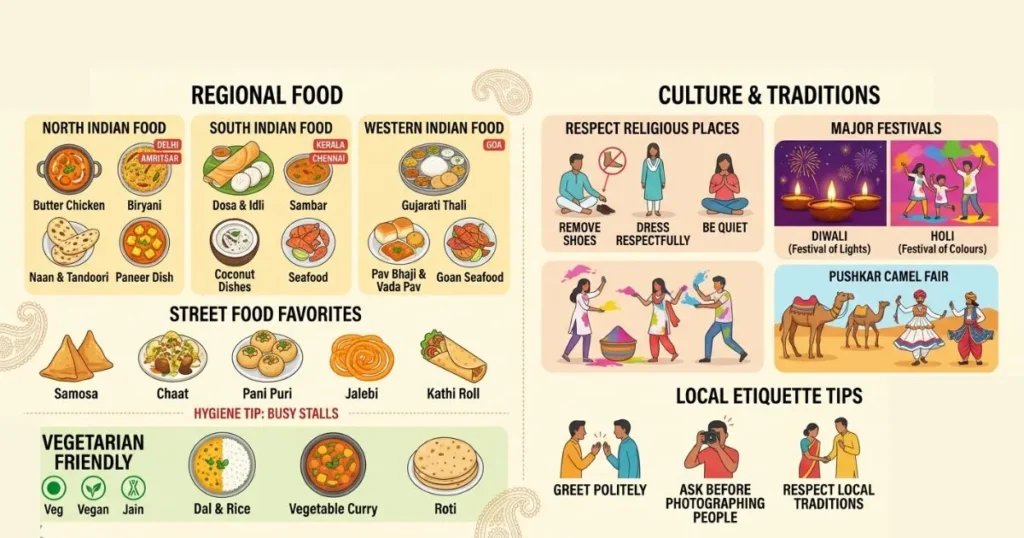
Understanding local customs can help travellers have better experiences.
Indian Food Guide for Travellers
Indian cuisine changes dramatically from region to region.
North Indian Food
North India is famous for:
- Butter chicken
- Biryani
- Naan
- Tandoori dishes
- Paneer dishes
Popular food cities:
- Delhi
- Lucknow
- Amritsar
South Indian Food
South Indian cuisine is known for:
- Dosa
- Idli
- Sambar
- Coconut-based dishes
- Seafood
Popular food destinations:
- Chennai
- Kerala
- Karnataka
Western Indian Food
Western India offers unique flavours.
Popular dishes include:
- Gujarati thali
- Pav bhaji
- Vada pav
- Goan seafood
Street Food in India
Street food is an important part of Indian culture.
Popular street foods include:
- Samosa
- Chaat
- Pani puri
- Jalebi
- Kathi rolls
Travellers should choose busy food stalls with good hygiene practices.
Vegetarian Food in India
India is one of the easiest countries in the world for vegetarian travellers.
Many restaurants clearly mark:
- Vegetarian options
- Vegan meals
- Jain food options
Popular vegetarian dishes include:
- Dal
- Vegetable curry
- Paneer dishes
- Roti
- Rice dishes
Indian Culture and Traditions
Respect Religious Places
When visiting temples, mosques, churches, or other religious sites:
- Dress respectfully
- Remove shoes where required
- Follow local rules
- Avoid loud behaviour
Indian Festivals
Festivals provide unforgettable travel experiences.
Popular festivals include:
Diwali
Known as the festival of lights, Diwali includes:
- Decorations
- Fireworks
- Family celebrations
- Traditional sweets
Holi
The festival of colours celebrates:
- Spring arrival
- Community gatherings
- Joyful celebrations
Pushkar Camel Fair
A famous Rajasthan event featuring:
- Camel trading
- Cultural performances
- Traditional activities
Local Etiquette Tips
Simple manners can improve your interactions.
Useful tips:
- Greet people politely
- Ask before photographing people
- Respect local traditions
- Avoid public criticism of customs
- Dress appropriately in conservative areas
9. Safety, Health & Essential Travel Tips
India is generally a welcoming destination, but travellers should take normal precautions to stay safe and healthy.
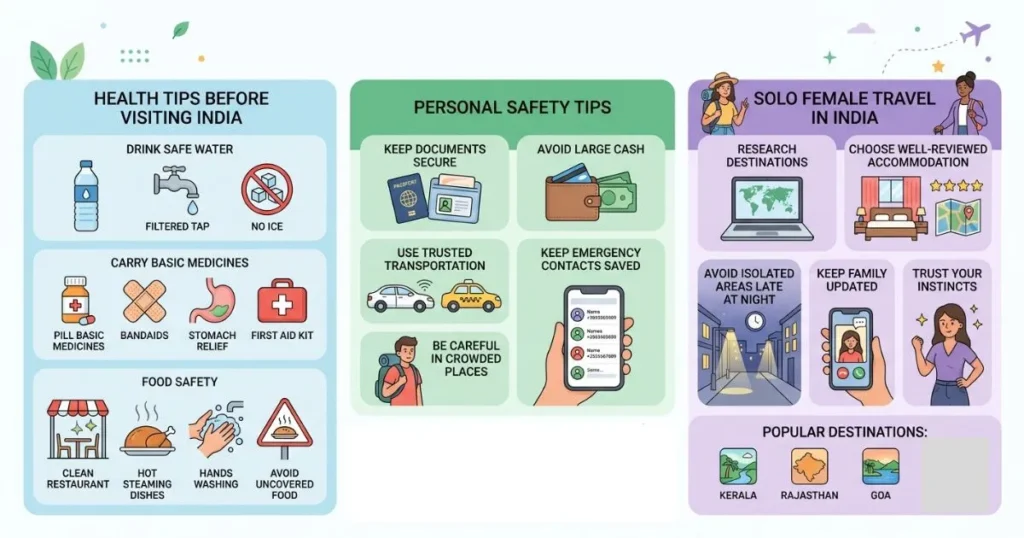
Preparation and awareness can prevent many common travel issues.
Health Tips Before Visiting India
Drink Safe Water
Travellers should:
- Drink bottled or filtered water
- Avoid unsafe water sources
- Be careful with ice in unknown places
Carry Basic Medicines
Useful items include:
- Personal medication
- Basic pain relief medicine
- Stomach-related medicine
- First aid supplies
Food Safety
To reduce food problems:
- Choose clean restaurants
- Eat freshly prepared food
- Wash hands regularly
- Avoid uncovered food in questionable areas
Personal Safety Tips
Follow these safety practices:
- Keep important documents secure
- Avoid carrying large amounts of cash
- Use trusted transportation
- Be careful in crowded places
- Keep emergency contacts saved
Solo Female Travel in India
Many women travel successfully through India every year.
Helpful suggestions:
- Research destinations before visiting
- Choose well-reviewed accommodation
- Avoid isolated areas late at night
- Keep family updated about your location
- Trust your instincts
Popular destinations for solo travellers include:
- Kerala
- Rajasthan
- Goa
- Himachal Pradesh
Emergency Numbers in India
Important emergency contacts:
| Service | Number |
| Emergency Assistance | 112 |
| Police | 100 |
| Ambulance | 108 |
| Fire Service | 101 |
10. Suggested India Travel Itineraries
Creating a realistic itinerary helps travellers enjoy more experiences without feeling rushed.
7-Day India First-Time Itinerary
Day 1–2: Delhi
Explore:
- India Gate
- Red Fort
- Old Delhi markets
Day 3: Agra
Visit:
- Taj Mahal
- Agra Fort
Day 4–6: Jaipur
Explore:
- Amber Fort
- City Palace
- Hawa Mahal
Day 7: Return to Delhi
This route is perfect for first-time visitors.
14-Day India Itinerary
Days 1–3: Delhi
History and city exploration.
Days 4–5: Agra and Jaipur
Experience India’s royal heritage.
Days 6–8: Udaipur and Rajasthan
Enjoy:
- Lakes
- Palaces
- Local culture
Days 9–11: Varanasi
Experience spiritual India.
Days 12–14: Kerala
Relax with:
- Backwaters
- Nature
- Local food
3-Week India Adventure Itinerary
For travellers with more time:
| Days | Destination |
| 1–3 | Delhi |
| 4–6 | Rajasthan |
| 7–9 | Agra and Varanasi |
| 10–14 | Kerala |
| 15–17 | Goa |
| 18–21 | Himalayan region |
Conclusion
India is a country full of unforgettable experiences, where every destination tells a different story through its history, culture, food, and natural beauty. This India Travel Guide provides everything you need to plan a comfortable and enjoyable journey, from choosing the best places to visit to understanding local customs and travel tips. Whether you explore ancient monuments, relax on beautiful beaches, or discover local traditions, India offers endless opportunities for adventure and discovery. With smart planning and a curious mindset, your trip to India can become a life-changing experience filled with memories you will cherish forever.
FAQ’s
What is the best travel guide to India?
The best travel guide to India includes information about destinations, visa requirements, transportation, budget, food, safety tips, and local culture to help you plan your journey.
What are the do’s and don’ts in India?
Respect local traditions, dress appropriately at religious places, avoid wasting food, drink safe water, and be polite when interacting with local people.
Where should I go for the first time in India?
First-time visitors should consider the Golden Triangle route covering Delhi, Agra, and Jaipur to experience India’s history, culture, and famous landmarks.
How many days are enough to visit India?
A 10 to 14-day trip is ideal for exploring major attractions, while longer trips of 3–4 weeks allow deeper cultural and regional experiences.
Which part of India is most beautiful?
Beauty depends on personal preference, but places like Kerala, Rajasthan, Ladakh, Kashmir, and the Northeast are among India’s most scenic regions.